The Ministry of Industry and Information Technology explains in detail the operation norms of the New Deal of "the strictest telephone call in real-name registration system in history"

  Beijing, May 31 (Reporter Zhang Mianmian) According to the Voice of China report, the Network Security Bureau of the Ministry of Industry and Information Technology accepted an exclusive interview on the "Telephone real-name registration system" policy yesterday, facing the problem and explaining the New Deal in detail. According to the previous notice, telecom operators will register all users in real-name registration system before June 30 next year, and users who fail to make up the registration according to the regulations will be forced to stop. This policy is also considered as an "ultimatum". So, what are the specific operational norms of the New Deal, which is called "the strictest real-name registration system in history"?

  In a strong dialect, "Come to my office, why can’t you even hear your own leader?" In life, there are many people who encounter this kind of phone fraud. One of the most important reasons for telephone fraud is the "three no phone cards" with no source, no information and no guarantee. Criminals use these phone cards to make trouble. Therefore, the promotion of telephone real-name registration system is imperative.

  It is understood that as of the first quarter of this year, the proportion of real-name registration of users in China has reached 93%, and new users can basically register with their real names. For old users, the real-name registration of about 300 million users has been basically completed, leaving about 100 million old users, so as to achieve real-name registration system by the end of June next year. Sui Jing, deputy inspector of the Network Security Bureau of the Ministry of Industry and Information Technology, said that at first, the three major operators, China Mobile, China Unicom and China Telecom, were not active in promoting real-name registration system, because in the short term, the compulsory implementation of real-name registration system would have a negative impact on the accumulation of users. However, in the long term, it would allow operators to carry out their business more pertinently. At present, there is basically no resistance for the three major operators to promote real-name registration system.

  According to the data of the Ministry of Industry and Information Technology, by the end of April this year, 140,000 mobile phone numbers had been shut down, of which more than 60,000 were related to virtual operator, accounting for 40% of the total. Numbers such as 170 and 171, which have low tariff threshold and do not require identification, have become synonymous with fraudulent calls. The reporter found on the Internet that many shops are selling paragraphs 170 and 171 from virtual operator. A seller told the reporter that the 170-segment and an empty card without phone charges he sold need 25 yuan, and the buyer does not need to provide an ID card. It takes 121 minutes to make a national call, and the national call is free.

  The management of basic telecom operators here is strict, and criminals there can only find other ways. Sui Jing said that virtual operator Section has become the hardest hit area to promote real-name registration system. "After the basic telecom operators are well managed here, there are always some people who want to commit crimes. They will definitely find ways to go to other weak places to buy cards, so naturally they will turn to this piece of virtual operator, which has just entered the operation, plus virtual operator has just entered this field, but they still have certain problems in implementation, so they have also provided such conditions and provided such convenience to these criminals."

  Sui Jing said that in view of the problem of virtual operator telecom user real-name registration system, compared with last year’s special campaign to crack down on black cards, two new requirements were added this time. In the future, an ID card and an operator’s number can only have five cards at most. In the hands of some agents, there are still acts of issuing cards in batches and false registration. For an agent, he earns an agency fee for each card he issues.

  On the other hand, the New Deal requires the new mobile phone calling card to define and bind all industry cards including bus cards. "According to its application scenarios and business forms, data can only be transmitted." At the same time, it is stipulated that the trade card cannot be sold for the second time. If there is a problem, the seller is jointly and severally liable.

  In addition, in the future, online sales will also require an authorization management system. Operators will decide whether to grant authorization according to the security of online store information protection and their own qualifications. Which operator is authorized will be marked on the Internet. Taobao will clean up online stores according to the situation of authorized agents, and there will also be authentication links in express delivery.

  In fact, the telephone real-name registration system was implemented in 2010, but the implementation of the policy did not make great progress until last year. Then why has this policy progressed so slowly over the years? Can this round of New Deal be implemented smoothly?

  Industry analysis, in addition to the resistance from virtual operator, what is more important is that there is no law to follow; Today, there is a special requirement in the anti-terrorism law that telecom enterprises should check the identity of users, and those whose identities are unknown or who refuse to accept the inspection should be forced to make up the registration. Those who fail to make up the registration within the specified period will be forced to stop their business, and the relevant sellers will be severely punished. Therefore, this policy is called "the strictest real-name registration system in history".

  Sui Jing emphasized that the punishment will be intensified. The punishment for virtual operator will be linked to their next step of expanding the pilot business scope and developing new users, and will also be linked to their next step of applying for a formal business license.

  Sui Jing judged that through this series of measures, I am confident that the real-name rate of telephone users will reach more than 95% by the end of this year, and all telephone users will realize real-name registration by June 30 next year. While the policy is vigorously promoted, some users are worried that their information security will not be guaranteed. In this regard, Sui Jing responded that, in fact, after the National People’s Congress decided to strengthen the protection of individual users’ information, the Ministry of Industry and Information Technology issued two regulations, one on real-name registration system and the other on protecting the information security of telecom users. In this regard, the Ministry of Industry and Information Technology will supervise in time, correct the problems found in time, and resort to the law if it involves criminal law. If problems are found in operating enterprises, the Ministry of Industry and Information Technology may impose administrative penalties on them, and may impose administrative fines ranging from 10,000 yuan to 30,000 yuan.
The giants of central enterprises and private enterprises jointly compile industry standards to promote the transformation and upgrading of the construction industry.

  Dongguan, China Broadcasting Network, September 29 (Reporter Wang Xuewei) Water leakage, cracking and bulging … For many people, new houses have been repossessed and old houses have lived for a long time, and all kinds of problems are miserable. For a long time, the traditional construction methods and excessive dependence on competitors’ jobs have led to the fact that China’s building level and housing quality are far behind advanced countries.

  Nowadays, an industry change has quietly begun. On September 28th and 29th, the "SSGF Industrialization Construction System Site Meeting" was held in Dongguan, Guangdong Province. More than 260 people including China Real Estate Association and authoritative experts and scholars attended the meeting, which started the "first shot" of the national real estate industry to carry out quality improvement actions. At the meeting, the giants of central enterprises and private enterprises jointly compiled industry standards, which will seize the 5 trillion market of prefabricated buildings.


The giants of central enterprises and private enterprises jointly compile industry standards to promote the transformation and upgrading of the construction industry.

  What is "SSGF"?

  A system, 28 patents

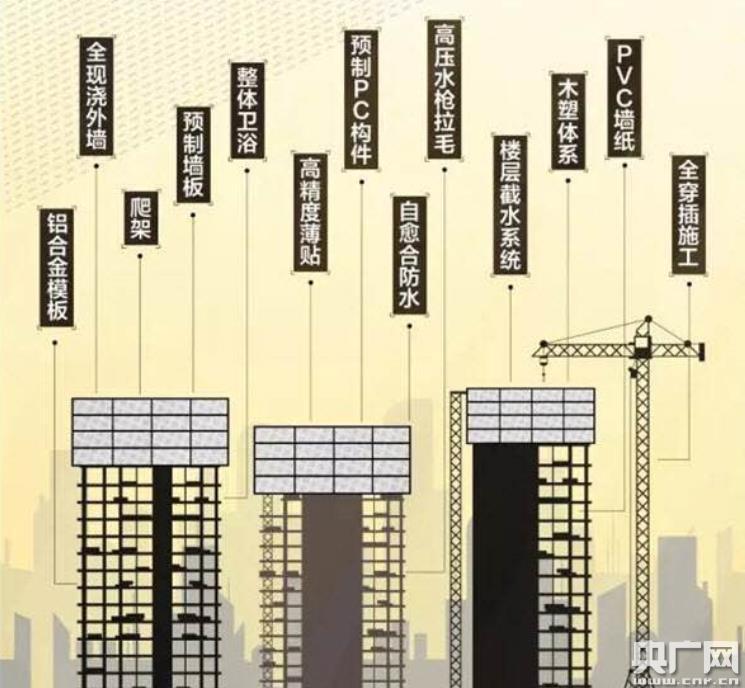
  SSGF industrial construction system was initiated by Country Garden in 2015, and it is a new type of assembly and building industrialization solution. With the four core concepts of Sci-tech technological innovation, Safe&share safe sharing, Green green sustainability and Fine&fast high quality and efficiency, based on the industrialization of assembly, cast-in-place, electromechanical and interior installation, it has integrated 19 new construction technologies and applied for 28 patents.

  Compared with traditional manual operation and general assembly construction method, it has the advantages of high quality, high speed, high efficiency and low energy consumption, and effectively solves the three major industrial ills such as leakage, cracking and hollowing.

  Site:

  Interpolation construction is a bit handsome.  

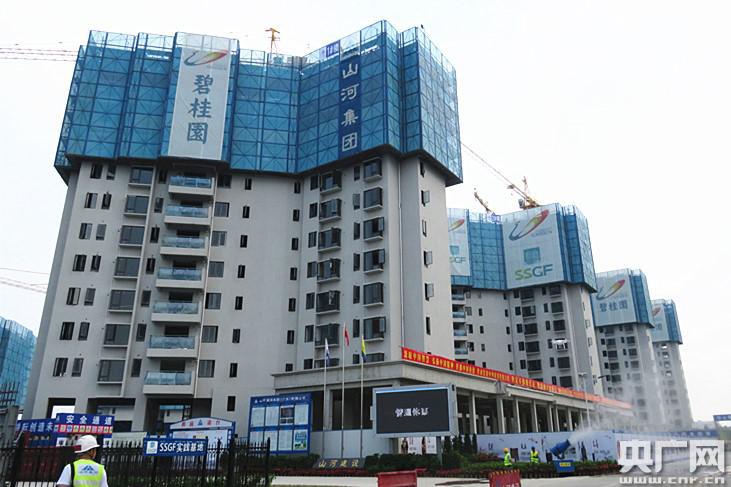
  The reporter saw in the Shijie project that the blue climbing frame was on the 14th floor, the external wall was being poured, and the floor tiles had been laid on the 8th floor. This interspersed construction technology enables this project to be completed 8-10 months ahead of the general project.

  For the owners, SSGF project can realize buying a house at the beginning of the year and handing over the building at the end of the year. At the same time, because the external wall is built with aluminum formwork and cast with reinforced concrete at one time, compared with the traditional manual external wall, it looks very flat and does not need plastering, but the general assembly-type "building block" construction method greatly improves the overall safety and impermeability, and there will be no minor problems of leakage.


  Dongguan Shijie Country Garden under construction covers all the core technologies of SSGF at present. 

  Market prospect:

  It is expected to reach 5 trillion in eight years.

  It is understood that the prefabricated buildings in developed countries have been relatively mature and perfect after decades or even hundreds of years. The proportion of prefabricated buildings in Japan and the United States is as high as 90%, while that in Singapore, Sweden, Denmark and France ranges from 70% to 85%. However, China’s prefabricated buildings account for only about 3% of the new building area, but with the continuous promotion of the central and local governments at the policy level, the penetration rate of prefabricated buildings in China has accelerated.

  According to the judgment of Forward-looking Industry Research Institute, China’s prefabricated building area is expected to exceed 800 million square meters in 2020. Based on the calculation of 2 500 yuan per square meter, the market scale will exceed 2 trillion yuan, and by 2025, the market scale will reach 4.7 trillion yuan.

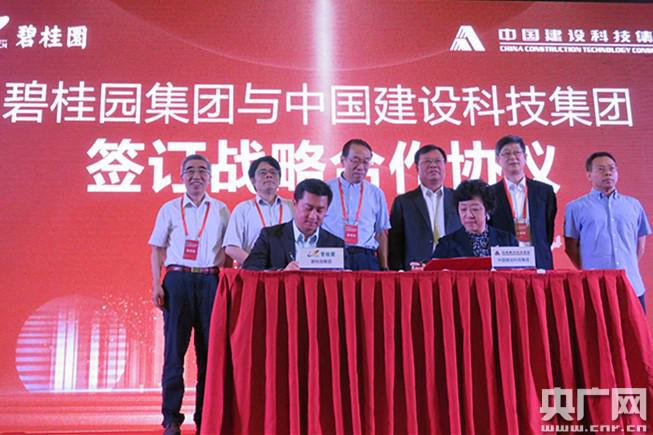
  At this on-site meeting, Country Garden signed a strategic cooperation agreement with the leading enterprises in China’s survey and design industry and the central enterprise China Construction Science and Technology Group to jointly compile industry standards and seize the 5 trillion market of prefabricated buildings. According to the agreement, the two sides will work together to upgrade technology research and development, compile a standard system to strengthen the advantages of integrated operation, build demonstration projects, strengthen technology promotion, and jointly promote the modernization of the construction industry.


  Signing ceremony site

  Read "SSGF" several times:

  28 items:

  SSGF industrial construction system is based on the industrialization of assembly, cast-in-place, electromechanical and interior installation, and integrates more than 20 new construction technologies. It has applied for 28 patents, which is called "green technology" in construction by the industry, and can effectively solve three major troubles such as leakage, cracking and hollowing.

  8 ~ 10 months:

  Because the main building and decoration project can be promoted synchronously by floors, the construction period is greatly shortened by 8-10 months on the basis of improving quality. The construction period of the project adopting SSGF is about one year, which can basically realize the owner buying a house at the beginning of the year and carrying a bag at the end of the year.

  "Two Shanghais":

  SSGF makes the floor become an "air assembly factory", and each floor is assembled by molds in the air and cast in one step. Masonry and plastering are completely eliminated, which can greatly reduce the use of wood, sand and gravel, reduce carbon dioxide emissions and land occupation.

  Take the newly started housing area of 1.67 billion square meters in China in 2016 as an example. If SSGF is adopted, it can reduce carbon dioxide equivalent to the total emissions of the global aviation industry, reduce hundreds of millions of decoration wastes, save 700,000 people’s domestic water for one year, and save forests equivalent to twice the area of Shanghai (about 13,000 square kilometers) and river sand equivalent to five times the sand discharge of the Pearl River.

List of 100 candidates for 2023 "China Intangible Cultural Heritage Person of the Year"

Ding Zhen Chi Zhen Tibetan Tangka, a representative project of intangible cultural heritage in Ganzi Tibetan Autonomous Prefecture, Sichuan Province-a representative inheritor of Miantang Painting School Autonomous Prefecture.


The representative project of Ma Ga’s main hemp national intangible cultural heritage is the national representative inheritor of Baoan’s broadsword forging skills.


Representative inheritor of Emei Wushu, a national intangible cultural heritage representative project in Zhao Lingyun, Ma.


Wang Wenli’s national intangible cultural heritage representative project oolong tea making skill (Tieguanyin making skill) is a national representative inheritor.


Wang Yu, representative inheritor of drawnwork skill in Tianjin municipal intangible cultural heritage representative project.


Wang Zhihao, a representative project of Sichuan provincial intangible cultural heritage, is a county-level representative inheritor of Du’s preserved egg pickling skills.


Wang Zhenfang national intangible cultural heritage representative project Ru Ci firing skill provincial representative inheritor.


Wang Peixin, representative inheritor of Cuihualou Jingwei Cuihua Cuihua Cuihua Cuihua Cuihua Cuihua Cuihua Cuihua Cuihua Cuihua Cuihua Cuihua Cuihua Cuihua Cuihua Cuihua Cuihua Cuihua Cuihua Cuihua Cuihua Cuihua Cuihua Cuihua Cuihua Cuihua Cuihua Cuihua Cuihua Cuihua Cuihua Cuihua Cuihua Cuihua Cuihua Cuihua Cuihua Cuihua Cuihua Cuihua Cuihua Cuihua Cuihua Cuihua Cuihua Cuihua Cuihua Cuihua Cuihua Cuijing Cuijing Cuijing Cuijing Cuijing Cuijing Cuijing Cuijing Cuijing Cuijing Cuijing Cuijing Cuijing Cuijing Cuijing Cuijing Cuijing Cuihua Cuijing Cuihua Cuihua Cuihua Cuihua Cuihua Cuihua Cuihua Cuijing Cuijing Cuijing Cuijing Cuijing Cuijing Cui


Deputy Director of Suzhou Intangible Cultural Heritage Protection and Management Office, Yan Wang


National representative inheritor of Mongolian medicine (Zanbaladorjiwen acupuncture and fire acupuncture therapy), a representative project of Wulan national intangible cultural heritage.


Representative inheritor of Fang Haoran national intangible cultural heritage representative project at the level of oral skill.


Elias Gayiti national intangible cultural heritage representative project Xinjiang Uygur Maixirefu (Xinjiang Uygur Dao Lang Maixirefu) national representative inheritor.


Longqian National Intangible Cultural Heritage Representative Project Guangxi Opera Autonomous Region Representative Inheritor


Ye Qingfeng Fuliang county-level intangible cultural heritage representative project Chengjiashan Ye family tree compilation custom county-level representative inheritor.


Ye Weizhang’s National Intangible Cultural Heritage Representative Project Mulan Legend National Representative Inheritor


The representative inheritor of Bihong National Intangible Cultural Heritage Project at Jingxiu District level.


Tursun Roustan National Intangible Cultural Heritage Representative Project National Representative Inheritor of Uyghur Molding Pottery Burning Technique


Curator, Lv Junjie Zisha Art Museum, Lv Yaochen, Lv Junjie


Zhu Weikang is the representative inheritor of Zhu’s internal medicine therapy, a representative project of Jing ‘an district-level intangible cultural heritage.


Associate Research Fellow, Institute of Ethnic Literature, China Academy of Social Sciences, Zhu Gang


Qiao Lanrong’s National Intangible Cultural Heritage Representative Project Taohuawu Woodblock New Year Pictures Municipal Representative Inheritor


Qiao Guiqing’s national intangible cultural heritage representative project Zhenjiang Hengshun balsamic vinegar brewing technology national representative inheritor.


Former Director of the Intangible Cultural Heritage Research Center of Ryan. Qiao Central Academy of Fine Arts.


Ren Xinghang is the national representative inheritor of Jun porcelain firing technology, a representative project of national intangible cultural heritage.


Liu Weixiang is the provincial representative inheritor of Tujia Brocade "Xilankapu", a representative project of Hubei provincial intangible cultural heritage.


Liu Nengfeng is the representative inheritor of stone carving (Dazu stone carving), a national intangible cultural heritage representative project.


Liu Xicheng, researcher of China Federation of Literary and Art Circles


Guan Jinfang’s national intangible cultural heritage representative project Oroqen folk songs (Oroqen Zandaren) is a national representative inheritor.


Jiang Fan Professor of Folklore, Liaoning University


The representative inheritor of Manchu Ministry, the national intangible cultural heritage representative project of Anzibo.


Sun Jun, Representative Project of Zhengzhou Municipal Intangible Cultural Heritage, Henan Province, Zhengzhou Kiln Celadon Burning Technique, Representative inheritor at the municipal level.


Sun Shuchun’s National Intangible Cultural Heritage Representative Project-Traditional Chinese Medicine Orthopedic Therapy National Representative Inheritor


Ji Xiaoming, a representative project of national intangible cultural heritage, is a provincial representative inheritor of black tea making skills (Xianyang Fucha making skills).


Yan Shaoying’s national intangible cultural heritage representative project Longquan celadon firing technology municipal representative inheritor.


The representative inheritor of the Su Haizhen National Intangible Cultural Heritage Representative Project-Beijing Duckstring Art Autonomous Region.

Li Yunxiao, Zhejiang Xiaobaihuayue Troupe Actor


Li Fangxi, Deputy Director of Wenzhou Culture, Radio, Film and Television Tourism Bureau, Zhejiang Province


Director of dadukou district Intangible Cultural Heritage Protection Center, Chongqing, Guo-hong Li


Li Mingyan’s National Intangible Cultural Heritage Representative Project Traditional Chinese Medicine Processing Technology (Wuyi Shouxian Valley Traditional Chinese Medicine Processing Technology) is a national representative inheritor.

Li Zhiyang’s National Intangible Cultural Heritage Representative Project: Municipal Representative Inheritor of Miao Folk Songs


Director of lin li Sichuan Intangible Cultural Heritage Protection Center


Li Fuming’s National Intangible Cultural Heritage Representative Project Silver Forging Technique (Heqing Silver Forging Technique) is a provincial representative inheritor.


Yang Lihui Professor, Institute of Folk Literature, School of Arts, Beijing Normal University


Yang Jun’s national intangible cultural heritage representative project Huangmei Opera national representative inheritor.


Yang Zhijian, the representative inheritor of Shanghai-level intangible cultural heritage representative project, Guqin’s craftsmanship.


Xiao Junjing’s National Intangible Cultural Heritage Representative Project Green Tea Making Skills (Xinyang Maojian Tea Making Skills) is a district-level representative inheritor.


Wu Zhenghui’s national intangible cultural heritage representative project Huizhou Three Carvings national representative inheritor.


Qiu Shuhua’s National Intangible Cultural Heritage Representative Project Northeast Drum National Representative Inheritor


Zou Kunshan National Intangible Cultural Heritage Representative Project Hunan Yugu National Representative Inheritor


Wang Haiyan national intangible cultural heritage representative project Shadow Play (Huaxian Shadow Play) district representative inheritor.


Shen Caihong’s national intangible cultural heritage representative project Luzhou Laojiao liquor brewing technology national representative inheritor.


Zhang Wennian’s national intangible cultural heritage representative project Xuanbi production skills national representative inheritor.


Zhang Yejin’s national intangible cultural heritage representative project Yuejiaquan national representative inheritor.


Zhang Xiaodong’s national intangible cultural heritage representative project Kite making skills (Weifang Kite) is a national representative inheritor.


Zhang Luqi, a representative project of national intangible cultural heritage, is a national representative inheritor of pottery firing technique (Yazhou pottery firing technique).


Zhang Qiang, Deputy Chief of Public Culture Unit of Zhungeer Banner Culture and Tourism Bureau, Ordos City, Inner Mongolia Autonomous Region


Zhang Qing, Director of the Intangible Heritage Department of Chengdu Culture, Radio, Film and Television Tourism Bureau, Sichuan Province


Lu Dajie’s national intangible cultural heritage representative project Dragon Dance (Pudong Dragon Lantern) is a national representative inheritor.


Chen Leping national intangible cultural heritage representative project: the provincial representative inheritor of ancient stage construction skills.


Chen Xudong Zhejiang Provincial Intangible Cultural Heritage Representative Project Yuyue Soy Sauce Brewing Technology Municipal Representative Inheritor


Chen Lijun, Zhejiang Xiaobaihuayue Troupe Actor


Chen Mengli’s National Intangible Cultural Heritage Representative Project Li Nationality Costume Municipal Representative Inheritor


Chen Hongru is the representative inheritor of folk snake wound therapy in Lujiao Town, a representative project of Chongqing municipal intangible cultural heritage.


The provincial representative inheritor of Shangdang Bangzi, a national intangible cultural heritage representative project in Chen Suqin.


Fan Weiqun’s national intangible cultural heritage representative project Yixing Zisha pottery production skills provincial representative inheritor.


Mao Weitao national intangible cultural heritage representative project Yue Opera national representative inheritor.


Changyangyang Henan Provincial Intangible Cultural Heritage Representative Project Folk Paper-cut (Mengjin Paper-cut) Provincial Representative Inheritor


President of Lijiang Folk Artists Association, He Wenguang


Yue Wenxiang’s National Intangible Cultural Heritage Representative Project Manhandiao Municipal Representative Inheritor


Lang Jiazi’s National Intangible Cultural Heritage Representative Project Mianren (Beijing Mianrenlang) District Representative Inheritor


Rong Bashina is a first-class actor of the National Culture Working Group of Nujiang Lisu Autonomous Prefecture, Yunnan Province.


Hu Yiwei, founder and designer of Shanghai Weiyize brand consulting agency


Hu Mingrong Secretary of the Party Committee and Director of the Neighborhood Committee of Jiangxinyuan Community, Jiangdi Street, Hanyang District, Wuhan City, Hubei Province


Ke Cuiling’s national intangible cultural heritage representative project Yugur national representative inheritor of clothing.


Duan Sixing National Intangible Cultural Heritage Representative Project Woodcarving (Jianchuan Woodcarving) National Representative Inheritor


Jiang Zongde’s national intangible cultural heritage representative project Jianchuan Baiqu national representative inheritor.


Hong Jianhua’s national intangible cultural heritage representative project Bamboo Carving (Huizhou Bamboo Carving) is a national representative inheritor.


Hong Rongzeng is the representative inheritor of Yingge (Chaoyang Yingge), a national intangible cultural heritage representative project.


Aoqi Professor, School of Ethnology and Anthropology, Inner Mongolia Normal University


Yuan Xuejun Honorary President of Hebei Folk Culture Association


The national representative inheritor of Reheman Abdullah’s national intangible cultural heritage representative project, National Musical Instrument Making Skills (Uygur Musical Instrument Making Skills).


Gu Mingqi’s representative project of national intangible cultural heritage, Silk weaving skills (handmade skills of silk in Jili Lake), is a national representative inheritor.


Xu Xiaofeng Director of Intangible Cultural Heritage Protection Department of Shanghai Pudong New Area Cultural and Art Guidance Center


Gao Bingzhong Professor, Institute of Advanced Studies in Humanities and Social Sciences, Beijing Normal University


Guo Li’s national intangible cultural heritage representative project cork painting municipal representative inheritor


Cao Baoming, Team Leader of Jilin Intangible Cultural Heritage Protection Expert Group


Liang Hengyuan, representative inheritor of Xincheng Zhuang brocade skill autonomous region, a representative project of Guangxi Zhuang Autonomous Region intangible cultural heritage.


Dong Meihua, General Manager of Yunnan Apenjie Culture Media Co., Ltd.


Han Xi, Deputy Director of Traditional Toys Committee of Beijing Toys Association


The representative project of Ji Xigui’s national intangible cultural heritage is the national representative inheritor of Yueyao celadon firing technology.


Party Secretary and President of Gemee Dong ‘e Ejiao Co., Ltd.


Fu Anping Research Librarian of Jiangxi Intangible Cultural Heritage Research and Protection Center


Dorg Nima National Intangible Cultural Heritage Representative Project Jianggeer Autonomous Region Representative Inheritor


Wen Jianming, a representative project of Shanxi provincial intangible cultural heritage, is the provincial representative inheritor of Jinpai brick carving.


National representative inheritor of Jin Opera, a representative project of Xie Tao national intangible cultural heritage.


Representative inheritor of Zhuang embroidery autonomous region, a representative project of intangible cultural heritage in Guangxi Zhuang Autonomous Region, Lan Lin


Pan Lusheng, Vice Chairman of China Federation of Literary and Art Circles, Chairman of China Folk Writers Association, and Deputy Director of the National Committee for the Examination and Approval of Intangible Cultural Heritage Terms.


Huo Junzheng, a representative project of municipal intangible cultural heritage in Xuchang, Henan Province, is the representative inheritor of traditional handcrafting skills of Huozhuang Shehuo props at the municipal level.


Wei Yonghong’s National Intangible Cultural Heritage Representative Project Lanzhou Taiping Drum National Representative Inheritor


Continue reading »