Traffic efficiency increased by 16.7%, and the first all-station-level domestic expressway toll station in China landed in Nanjing.
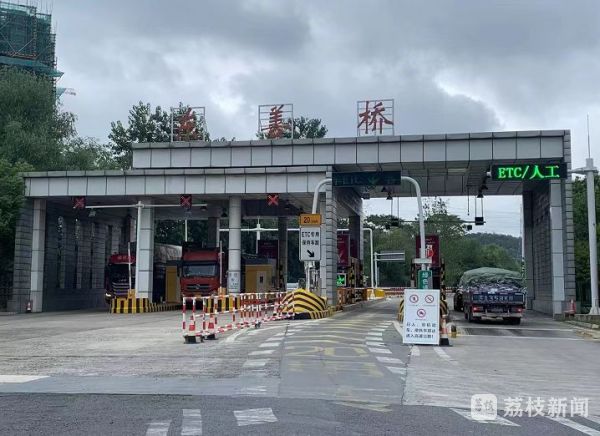
The reporter was informed that Nanjing Dongshanqiao Toll Station has five crossings with two entrances and three exits and the whole station information system was officially put into use on October 12, becoming the first Xinchuang Toll Station in China with independent intellectual property rights from the bottom hardware facilities, basic software to the upper toll collection system.
This information platform independently developed by "Jiangsu Aerospace 706 Information Technology Co., Ltd." deeply integrates the new technology and the development direction of expressway toll service, and pushes China’s expressways to the era of "cloud toll collection", realizing the full autonomy and controllability of China’s expressway information system. While ensuring information security and data security in the transportation field, the average traffic efficiency of bicycles will be improved by 16.7% more effectively. A single site can save energy by 10,000 kWh per year. Only according to the calculation of 135 lanes in 15 stations under the jurisdiction of Nanjing Highway Group, the average annual electricity consumption can reach 400,000 kWh, contributing to the construction of smart Jiangsu and green Jiangsu.
To undertake the national strategic mission, Jiangsu Aerospace 706 has the courage to take responsibility.
Don’t look at a small high-speed kilometer toll station. The core software and hardware of the toll collection system used to rely on imports. Documents such as the national "Tenth Five-Year Plan" for scientific and technological innovation in the transportation field put forward the goal of "autonomous control and localization of key core technologies" in the information development of the transportation industry, requiring upgrading the information infrastructure, making efforts to break through the technical problem of "sticking the neck" and realizing high-level scientific and technological self-reliance. Jiangsu, as one of the first batch of 13 pilot units in the construction of a strong transportation country in China, put forward in the "Jiangsu Plan for a Strong Transportation Country" that it is necessary to strengthen the application of high and new technologies and develop the application of key technologies such as Shanghai-Nanjing Smart Expressway.
According to the "Traffic Power Jiangsu Plan" and the "Guiding Opinions on the Construction of Quasi-free Flow Toll Collection System of Expressway Toll Stations in Jiangsu Province", Jiangsu Aerospace 706 Information Technology Co., Ltd. carried out technical research according to the present situation of expressway toll stations in Jiangsu. In the early stage, under the guidance and organization of Nanjing Highway Group, Jiangsu 706 overcame the double tests of epidemic prevention and control and technical research, went deep into the field and made full investigation, and carried out the development of lane controllers, the construction of simulation test environment, the adaptation and transformation of toll collection software, the optimization and integration of the whole system, and deployed two pilot lanes at Yinxiang toll station. After debugging and optimization, the system equipment has changed from "yes or no" to "good or not", the system control and business in the station are separated, the cloud network integration can be remotely centralized and controlled, and the path, billing and charging are online, which fully realizes more convenient maintenance, smarter service, more efficient processing and safer user and business data. Since its launch, the system has been running safely and smoothly for 4 months, with a cumulative traffic volume of about 390,000 vehicles, and the failure rate has been significantly reduced.
Jiangsu 706 and Nanjing Highway Group seized the favorable opportunity of the "Traffic+Xinchuang" application scenario pilot, and carried out the promotion of the whole station Xinchuang toll station in Nanjing Dongshan Bridge. Since the operation of the system, 15,292 vehicles have passed by. While retaining the original charging function and operating habits, the modes of toll collectors and drivers and passengers are unchanged, and the traffic is uninterrupted, new functions such as document recording and self-contained QR code scanning have been added, making payment more convenient and traffic smoother. The changes brought about by the opening of the new system can be seen by the naked eye. This time, Nanjing Dongshanqiao toll station, with two entrances and three exits, has "renewed" five crossings and the whole station system, which truly achieved a full coverage of Xinchuang system.
Fill the gap in domestic technology, benefit the people’s livelihood through double cooperation.
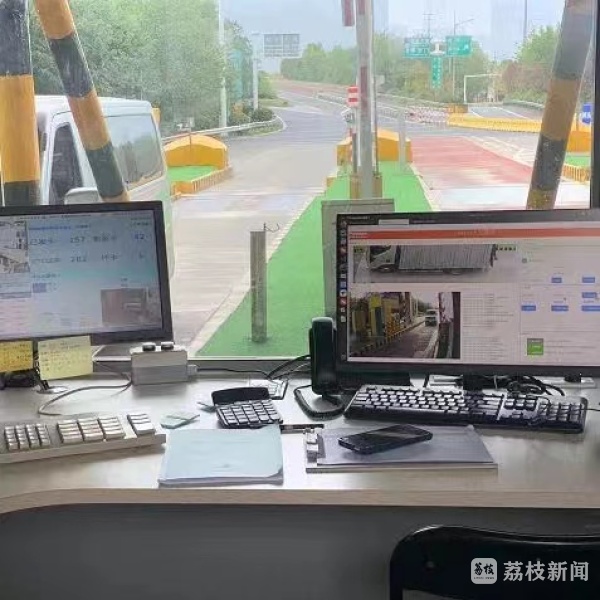
In the research and development of this system, the lane controller independently developed by Jiangsu Aerospace 706 Information Technology Co., Ltd. has the advantages of high safety, multi-expansion and anti-interference. At the same time, Tianyi server and desktop independently developed in China are adopted, and the China "Core" processor equipped with it has outstanding computing power, security and stability, and gets rid of dependence on foreign technology, thus further ensuring the privacy of user data and the security of business data.
Xinchuang system equipment expands the vehicle information recording function on the original basis, which can handle the whole process business in real time and efficiently. Compared with the traditional system platform, the traffic time of single vehicle in artificial lane is reduced by 1.5 seconds, the service time is reduced by 15%, and the number of vehicles passing in the same unit time is increased by nearly 20%.
Compared with the traditional lane controller, the newly developed intelligent lane controller consumes about 35 watts, and the power consumption is only one tenth of the original equipment. Taking five lanes of Dongshanqiao Station as an example, after all business management terminals and servers are replaced by Xinchuang system equipment, it is estimated that the average annual electricity consumption will be about 15,000 kWh. According to the calculation of 135 lanes in 15 stations under the jurisdiction of Nanjing Highway Group, the average annual electricity consumption is about 400,000 kWh, which helps low-carbon life to travel and promote the coordinated development of industrialization and modernization on the basis of energy conservation and environmental protection.
Xinchuang system can seamlessly connect with the latest technologies and intelligent terminal equipment such as automatic card issuing and charging robots at high-speed crossings, realize flexible customization of related system components, and have good compatibility between software and hardware systems, which improves the degree of lane automation and intelligence, meets the needs of users’ integrated management, and can comprehensively enhance the experience of drivers and passengers’ rapid passage and quality service.
Compared with the traditional lane controller, the intelligent lane controller is about 80% smaller, lighter, more integrated, and more cost-effective, which effectively reduces the system equipment operation and maintenance costs of expressway operating units, reduces manual work links, reduces system complexity, and improves system data security and work efficiency while meeting the normal traffic rate and stability requirements of expressway toll stations. At the same time, the lane width is compressed, and the land resources are intensive, which provides a strong support for realizing the "narrow island, pavilion and less people" of the station area.
It is reported that this set of China’s first traffic innovation system with completely independent property rights will be first applied and demonstrated in Nanjing, and under the guidance of the Provincial Department of Industry and Information Technology and the Communications Department, key technical research will be carried out for provincial-level central cloud control platform, ETC ramp management system, remote auxiliary system, automatic vehicle identification, etc., and standards and specifications for traffic innovation will be formulated to focus on breaking through key core technical problems, so that "innovation+traffic" will develop more rapidly and the "stuck neck" problem will be solved.
(Jiangsu Guangdian Rong Media News Center/Yu Hai Editor/Xu Weiqi)