36Kr Going to Sea Insight | 2024 White Paper on Global Consumption Trends: Grasping Global Business Opportunities in Diversified Changes
Visit 36Kr’s website. letschuhai.com For more information about global business.

The global consumer market is developing towards the trend of diversification.
In 2023, the online sales of Black Five reached a record $9.8 billion, and behind this is the real demand of consumers for low prices. They tend to leave more budget for discounted goods.
At the same time, consumers are not completely unwilling to pay higher prices. If the products can reflect personal taste or have better personalized design, most consumers can accept high premium. They are willing to invest more money in their ideal lifestyle.
It can be seen that the pursuit of cost performance and the pursuit of high-quality consumer behavior coexist. This diversified preference also puts forward higher requirements for merchants. They need to identify the core selling points of products, set appropriate prices, adopt the marketing methods that consumers like, and make dynamic adjustments with market changes.
In all these cases, the new changes in overseas markets not only bring opportunities to businesses, but also pose different puzzles and challenges. Based on this background, TikTok for Business conducted in-depth research on overseas consumer markets, and jointly released the White Paper on Global Consumer Trends in 2024 (hereinafter referred to as "White Paper") with 36Kr, focusing on Southeast Asian and American markets, to help businesses better meet business opportunities in overseas markets.
If you want to know more about TikTok’s dry goods in the sea, please scan the code and download the full report for free.

When you open the white paper, you can find that the research idea of the report is around the "double-cycle value system". This value system takes TikTok consumer field as the core, and directly connects overseas consumers with overseas merchants through the five major trends of track, channel, price, trend and marketing.
The white paper focuses on this specific consumer field because social e-commerce represented by TikTok is leading the new trend of global consumption. 36Kr went out to sea and observed that social media platforms, which are good at community interaction and word-of-mouth communication, have gradually become an important force to enliven the global e-commerce market. According to Accenture’s forecast, by 2025, the growth rate of global social e-commerce will be three times that of traditional e-commerce, and the scale is expected to reach 1.2 trillion US dollars.
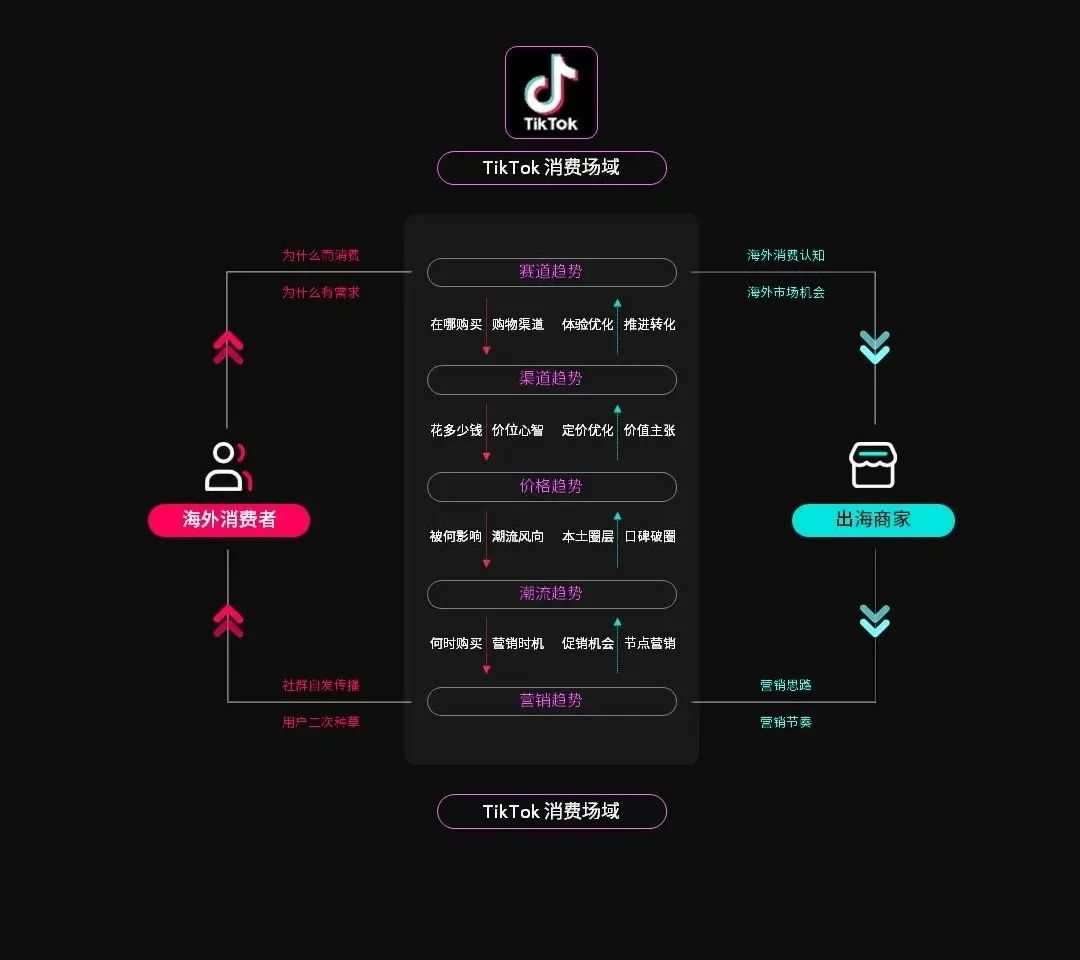
Around the five trends proposed by the dual-cycle value system, we can see that consumers and businesses are also influencing each other’s decision-making behavior. From the perspective of overseas consumers, these five trends reveal the characteristics of consumers’ consumption preferences, shopping budgets and fashion hobbies. For overseas merchants, they constantly draw nutrition through TikTok business cycle system, covering overseas users’ preference cognition, product development insight, supply chain management optimization and many other aspects to create a sustainable business flywheel.
Specifically, what are the noteworthy insights brought by these five trends?
At a time when the cross-border e-commerce track is becoming more and more crowded, it is more and more critical to find opportunities for new market growth. Under the background that the overall supply tends to be saturated, new demand often lies in the change of consumers’ habits.
In the Southeast Asian market, the improvement of residents’ health awareness has injected vitality into consumption in related fields. According to the survey data, in the mainstream e-commerce platform in Southeast Asia, the sales of health care products reached 100 million US dollars in June 2023. Health concerns have been integrated into the daily shopping habits of consumers in Southeast Asia.
The emergence of a new concept of life provides a good idea for businesses to choose track opportunities. For example, beauty care can emphasize natural effects, while smart small household appliances highlight creating a healthy home environment for consumers. It is not easy for businesses to find new category opportunities, but it also has great uncertainty. By grasping the changes in consumption habits, businesses can be closer to consumers’ purchasing motives and accurately create product selling points.
When new track opportunities emerge, businesses need to respond faster and pass on the core selling points of their products to consumers. In order to truly and effectively present the healthy elements of products, many merchants choose TikTok as the position of content marketing gameplay. On TikTok, merchants use keywords and video materials to present the health efficacy of products, choose suitable talents to endorse the efficacy of products, and make suitable communication content for products.
Various channels coexist in overseas consumer markets, and various channels correspond to diverse shopping experiences.
For overseas consumers, different channels have jointly created a composite shopping experience. Among the three mainstream consumption channels, the shelf e-commerce platform provides consumers with a convenient, fast and rich commodity selection experience; Offline physical stores provide consumers with real and product-aware and immersive service enjoyment; Social platforms provide consumers with the experience of free exploration and sharing.
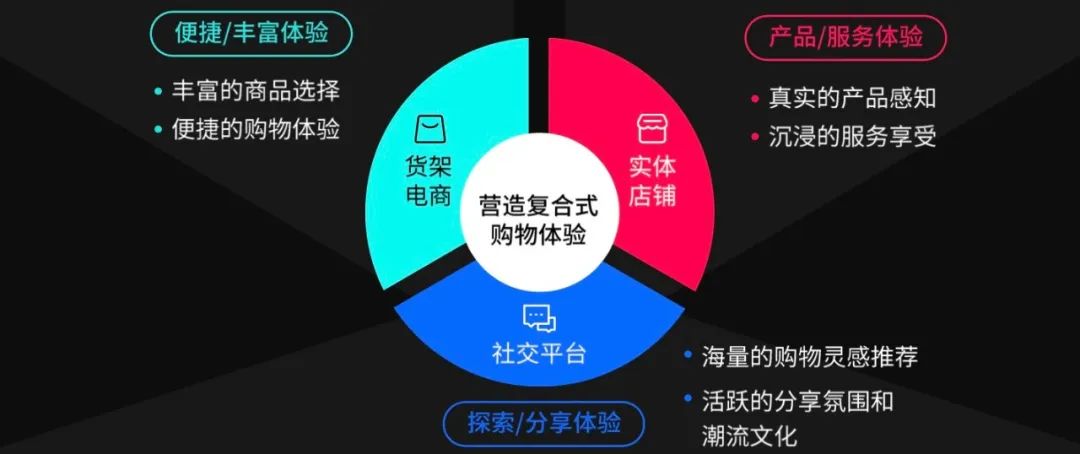
Creating a compound shopping experience is almost the only way for most businesses. In this process, TikTok has brought a more stereoscopic and comprehensive full-link shopping experience, which can integrate consumers’ demands for different shopping experiences.
In the closed-loop ecology of TikTok, live broadcast, short video and commodity shopping advertisements can stimulate users’ demand for active shopping and realize consumers’ one-stop experience from discovery to purchase. In addition, TikTok can take advantage of traffic and guide consumers to other online channels and offline physical stores.
For the category of strong experience such as home appliances, offline channels are an important part of interaction with consumers. During the launch of new products in Vietnam, Dreame, a brand of clean household appliances, invited the head experts to participate in the offline conference and held a simultaneous live broadcast in TikTok, which effectively attracted consumers to experience and buy offline.
With the intensification of overseas economic polarization, consumption is also showing the phenomenon of rising and falling.
In mature markets, consumers attach importance to the emotional value of products, and premium is often associated with a better lifestyle. In Southeast Asia, "value for money" or even "value for money" products are more popular with consumers.
Taking electronic products as an example, consumers in mature markets hope to enrich their ideal life with cutting-edge technology with a "futuristic sense", and they are willing to be the first to adopt early adopters in scientific and technological products; In emerging markets such as Southeast Asia, consumers have a high price mentality for 3C products, but the reasons that urge them to buy such products still focus on cost-effective factors such as "good product quality" and "affordable price".
Based on the cognition of price mentality, merchants need to pay attention to the transmission of commodity value. Whether it’s brand building of emotional value or cost-effective promotion, businesses can use TikTok to tailor marketing programs for products with different price positioning.
Taking the cost-effective marketing method as an example, TikTok live broadcast can not only make consumers understand the products more truly and comprehensively, but also attract consumers through limited-time offers and other gameplay. Secret Clean, a personal care brand in Indonesia, invited people to broadcast live, show factory scenes and directly calculate discounts to encourage transformation.
At present, the dominance of a single trend no longer exists, and emerging trends are developing in the direction of fragmentation and diversification.
With the rapid change of trends, consumers are increasingly fond of pursuing "freshness" and switching between different products and brands. According to the white paper, 59% of Southeast Asian consumers hate the unchanging consumption experience, and 66% of Southeast Asian consumers will chase the trend by buying related trendy products.
For merchants, the trend is the vane of consumption, and catering to the trend change is the key to grasp the consumer’s early adopter mentality. Merchants should quickly and violently detonate the new trend and try to influence more people during the "preservation period".
Social media represented by TikTok can quickly spread trend information and shopping information, which is an excellent position for businesses to guide the trend and take advantage of the situation to "go out of the circle". Community-based interest recommendation on TikTok is also easier to break the personalized circle and improve brand awareness and exposure.
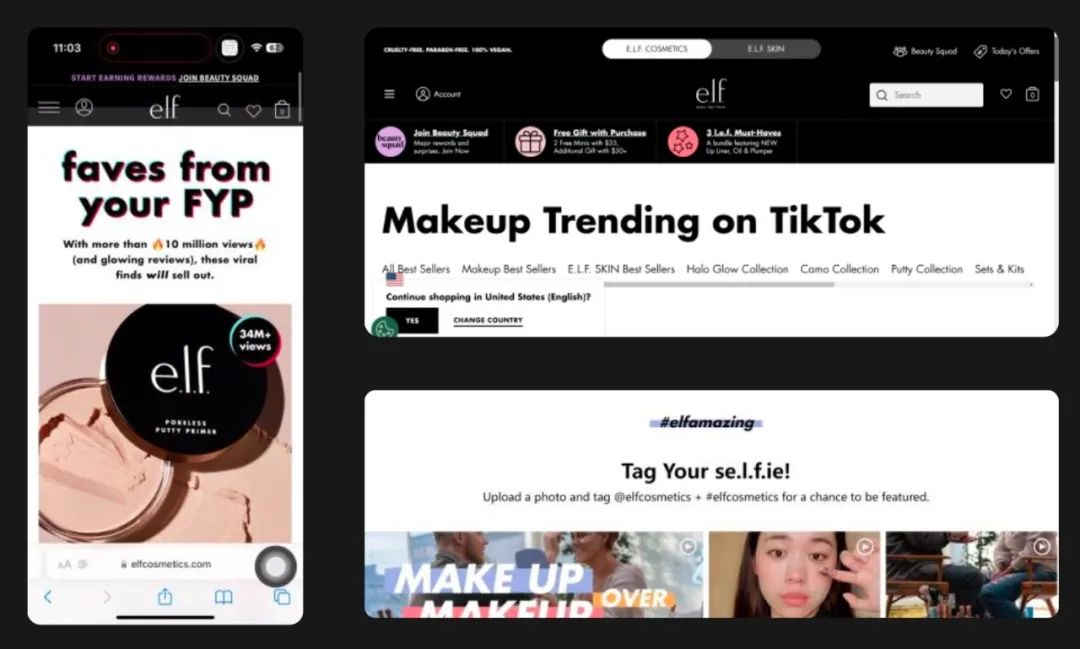
For example, the beauty brand e.l.f has long adhered to industry innovation and created cultural trends. On official website, the brand of e.l.f, users can see the make up trending on TikTok and related beauty products. E.l.f. also launched UGC interaction to encourage users to post makeup photos after using E.L.F products in TikTok, and jointly lead the influence of beauty trends.
The cultural customs of overseas markets are very different, which forms a rich and diverse marketing node.
In Europe and America, large and small nodes are all over the year. In addition to the shopping spree season such as "Black Five Nets One" and "Christmas" which occupy the main stage, some entertainment IP and performance activities can also attract the attention of the whole people and set off a consumption boom, such as Barbie movies and Taylor Swift concerts.
In Southeast Asia, there are differences in languages, festivals, nationalities and religions among countries, and multi-cultures coexist harmoniously here. Many large-scale festivals have cross-national and cross-regional influence in Southeast Asia, such as Ramadan, Lunar New Year and Water-splashing Festival. Festive celebrations are usually accompanied by expanding shopping demand, and multiculturalism also leads to differences in consumption preferences.
Localized content marketing should respect common sense and pay attention to users’ wishes, and the brand needs to fit the holiday creativity and the hot direction that users pay attention to. On the basis of balancing traffic and depth, create valuable, original and expected explosive content.
For example, Toudan Technology, a brand of kitchen supplies going to sea, regards large and small nodes as the starting point of product iteration. At Christmas, Halloween, Valentine’s Day and other big nodes, Toudan Technology will provide users with holiday limited cups; When Barbie’s pink craze sweeps the world, Toudan Technology will focus on marketing their pink water cups. In order to quickly associate iterative products with node heat, Toudan Technology continuously outputs short video ideas on TikTok, so that products can be efficiently spread with high-quality content, repeatedly stimulating users’ desire to buy.
In the above five links, TikTok provides effective business ideas and tools for businesses to carry out cross-border business. TikTok can show such advantages in business transformation because of the influence of the platform on user interaction. Famous products mentioned in the communication with 36Kr that TikTok provided rich user connection functions for the brand. The brand side drives users to participate in the interaction with high-quality content, while the content produced by users provides creative inspiration for the brand. This two-way interaction is increasing, which makes TikTok an active communication field and attracts more users’ attention and interaction.
With the continuous expansion of TikTok’s communication field, merchants pay more attention to the use of content creativity to promote actual sales, and combine TikTok’s e-commerce function to achieve better commercial benefits. In order to help businesses face challenges and seize opportunities in the complicated and ever-changing voyage to sea, the white paper has compiled TikTok platform-wide resources and solutions in detail to help businesses open a rule-based business advancement road in TikTok.
If you want to know more about TikTok’s dry goods, please scan the QR code below or click the link to download the full report for free.

Text | 36Kr Global Research Institute
Figure | Pexels
On April 24th, LET’S MAKE POSSIBLE dubai international airport Free Trade Zone 2024 China Exchange Meeting will be held in Shenzhen. Enterprises from the Middle East and representatives from Dubai will gather at the event site to introduce Dubai’s market environment and development opportunities, and answer questions about the business challenges in Dubai. Click on the link or scan the QR code below to register for the conference.

At present, 36Kr overseas study and exchange group has attracted more than 14,000 overseas students from domestic and foreign start-ups, industry giants and investment institutions. In the sea community, we select and sort out daily global cross-border information for group members to help sea people grasp the latest trends; Organize regular exchange activities at sea, link the sea ecosystem and find potential partners! Welcome to join WeChat (ID: wow36krchuhai-xzs2), 36Kr’s assistant at sea, to apply for joining the group and go to sea together!