Whether a marriage can go to the end depends on this.

The following article comes from night listening, and the author cures your night listening.

Listen at night.

For love, meet a better self

Author | Transcendence

Source | Night Listening (ID:yetingfm)

Some people say, "Love is beautiful, but marriage is not easy."

Indeed, it is easier to fall in love than to get along.

Marriage is not easy, human fireworks, chicken and dog pieces, not only to withstand the blandness of daily necessities, but also to withstand the test of years.

If you want to live a happy life, you need the joint efforts and management of husband and wife.

Only by mastering the way of management can the marriage be stronger and more happy.

The more experience I have, the more I know that a good marriage is inseparable from this: the restraint of both partners.

Restrain excessive expectations

There is a saying in the book Intimacy:

"The road to hell is paved with expectations. Because expectations will block out loving feelings such as acceptance and freedom. "

In marriage, you expect too much from your partner. Once things don’t go your way, you will fall into the gap between "reality" and "expectation" and be troubled by disappointment, regret and chagrin.

There is a friend around me. Every time I meet her, I hear her complaining about her husband:

"Before I got married, I thought he was good everywhere, tall and handsome, and considerate to me. After getting married, I found that he was lazy and sloppy, with dirty clothes and socks scattered all over the house. Every day, he played games except brushing short videos, and never thought about helping me with housework.

I’m not motivated at all. I’ve been working for seven or eight years, and my salary is still 5 thousand yuan. Everyone else has changed cars and rooms, but he’s still the same. "

Writer Peterson said: "The art of marriage lies in not expecting the husband to be a god with a halo and the wife to be an angel flying. Don’t ask the other person to be perfect, but cultivate your own waywardness, patience and understanding. "

Expecting too much from your partner will often magnify the shortcomings of the other party and make you suffer. In the long run, marriage will inevitably have problems.

Instead of complaining that your partner didn’t give you the expected marriage, you should lower your expectations for marriage and treat your partner with a tolerant attitude.

There is a good saying:

"The core part of marriage is low expectations and high tolerance."

Another friend of mine always looks happy when he talks about marriage.

In fact, her husband works in other places and comes back once a month, which can’t help anything.

She has to take care of her two children, get up before dawn every day to prepare breakfast, then send them to school and then rush to work.

Someone asked her, "Aren’t you tired of doing it all by yourself?"

She smiled and said, "Tired, my husband is far away and can’t count on him. In fact, he is also very hard and busy at work."

Lowering the expectation of marriage is a magic weapon for a happy marriage.

In marriage, one lesson we must learn is to restrain our expectations of our partners.

When expectations are lowered, you will find that all encounters are gifts and life is full of surprises.

Restrain the desire to reform each other

Professor Dai Jianye once said:

"Never be ambitious about love and marriage. The bigger the ambition, the deeper the pain. The more you ask, the less you gain.

In the world of two people, you can set high standards for yourself, but you can’t be strict with your partner. "

He also talked about his relationship with his wife.

He comes from the countryside, and his wife is the son of a cadre family in the city. They have different living environments and life concepts since childhood.

He can’t stand his wife’s extravagance and picky, and she always criticizes his meanness and masculinity.

Both of them are adamant and want to transform each other according to their own standards, thinking that they can transform each other in their own way.

As a result, a leopard cannot change his spots. Instead of changing each other, it hurts his feelings.

Just after the honeymoon, my family was teetering with smoke.

Later, after reflection, the two began to learn to tolerate each other before they found the happiness of their marriage.

Husband and wife come from different families and have different habits, temperaments and hobbies. It is the most unrealistic and selfish idea to ask each other to change blindly.

Many marriages are "dead" in a suffocating desire for transformation.

Best-selling author Christopher Meng also talked about his own experience.

When he was young, he wanted to find a perfect woman.

After he met a good girl, he planned to make her better through transformation.

So, he asked the girl to read more books and cultivate her conversation; Let girls run to have a perfect figure; I also tried to change the girl’s personality and make her gentle and funny.

Finally, the girl not only didn’t become what he wanted, but let the relationship end in a quarrel.

Miyazaki Hayao said: "Love is not to build a perfect person, but to learn to appreciate that imperfect person with beautiful eyes."

As a saying goes: we can’t change the weather, but we can change our mood, we can’t change others, but we can change ourselves.

In marriage, instead of always thinking about changing each other, it is better to change your mentality and learn to understand and be considerate.

Don’t care too much about things outside the principle, and don’t be too obsessed.

When facing your partner, say less "what should you do" and more "what would I do".

Only in this way can marriage present a beautiful side.

After all, if you love someone, you should love what they are, not what you want.

Restrain the tone of reproach

Heard a word:

"Blame is the killer of intimacy."

I think so.

Many times, it is not the unbearable big problems such as infidelity and domestic violence that kill marriage, but the accusations that are easy to ignore.

A listener listened to a backstage message at night and said: After six years of marriage, he was suddenly completely disappointed with his marriage.

It turns out that her husband is busy at work and often works overtime or travels.

She takes care of the baby alone, buys food and cooks, picks up and drops off at school, and helps with homework.

Every time, her husband comes home and always blames him:

Did you do the cleaning? Why is there hair on the sink?

What’s the matter? How long have you left your clothes?

How to coach, the child’s ranking has dropped again!

There is really no common sense. I don’t even know that ribs should be thawed the night before. ……

There is no end to such blame.

The listener said that if it weren’t for the children, she would have divorced.

It’s really embarrassing. The trivia of life, because of criticism and picky, has become a straw to crush marriage.

As the old saying goes: "Kind words with others are warmer than cloth; Hurting people with words is deeper than spears. "

If husband and wife blame and complain blindly, marriage will inevitably fall apart over the years.

On the contrary, if you are considerate and relieved when you are in trouble and face it calmly, there is no hurdle to get through.

A self-media author shared a story.

When my friend Xinxin was shopping, she met a wealth management company doing publicity. She listened to the propaganda of the staff and took out 100,000 yuan from the savings of buying a house. She was full of expectations to get 20% of the proceeds in the next year.

After half a month, Yan Yan went out to do business. When she passed by, she was dismayed to find that the company had gone empty.

Xinxin realized that she had made a big disaster and called her husband in tears.

The husband didn’t say a word of blame, but just comforted her: "Never mind, we can earn again without money."

I have to say that Xinxin’s husband is a wise man. After all, it has happened, and no amount of blame will help.

A "never mind" not only gives his wife great comfort, but also enhances the feelings of husband and wife.

The most touching love words between husband and wife are not "I love you", but not blaming when something happens.

Not blaming things is an indispensable adhesive for a happy marriage, which can bring two hearts closer together.

"Paper Marriage" said:

"Deciding to marry a person only takes a moment of courage; Guarding a marriage requires a lifetime of hard work. "

There is no natural perfect marriage, only happiness managed by heart.

People who really love will restrain themselves.

Restrain excessive expectations and find the bright spot of the other party;

Restrain the desire to reform and accept each other’s imperfections;

Restrain the tone of reproach, and speak well on big and small issues.

In this way, marriage can stand the test of years and win the happiness of flowing water.

At the end of the article, I light up [watching]. I hope all my friends can master the secret of a happy marriage and live a beautiful and fruitful life for the rest of their lives.

Pet powder welfare is coming.

Readers who rank first in any article selected for comments and likes every day (the number of likes should exceed 30) can get a folding umbrella (as shown above).

Award rules:

1. The winner must also pay attention to "Hubei e-family" WeChat WeChat official account; The number of likes exceeded 30 within 72 hours of leaving a message; The number of comments is ranked first.

2. The collection of praise statistics is up to 72 hours, when Xiaobian will reply to your specific award-winning method.

3. Each person is limited to receive it once a month, and the number is limited. Come and participate ~

THE END

Source of this article: Night Listening (ID:yetingfm), an emotional life tuba subscribed by over 33 million people. Hubei E Family is authorized to publish this article, please contact Night Listening for reprinting.

This article belongs to government public welfare propaganda. If you have any objection to the words or pictures, please contact to delete them!

Original title: "A marriage can go to the end, just look at this."

Dalio, Bridgewater: What are the rules of global rise and fall?

  Times change, countries rise and fall.

  The rise and fall of a country is driven by long-term factors as well as accidental events. At present, during the epidemic period we are experiencing, the performance of the United States lacks global leadership, and the over-issuance of the US dollar has once again made people question its status as an issuer of abuse reserve currency. The newly released International Monetary Fund (IMF) data shows that the proportion of US dollars in global foreign exchange reserves continues to decline, and it fell to 60.89% at the end of 2019, the lowest in recent years, and the proportion of RMB is 1.96%.

  We often follow Bridgewater Dario’s point of view. He believes that in the "great cycle" of national strength, the status change of reserve currency is the slowest. Before that, the change of national strength was already taking place. By studying the long-term history of many countries, we can reveal the most important influencing factors of the great cycle of national strength.

  What are these factors? We share with you Dario’s recent articles published in LinkedIn.

  This article will explain the essential motivation behind the rise and decline of the strongest country in history. This is the essence of the law that I showed when I studied the dynasty changes of the past three reserve currency countries: the Netherlands, Britain and the United States, and six other important powers: Germany, France, Russia, India, Japan and China in the past 500 years. Besides, I also specially studied all the generational changes in China since the Tang Dynasty. In addition to seeing the transfer of wealth and power, we have also seen changes in all aspects of daily life such as science and technology, culture and art. These individual case studies will be elaborated in detail in Part 2. When we switch back and forth between historical cases and the underlying paradigm, we can see how these cases show the underlying paradigm (Fit the archetype) and how the paradigm I summarized can describe the actual situation of these historical cases well (the law reflected by the paradigm will be exactly the sum average of historical events).

  As I mentioned above, the most important task of this article is to show you the eternal and universal operation law behind the world as much as possible and use it for me. For me, this process makes me feel obligated and full of energy. As I mentioned in my previous article, my curiosity and anxiety about the world prompted me to uncover the law behind it, but when I really did research, the whole process brought me a much grander picture of the world than I expected. In my opinion, all this reveals more clearly how people and countries have risen and weakened for thousands of years. Behind these ups and downs, there is a huge cycle that goes hand in hand, but I never realized all this before.

  Although the grand picture I will show you is my independent view, readers, I also need to declare to you that I can’t show you this picture without help from all sides. It comes not only from my hard study in the past 18 months, but also from my deep discussion with top scholars and doers, a lot of hard reading of historical works with profound insights in the past, and the hard research of top research teams, combined with my investment experience in the global scope in the past 50 years. With so much help, it takes courage, humility and continuous efforts to explain the law of the rise and fall of great powers in history, and there is no guarantee that everything I say is correct. However, I am sure that most of what I said is right, and I also understand that this law gives me a strong ability to predict the future, and I can predict scenes that we have never seen in my life, because these things have been happening repeatedly in the historical process of social development. My goal is to make all this clear to you after my hard research and practice, so that it can be used by you.

  01

  Study the screening principles of countries

  Let me make it clear first that the big country we study is not necessarily the country with the best living standard. There are two reasons: first, although wealth and power are what most people pursue, some people and some countries do not think these things are the most important and will not consider fighting for them. For example, some people think that having a peaceful and fulfilling life is more important than having a lot of wealth and power. They don’t pursue wealth and power constantly, so they are not the object of study. Secondly, the countries studied do not include the so-called "boutique countries" (such as Switzerland and Singapore), which have high wealth and living standards, but are not large enough to become big countries.

  How do people acquire wealth and power?

  Let’s look at the big picture. Throughout the well-documented history, various forms of people (such as tribes, kingdoms, countries) have either created themselves or obtained wealth and power from others. When they gather more forces than any other organization, they become the world’s leading forces and then determine the world order. When they lost that power (as every big country did in the past), wealth, power and world order changed greatly, which had a great impact on economy, market and all aspects of life. In this chapter, we will study how many forces jointly determine the ups and downs of this cycle, so as to regularly make the wealth and power of big countries rise first, then maintain, and then decline (Causing the archetypal empire’s wealth and power to rise, be sustained, and then decline).

  With the passage of time, the development of society and the improvement of productivity, the world’s total wealth, total rights and living standards have been continuously improved. In the whole human society, the gains from learning always outweigh the losses. Although due to the differences in education level, work ability and scientific and technological development level, different people’s learning productivity has increased at different speeds. Knowing this, those in power can make better policies and make the country develop better; Investors and company managers can therefore decide how to make better investments. Although the improvement of learning ability and productivity level is of great significance, they are constantly innovating, so they are not the cause of major changes in people with wealth and power.

  The sharp fluctuation of wealth and power is caused by many factors, although I have identified 17 influencing factors, the most important of which is the currency and credit cycle. These powerful forces usually come together in classical cycles, which tend to form a very large ups and downs cycle in a complementary way and appear repeatedly throughout history. This huge archetypical cycle controls the rise and fall of empires, which affects everything, including their currencies and markets. Like the archetypical debt cycle I outlined in Debt Crisis-My Coping Principles, this cycle paradigm represents a typical debt cycle that we can compare with other debtors, including the debt cycle we are in now. Knowing this, we can try to get a glimpse of the future through the gap.

  At the time of writing this article, we see that all these 17 forces are at work, and the most important ones are the debt cycle, the gap between the rich and the poor cycle and the global geopolitical cycle. As mentioned in the previous article, we recently lowered the interest rate to 0% during the economic downturn, and at the same time carried a lot of debts. This has led to a large number of government debts, and central banks are printing money for monetization. At the same time, there is a huge gap in politics and values between countries, and the emerging world power (China) is challenging the current world power (the United States). Although this situation has never happened in our life, it has happened many times in history (the most recent one happened in 1930-45). I will explain to you in this article that we are now experiencing an archetypal big shift in relative wealth and power, and with this change, we will witness the profound changes in the world order that have affected all countries.

  The reason why the transfer of wealth and power between countries is often overlooked is that although it is rapidly forming, it has not suddenly appeared. This neglected but obvious thing shocked us. Most people don’t pay attention to the laws of history, so they can’t accurately understand our current situation. Therefore, in this article, I will describe in a very concise way how I view the archetypical mechanics behind the rise and fall of big countries and their market operations.

  In order to see the whole picture of historical changes, you can’t get too entangled in details.

  If I want to show you all this huge picture called "the changes of human history", then I can’t concentrate on presenting every detail. Similarly, as an appreciation of the scroll, please understand this and try to look at it from a macro and divergent perspective. This is because we are trying to understand and appreciate the evolution and changes that span a long period of history. In order to see these changes, we have to ignore some details. Of course, when we should stop and pay attention to the details (some specific details are very, very important), I will switch from macro narrative to micro-description, so that we can take a closer look at these details.

  Examining what happened in the past from the grand perspective of human historical changes will fundamentally change the way we look at things. For example, many things we take for granted, many words we blurt out, did not exist in most historical periods. Therefore, I will try my best to present the whole historical picture to you vividly, but I won’t get entangled in all the details of history. However, in the cases we studied, I will present you with relatively complete details.

  For example, we should carefully understand the differences between different countries, kingdoms, nations, nations, tribes, empires and dynasties. Nowadays, we mostly talk about (sovereign) countries, but it is well known that sovereign countries did not appear until the 17th century after the Thirty Years’ War in Europe. Generally speaking, there was no modern country before that, only the kingdom could be seen. But in some places today, the kingdom still exists, and the boundaries with sovereign countries are unclear, and some places have both. Generally speaking, the kingdom is the smallest, the country is the second, and the empire is the largest, and the relationship between them is not clear. Britain was a kingdom at first, then evolved into a sovereign country, and finally became an empire whose borders extended beyond England, so that its leaders could control a vast area and many non-Anglo-Saxon people.

  Similarly, each type of political entity (such as country, kingdom, tribe and empire) controls population in different ways, which puzzles those researchers who strive for perfection. In some cases, empire refers to the area occupied by the ruling power; Sometimes it refers to those areas that are influenced by the ruling power through threats and inducements. The British empire occupied the territory of the empire in general, while the United States controlled more countries by relying on the "carrot+stick" strategy. Although this is not entirely correct, at the time of writing, the United States has military bases in 70 countries, so it is obvious that there is an "American empire", but what it refers to is controversial. Anyway, I hope readers understand what I mean: trying to be precise in words may hinder me from conveying more important information. So in this article, you will have to put up with my ubiquitous uncertainty. You also need to understand why I collectively refer to these political entities as countries, even if it is not technically the case.

  Some people may think that it is impossible for me to compare different countries and different systems at different times. I can understand this view, but I assure you that I will try my best to explain any differences, but the similarities between eternity and universality in history far outweigh the differences. It is extremely sad to let differences prevent us from seeing the laws of history clearly.

  03 historical change and the cycle that goes hand in hand.

  As mentioned above, the long-term progress of mankind depends on constantly doing things better, that is, improving productivity. In the long run, learning and constantly improving productivity is the most important force; Although economic cycle fluctuation is also important in the short term, it cannot change the long-term trend. The chart below shows the changes of global per capita production value (estimated real GDP) in the past 500 years, which can also illustrate this point.

  Estimates of global GDP per capita in the past 500 years (based on 2017 US dollars, taking logarithm)

  From this top-down perspective, we can observe that the growth rate of global per capita output was very slow in the early days, but the slope of the growth curve suddenly became steep around 1800, reflecting the rapid improvement of production efficiency. Such changes have benefited from the improvement of the education level of the whole people and the transformation of educational achievements into productive forces. This change is caused by many factors, which can be traced back to the invention of the printing press in Europe in the mid-15th century (China used it very early), which improved the knowledge and education level of more people and contributed to the Renaissance, the scientific revolution, the Enlightenment and the first industrial revolution in Britain.

  The popularization of education has also shifted wealth and power from the agricultural economy to the industrial economy. In the agricultural economy, monarchs, nobles and churches jointly own land and make profits from it; In the industrial economy, capitalists create and own the means of production, and together with the (secular) government, they maintain a system that enables them to make profits and take power for a long time. In other words, this system has been operating since the industrial revolution; In this system, wealth and power come from the combination of educational resources, innovative ability and capitalist system, and are controlled by those in power and those who control capital and educational resources.

  However, behind the track of relatively steady increase in productivity, it is a turbulent era that witnessed prosperity and depression and experienced revolution and war. However, these turbulent periods are still weak relative to the long-term progress trend, so they only show a weak swing in the chart. These swings seem intense to us as individuals, but only because our lives are short and small.

  Take the Great Depression and the war between 1929 and 1945 as an example. For us, these 17 years have been long and full of shock. The following chart reflects this period (economic situation), which is taken from the above line chart (reflecting the 200-year change). As you can see, GDP per capita fell by about 10% during the Great Depression, and then recovered, while the US stock market fell by 85%. The Great Depression was followed by World War II, which increased the production of munitions. However, due to the destruction of a large number of means of production, it is inaccurate to call this period "the era of mass production", even on a per capita basis. At the end of the war, the global per capita GDP dropped by about 12%, a large part of which was caused by the economic collapse of the defeated countries.

  It can be seen that between 1929-1933 and 1944-46, the global per capita GDP dropped by 10% and 12% respectively.

  Although the first chart I showed reflects the productivity of the world (to the best of our ability), it does not show the transfer of wealth and power between countries. The chart below shows the relative wealth and national strength of 11 world powers in the past 500 years. This wealth and power index is calculated by eight indicators, which I will introduce in detail later. Even though these data are not accurate due to the age, they still perfectly reflect the macro trend. As you can see, almost all big countries have experienced a period of rise and decline. Thick lines are the four most important big countries: the Netherlands, Britain, the United States and China, which have respectively mastered the three recent reserve currencies in history. It is the present tense for the United States, the past tense for Britain, and earlier for the Netherlands. I mention China because it has grown into the second most powerful country and remained so powerful for most of the time before 1850.

  Medium-short period evolution

  The chart shows: 1. Although China’s position declined sharply after the 19th century, it has been in a dominant position for centuries (always surpassing Europe in commodity trade); 2. As a relatively small country, the Netherlands became the greatest empire in the world in the 17th century. 3. Britain followed the Dutch model and reached the peak of its national strength in the 19th century; 4. In the end, the United States surpassed several countries and remained a world power for 150 years, especially after World War II and the war. Today, China is catching up.

  The next chart dates back to 600 AD. In order to make the chart look simple, I included 500 years in the above chart. Although 11 countries, 12 major wars and a long history of 500 years can hardly be described as "simple". Long-period evolution

  As the picture shows, 1500 years ago, China was almost always the most powerful, although the Arab Empire, French Empire, Mongolian Empire, Spanish Empire and Ottoman Empire also rose.

  How do we measure the wealth and power level of a country?

  In the first two charts, I measure the wealth and national strength of countries, which is basically obtained by averaging eight indicators. They are 1. Education; 2. Competitiveness; 3. the level of science and technology; 4. Economic output; 5. Trade share; 6. Military strength; 7. Strength of financial center and 8. Reserve currency. We will further discuss the measure of power later, but let’s focus on these eight key elements first.

  Taking the year when China became the world’s largest country as the origin, we list the changes of various indicators in each of the 120 years before and after. The following table is the average data of many countries, but most of the weights are given to three countries with reserve currencies (namely, the United States, Britain and the Netherlands).

  Paradigm law

  These charts tell a good story about how great powers rise and fall. I will introduce other factors later, but before I do, let me briefly introduce the cycle. The first thing to note is that all these indicators are curved before and after the rise of great powers, because these indicators always complement each other. That is, the advantages and disadvantages in education, competitiveness, economic output and world trade share can be logically transformed into other advantages or disadvantages. For example, well-educated people will create a more innovative, competitive and productive society.

  I call this up-and-down swing of national strength "the great cycle". Please pay attention to the order in which these factors influence each other, because it reflects the process of the rise and fall of big countries. For example, education is always the leading indicator, but the change of reserve currency status is long overdue. This is because a strong education will bring advantages to most fields, including creating the most widely circulated currency in the world. Like the common language in the world, habit will amplify the strength of money itself and make it circulate more permanently.

  04 great cycle

  Broadly speaking, we can divide the rise and decline of empire into three stages: 1. The rise stage is characterized by gaining competitive advantage; 2. In its heyday, the country maintained its strong strength, but gradually laid a bitter fruit for losing its competitive advantage; And 3. In the weak stage, the self-strengthening mechanism in all aspects of the country has declined.

  In short, a country can only go uphill when it has the following characteristics:

  1. Strong and promising leadership: the premise of all successful elements.

  2. Good education: including teaching knowledge and skills.

  3. Rock-solid virtues, civic literacy and strong professional ethics: they are passed down through school and family education, and help civil society achieve the following achievements, such as:

  Low corruption rate and high respect for social rules such as the rule of law.

  People can not only unite, but also have a consensus on why they need to unite: when a group of people with abundant knowledge, advanced skills, good virtues and good civic literacy unite, they will create:

  4. A good resource allocation system, and can …

  Attracting the best talents in the world is the most important condition for a country to succeed, and then, this country will …

  6. gain strong competitiveness in the international market, so that the national income far exceeds the expenditure, which contributes to

  7. Strong income growth helps …

  8. Increase investment in infrastructure, education and research and development, so as to obtain

  9. Higher production efficiency: the improvement of production efficiency means the simultaneous improvement of productivity and wealth level. When the country’s production efficiency is high enough, they can invest and exhibit:

  10. New technologies: These new technologies will have commercial or military value; As these countries become more competitive with the above factors, they will

  11. Take more shares in the national trading system: this makes it necessary for them to establish:

  12. Powerful military force: protect trade routes and expand its influence on other countries. With their economic advantages, they have developed into the world’s leading …

  13. financial center, which can gather and finance capital: (Amsterdam was the world financial center when the Dutch empire dominated the world; After Britain replaced it, London became a financial center; And new york’s status now comes from the hegemony of the United States. But China is also developing its financial system with Shanghai as the center.) These expanding empires have …

  14. Strong stock, currency and credit markets: The currencies of countries that dominate trade and capital flows naturally become the first choice for trading media and wealth reserves, and develop into reserve currencies. According to this logic, when the Dutch empire dominated, the Dutch guilder was the global reserve currency; During the British Empire, the pound inherited this status. When the US dollar became the global reserve currency in 1944, the United States was only one step away from winning World War II, and it was obviously in a leading position in economy, finance and military affairs. Using a country’s currency as a reserve currency will naturally give the country stronger borrowing and purchasing power. As shown in the above figure, the opportunity for a country to gain or lose its status as a global reserve currency is much later than its other strengths.

  Through unremitting efforts and other complementary factors, the empires achieved their rise and maintained their national strength. The founders of those empires coordinated economic, political and military strength, and built an economic-political-military system that constantly benefited from the international community. The Dutch founded the Dutch East India Company, Britain founded the British East India Company, and the United States had a military-industrial complex. Facts have proved that this kind of economic, political and military cooperation is essential to the expansion of the empire.

  However, the development of the empire always has its platform period, which is because behind the success of the country’s rise, it also lays the groundwork for future weakness. Specifically, it includes:

  During the boom, people’s income increased, making labor more expensive; Compared with countries with lower wages for the same job, competitiveness naturally declines.

  The development model of the most successful countries will be imitated by emerging competitors, and shine on you is often superior to Blue, which makes the leaders lose their competitive advantage. During the British-Dutch hegemony, the labor cost of British shipyards was lower than that of the Netherlands; Therefore, the former chose to hire Dutch engineers to design ships with higher cost performance than the Netherlands. Because the cost of time and money required for copying is less than that of invention and creation, other things being equal, emerging empires hitchhike in mature countries through copying.

  In those countries that are born rich, people will reduce their workload and engage in more leisure and low-productivity activities; In extreme cases, it becomes decadent and incompetent. Especially when the backbone of society changes from a generation that must work hard to succeed to a generation that inherits wealth, the younger generation is often fragile and inexperienced, and it is more likely to be defeated when confronted with challenges. As time goes by, people in these prosperous societies are more eager to pursue a leisurely and luxurious life, so they do not hesitate to lose their strength, create bubbles, and finally become more vulnerable.

  The richest and most powerful countries have the status of global reserve currency, which gives them the privilege of borrowing a lot, so that they are caught in a debt trap. A large number of loans have enhanced the consumption power of hegemonic countries in the short term, but in the long run it is just the opposite. In other words, when lending and consumption are strong, hegemonic countries seem to be strong, but their financial strength is eroded. This lending model enables domestic people to over-consume, and provides funds for expanding the army and launching wars to enhance forces other than basic national strength. This model can be maintained for a period of time, even self-strengthening, thus increasing the interest return of creditor countries, thus enhancing the status of reserve currency.

  When rich countries borrow money from developing countries, it is also one of the early signs of wealth transfer. In the 1980s, the per capita income of the United States was 40 times that of China, but at that time, China had begun to buy US Treasury bonds because the US dollar was the global reserve currency. At the same time, it also became the starting point for China to catch up with the United States. Similarly, Britain borrowed heavily from much poorer colonies during World War II; The Netherlands did something similar before its national strength went downhill, but when the creditors refused to hold and sell the Dutch guilder, the Dutch debt structure collapsed instantly, and its monetary status and economic situation plummeted. The United States has also borrowed a lot of money and reduced its debt by issuing more money, but this has not shaken the status of the dollar and the US debt for the time being.

  When the number one power keeps "expanding its territory" until it is no longer worthwhile to maintain it, the cost of maintaining the system becomes higher than the income. The unprofitable global power system will further hit its financial situation, as is the case in the United States today.

  Because of unequal distribution, the success of economic development naturally widens the gap between the rich and the poor. Those who have wealth and power (such as those who profit from business activities or those in the government) take care of each other and maintain a system that is beneficial to them, while ordinary people lag far behind until the polarization between the rich and the poor has become intolerable injustice. The same is true in the United States today.

  The foreshadowing of decline is always buried in the golden age, and the prosperous country will gradually decline in the downward trend. This decline is due to the fact that when the country is going downhill, the power that can compete with it has developed relatively in the above-mentioned fields.

  When the national debt is high, the central bank can only make ends meet in the face of a weak economy, and the downward state leads to more debt and economic problems, the country has to print a lot of money and devalue its currency.

  If the gap between the rich and the poor widens infinitely, social values are polarized, and economic pressure (no matter where the pressure comes from) cannot be released, it will be easy for the rich and the poor to fight, and the initial conflicts will intensify later. This usually encourages political extremism, that is, populism of reformists (people who try to redistribute wealth) and conservatives (people who want wealth to be in the hands of rich people such as capitalists). Both democratic and centralized countries may become the soil of populism.

  When the rich are worried that their wealth will be taken away, or they will become the target of public criticism, they will transfer their wealth and life to places, assets or currencies that they think are safer. If this transfer is not explicitly prohibited, it will erode the tax and income of the place where the assets are transferred out, making it experience a typical vicious circle of asset hollowing out. Shrinking tax revenue is even worse, aggravating the tense situation, increasing tax revenue, forcing more rich people to leave, and other worse consequences. For example, we now observe that the root of some social problems is that the rich have fled the state with higher taxes because they don’t want to face the financial pressure and the gap between the rich and the poor. When the hollowing out of assets is too serious, the government will come forward to stop it-it is forbidden to continuously collect funds from the lost places to their new places, assets or currencies, and people who want to protect themselves will feel panic.

  Events that shake the foundation will devour the country’s productive forces. The size of the wealth cake is a little smaller, and people are fighting for shrinking resources; The cake is drying up day by day, and people are fighting over how to distribute it. Populist leaders of different camps are clamoring hard in the wrestling, hoping to control the situation and reorganize the order. At this time, democracy is particularly precarious compared with centralization. This is why in the 1920s and 1930s, Germany, Japan, Italy and Spain (as well as some small countries) were all centralized and pulled out the flag of the democratic camp, while the major democratic countries (the United States, Britain and France) also had the shadow of centralization. It is generally believed that in chaotic times, centralized and rapid decision-making is preferable to democratic decision-making based on discussion. Therefore, when the mass struggle against discipline and resorting to violence appears, the movement is not without merit.

  If a country has strong enough economic, geopolitical and military forces to challenge the existing dominant forces, then there are many potential conflicts between these competing powers. Because there is no system for peaceful adjudication of such disputes, conflicts have to be resolved through a head-on contest.

  When the cost of maintaining the image of a big country is greater than the income it brings, the economic strength of the country is hollowed out. At the same time, other countries are on the rise, and the big countries that are already strong in the outside world do not want to give away their interests. This state will make a strong country face economic and military threats. In order to maintain its status as a big country, military spending has been expanding again and again, but the domestic economy has been depressed, making it more difficult for leaders to collect taxes and making them need more domestic support. Seeing this dilemma, the enemy countries have chosen to strike at the beginning of the signs of the decline of great powers. Then, the big countries will face the difficult choice of facing or retreating economically and militarily.

  If other external shocks, such as natural disasters (plague, drought or flood), occur in a fragile period when big countries are struggling to cope with internal and external troubles, it is tantamount to injecting another destructive force into the process of national decline.

  It is also a problem when the number of people in a country who are vegetarian is not enough for the country to win in this cycle. Of course, since each leader is only responsible for a short part of this cycle, they can only solve problems on the basis left by their predecessors, which means that the National Games can control everything better than the leaders.

  In a word, due to the improvement of productivity, cakes are constantly expanding, and some cycles have emerged.

  The construction period of the country’s peak. Due to:

  1. Relatively low debt level

  2. Relatively small wealth, value and political views gap.

  3. People work together to create prosperity.

  4. Good education and infrastructure

  5. Competent leadership.

  6. A peaceful world order led by one or more major powers.

  When it flourished and declined, the country went to a period of deconstruction and reorganization. The reason for the country’s prosperity has gone to the opposite side and turned into a fatal weakness:

  1. High debt

  2. A huge gap in wealth, value and political views.

  3. The cooperation between nationals broke down and they turned to attack each other.

  4. Backward education and infrastructure

  In order to maintain the state of over-expansion, great powers have gone through a painful period of struggle, destruction and reorganization under the challenge of new rising forces, which has given birth to a new order and laid the foundation for the coming of a new era.

  Generally speaking, the 17 characteristic indicators in the figure below are the main forces driving the rise and fall of a country. For any country, the more each feature deviates to the left, the greater the possibility of its rise; The more you shift to the right, the greater the possibility of weakness. World powers tend to show more left-leaning characteristics, and under a virtuous circle, they continue to become stronger; However, if the management is not good, each characteristic index will shift to the right, and the country will go weak. At this time, new competitors can take the opportunity to rise, properly manage each characteristic index, and gradually the situation of strength has changed.

  17 factors affecting the rise and fall of a country

  In short, this is the reason why the rise and decline of great powers occur periodically. Now, I want you to do a little exercise: think carefully about whether the position of each characteristic index is to the left or to the right for the country/region you are interested in. What about the United States and China? What other countries are there? Make a judgment based on your intuition and compare it with my idea later. I will make a more systematic analysis of the characteristic indicators of these big countries later.

  These positive and negative factors are actually intertwined and affect each other, bringing great changes to society. It is no coincidence that the huge gap between the rich and the poor, the debt crisis, the revolution, the war and the changes in the world pattern almost happened at the same time. The following picture outlines the history of the rise and fall of every big country very clearly. As shown in the shaded area in the figure below, the destruction and reorganization caused by depression, revolution and war have largely destroyed the old system and laid the foundation for the emergence of new systems. These great depressions often occur every 10 to 20 years, but there may be more variables in this time period. Followed by a beautiful new world, no country is willing to compete with the world hegemon for the top spot, and well-behaved people begin to work and develop harmoniously. Usually, these beautiful periods can last for 40 to 80 years, but there will be great fluctuations. In the above two big cycles, there are also some small cycles, such as short-term debt crisis/business cycle, which last for 7 to 10 years.

  Reserve currency cycle

  For example, the decline of a Dutch power gives way to a British power, or Britain gives way to the United States. Most of the following things will happen in this process:

  Debt restructuring and debt crisis are internal conflicts in countries, which eventually lead to the redistribution of wealth, the collapse of the status of foreign war reserve currency and the collapse of a new generation of domestic and international order

  The last Great Depression occurred in 1930-45, which promoted the reconstruction period that began in 1945. More specifically, the collapse and reorganization of the monetary and credit system led to the depression in 1930-45, which led to the establishment of a new global monetary system (Bretton Woods system) based on the dollar in 1944. The huge gap between the rich and the poor in the Roaring 20s narrowed due to depression and war, which led to a fundamental change in the distribution of wealth and rights, and the global war also changed the world pattern. After 1945, everything has undergone earth-shaking changes. The United States became the world hegemon, the gold standard shifted, and a global monetary and credit system based on the dollar was established.

  Translator’s Note: This refers to the 1920s in the western context, which was a period of sustained economic prosperity. In the past ten years, it covered countless exciting events, so some people called it "the most colorful era in history".

  In this new world dominated by the United States, the United States has taken the lead in wealth, economic strength and military strength. It is the richest country with 80% of the world’s gold reserves; It is a country with the highest economic strength in the world, and its production capacity accounts for half of the world’s output; It is also a military power with absolute advantages, monopolizing nuclear weapons and having the most powerful conventional forces. However, after 75 years, the world pattern has also undergone fundamental changes, which we will discuss further in the following chapters. At that time, we will also try to predict and interpret the possible future development direction.

  Next, we will study each indicator more carefully. In the last chapter, I will summarize all these indicators and carefully infer how to make our future better in view of our current situation. In the second part, I will make a detailed interpretation of each country’s case.

  [1] Short-term cycle evolution chart

  As for the above figure, these indexes consist of many different statistical data, some of which can be directly compared, while others are only an estimate. The data in some countries are always discontinuous, so different data need to be spliced together. It should be noted that the line shown on the chart is the 30-year moving average of these indexes, and I have adjusted it, so there will be no lag. The moving average is chosen because it is less volatile and can filter out a lot of noise, making the direction of the big period clearer. For a longer-term interpretation, I will use these curves smoothed by the moving average; On the contrary, for some more detailed interpretations, the unprocessed curve may contain more information.

  [2] Chart of Paradigm Law

  Regarding the above figure, we show the relationship between these key indicators and history by anchoring specific time periods in history. The value "1" on the Y axis represents the peak value of this indicator relative to history, and "0" represents the bottom. The X-axis, that is, the time axis, is displayed in units of years, where "0" roughly represents the time when many indicators of the country reach the peak. In the rest of this section, we will introduce the stages of paradigm law in more detail. As for the indicator of global reserve currency, we will focus on China. Although it has been a big country for centuries, its currency has never become a global reserve currency. The reasons behind this are worthy of our further study.

  (A global M&A investment transaction information manager at your fingertips)

This article first appeared on WeChat WeChat official account: Yijie DealGlobe. The content of the article belongs to the author’s personal opinion and does not represent Hexun.com’s position. Investors should operate accordingly, at their own risk.

(Editor: Ji Liya HN003)

How did the financial tycoon of the Western Han Dynasty make huge profits through the investment war? | China Ancient Commercial History

Lead: Business has always been an important part of human society. There were many outstanding business figures in ancient China, but they were rarely known by the world. In order to summarize these business wisdom from ancient ancestors and enlighten the present, Lishi Business Think Tank has planned a series of "Business People in China’s Ancient Business History" for readers. This issue shares the financial magnate Wuyan who made a profit through the investment war in the Western Han Dynasty.

Liu Liping | Author Lishi Business Think Tank | Produced by

War is a matter that consumes human life and money. The former is the so-called "one will make a great effort and ten thousand bones will wither away", "poor bones along the river are still in a dream", and the latter is what Sun Tzu said in the Art of War: "Take a hundred thousand armour and feed food thousands of miles away". If more than one hundred thousand soldiers are used, they will be transported thousands of miles away, and there are also "internal and external expenses, guests’ use and glue.

In a word, fighting is a costly thing.

This is already a common sense.

However, we may not realize that the economic cost of war is not only paid by the state, but also by individuals. The personal contribution mentioned here is not to pay taxes for the country to use in the war, but as an individual, he should buy his own military supplies and use his own money to go to the battlefield.

This is actually in ancient China and foreign countries.

There is another point that many people may not realize. In ancient times, there were financial lending institutions that profited from the war and made huge profits.

What’s going on? Let’s take a look at the financial industry of the ancient investment war by resuming the chaos of the seven countries in the Western Han Dynasty.

one

The governors of the Western Han Dynasty dared to rebel because of money.

As we all know, since Qin Shihuang, China has implemented the county system, depriving the sons and grandsons of the right to hereditary territory and titles, and the political pattern of feudal society in China, as well as the central and local patterns, has been determined.

However, history is moving forward in a roundabout rhythm, moving forward, retreating a little, and moving forward again.

The Qin Dynasty was short-lived. Many people think that it was because Qin Shihuang implemented a thorough county system and did not set up descendants as vassals as barriers. So after the establishment of the Western Han Dynasty, in addition to continuing the county system established by the Qin Dynasty, it was still mixed with the vassal system, and Liu Bang enfeoffed his sons and nephews to become princes everywhere, forming a pattern in which the county system and the enfeoffment system crossed.

Liu Bang was uneasy about this situation in his heart. For example, when he made his nephew Liu Bi the king of Wu, he saw that Liu Bi was strong and couldn’t help feeling a twinge in his heart, so he stroked Liu Bi’s head and said, "Your boy must be loyal to my big fellow, and there must be no infidelity." Liu Bi was also frightened and trembling by this uncle who killed the snake uprising and put down the overlord, and said, "I will obey you."

With Liu Bang gone, it is not necessary to obey.

With the passage of time, the honeymoon period of the county system and the enfeoffment system passed quickly, and two different blood types could not coexist in the body of a dynasty and began to repel each other.

By the time of Emperor Wen of the Han Dynasty, Jia Yi, a famous scholar, urged the emperor to end the system of enfeoffment.

When Emperor Han Jingdi arrived, Chao Cuo, the minister, explicitly proposed to cut the vassal.

Thus, in 154 BC, the contradiction between the imperial court and the princes was irreconcilable. Headed by Liu Bi, the king of Wu, the king of Chu, the king of Zhao, the king of Jinan, the king of Zichuan, the king of Jiaoxi and the king of Jiaodong, they launched a rebellion in the name of "Qingjun side".

On the surface, the rebellion of the seven countries was to kill Chao Cuo, and Emperor Han Jing really believed it and killed Chao Cuo. However, the rebellion did not stop. It turned out that all the governors wanted not Chao Cuo’s life, but the life of the Han Dynasty.

I don’t need to repeat too much about the process and ending of the war. It only took more than three months, and the rebellion of the Seven Kingdoms was quelled by Zhou Yafu. Since then, the governors of the Han Dynasty no longer have the ability to confront the central dynasty by force.

The angle we cut in is the economic angle.

When the rebellion just started, how did the wealth and power of the two sides compare?

Everyone must be familiar with Emperor Han Jingdi’s side. It was the prosperous time of the rule of Wenjing. It is said that the grain in the treasury rotted into red, and the money strings were scattered, but they were not used.

And the vassal state side, do you think it is very weak?

Not only not weak, but even stronger than the central dynasty.

The State of Wu under the rule of the King of Wu, Liu Ying, was a giant consortium, which not only had a lot of money, but also implemented a wartime economic system.

The biggest advantage is that the prince of Wu has mines at home.

Yuzhang County, within the jurisdiction of Liu Bi, has a huge copper mountain, which can be used to cast coins; On the east side of the jurisdiction, there is a boundless sea where salt can be boiled.

There is money and salt, and there is no need to pay taxes.

Under this innate advantage, Wu was fully capable of waging war with the Central Committee of the Han Dynasty, and the advantage lay in Wu.

Liu Bi also attaches great importance to the welfare in China. The people live a good life and enjoy extra care. Once the local people are recruited by the central government for military service, the local government of Wu will also pay the employment fee for these people. One person is serving in the military service for the government, so the whole family life need not worry.

The imperial court recruited soldiers, and the local government gave them living expenses. It was clear that it was to buy the hearts of local people.

There are rich mountains, salt seas, manpower, people’s hearts, and princes fighting against the imperial court. The odds are really great. I really don’t know how to write the history of the national movement of the Western Han Dynasty if it weren’t for the military genius Zhou Yafu left by God.

On Wu’s side, the king of Wu paid the bill for participating in the rebel war.

On the central side of the Western Han Dynasty, those who fought had to buy equipment from their own pockets.

What’s more, major financial institutions in Chang ‘an City are reluctant to lend because they are bearish on the war prospect of the central dynasty.

What should Chang ‘an government do next?

two

In the case of sparing loans, how did the Western Han military get out of the predicament?

Re-examine the situation in Chang ‘an before the war.

It can be said that people are in a panic. The financial industry is a barometer of politics and military affairs. At that time, the financial institutions in Chang ‘an basically refused to give it to the "Central Army" of the Han Dynasty because they thought the chances of winning were too low.

"Biography of Huo Zhi" in Historical Records records: "Zi Qianjia thought that Hou Yi’s country was in Kanto, and the success or failure of Kanto was undecided, so he refused to cooperate."

The so-called sub-money family is the kind of lending institution and folk. They thought that the vassal state was east of Chang ‘an, and the success or failure was uncertain at that time, so they refused to lend.

Who will you lend it to?

To those who went to the front to fight.

These liehou ancestors got some enfeoffment because they worked for the Han Dynasty, mostly in the form of land. In return, liehou had to provide their own equipment, buy their own weapons and pommel horses and go to the front at their own expense when the country had military operations.

This situation existed in ancient China and abroad.

For example, "Mulan Ci" said: "The east market buys horses, the west market buys saddles, the south market buys bridles and the north market buys whips." Before Mulan joined the army, she bought equipment all over the market, and probably went to the front at her own expense.

Another example is Dumas’ novel The Three Musketeers. The French cardinal launched a war against Spain, and the members of the King’s Musketeers had to prepare their own armor, horses, knives and guns and follow the cardinal to the battlefield. One of them had to please the ladies and borrow money because he was short of money.

This is the situation faced by the Western Han Dynasty.

The assets given by the imperial court are either idle or gambled away, and maybe some of them are still negative assets.

It is necessary to serve the court. But you can’t go to the battlefield on foot with a bamboo pole with bare arms.

They first thought of loans, and maybe they are already frequent customers of these financial lending institutions.

However, all over Chang ‘an, financial institutions are either closed or pushed. Sorry, we financial predators are not optimistic about the war prospects of the imperial court, so we can’t borrow this money.

At this time, the strong men of the Western Han Dynasty were in a desperate situation.

The cross-flow of the sea shows the true colors of heroes and financial institutions.

I am greedy when others are afraid.

This greedy financial institution finally came out. At that time, it was not a financial crocodile, but it was ambitious.

The boss of this financial institution, surnamed Wu Yan, put up a signboard and was willing to lend money to the soldiers who were about to go to the front.

Soon, the empty-handed Hou people rushed in.

The Wuyan family made a written statement with the heroes who were about to go out, and the money was immediately available, but there was a harsh condition, that is, the interest was ten times.

"Its interest rate is ten."

It’s a total usury.

However, without thinking about it, the Hou immediately took money and bought brand-new equipment, and went to the front line without hesitation.

The so-called ten times interest rate is not a threat to them at all.

Because there are only two endings.

One is to die, and people don’t have to pay their debts when they die.

First, victory, once there is a trophy, this interest of ten times can only be described as "mere".

And there are only two endings of salt-free financial institutions.

First, defeat, defeat is defeat, nothing more than losing all one’s money, and the imperial court and country will be lost. What is there to say?

One is victory. Needless to say, we have everything.

The nature of capital is profit-loving, aggressive and adventurous.

Let the capital fight with the soldiers of the crusade.

three

Borrowing capital gained ten times in the war of seven countries.

The Seven Kingdoms Rebellion in 154 AD eventually became a large-scale dying struggle of local governors. The Han Dynasty continued its life for more than a hundred years, and the supreme military commander of the imperial court, Zhou Yafu, must be the most grateful person in the world. He used Han Jingdi’s uncle Liang Xiaowang as a fortress to attract the rebels’ fire, so that the rebels were exhausted here, and then he broke the back road of the seven countries by himself, and finally put down the rebellion in three months.

It was Liang Xiaowang who was not under Zhou Yafu’s credit. Although he didn’t take the initiative, he clung to his territory and resisted the fierce attacks of the rebels of the Seven Countries. Liang Xiaowang repeatedly asked Zhou Yafu for help, but Zhou Yafu just ignored it. Others were unreliable and had to ask for help, so the defensive ability was greatly stimulated, which led to great damage to the troops of the Seven Countries at the gates and made it impossible for Zhou Yafu to send troops.

There is another point that many people may not think of, and that is the lending institution-Wuyan’s Qianjia.

The bold lending behavior of the Wuyan clan actually retained the military backbone for the Western Han Dynasty, greatly released their fighting capacity and stimulated their desire to fight. There is money in your hand and you don’t panic when you go into battle. This is one of them. If you are in debt, you must fight bravely and win, so that you can earn your money back and look forward to the future. This is the second.

It can be said that the financial institutions without salt made a key contribution to the victory of the Western Han Dynasty.

Finance not only provides capital, but also provides confidence.

After the victory, the survivors came back with a huge amount of trophies, and their profits exceeded ten times the interest, which made everyone happy.

As for those who were buried in the battlefield, the debts they borrowed were of course bad debts, but they were completely washed away by rich returns.

The ultimate winner is the Han Dynasty.

The biggest winner is the Wuyan family.

Compared with before the war, its assets have increased tenfold.

"At the age of one, the interest rate of the salt-free family is ten times."

Biography of Historical Records of Huo Zhi, a short historical material, shows us the richer structure of ancient wars. It is not only the correct decision of the rulers, the level of the commanders’ use of troops, and the bravery of the soldiers that determines the outcome of the war to quell the rebellion of the Seven Countries, but also closely related to financial lending. It became an integral part of the fighting capacity and fighting confidence of the Han Dynasty.

From a financial point of view, Sima Qian may be the first person in China since ancient times.

— END —

China’s Military Strategy

China’s Military Strategy 
(May 2015)
People’s Republic of China (PRC) the State Council press office

catalogue

foreword

I. National security situation

Second, the military mission and strategic tasks

Third, the strategic policy of active defense

Fourth, the construction and development of military forces

V. Preparation for Military Struggle

VI. Military security cooperation


foreword

Today, the world is facing unprecedented changes, and contemporary China is at a critical stage of reform and development. In the struggle to realize the Chinese dream of the great rejuvenation of the Chinese nation, the people of China hope to work with other countries to safeguard peace, seek common development and share prosperity.

China is closely linked to the fate of the world. World prosperity and stability are opportunities for China, and the peaceful development of China is also an opportunity for the world. China will unswervingly follow the path of peaceful development, pursue an independent foreign policy of peace and a defensive national defense policy, oppose all forms of hegemonism and power politics, and never seek hegemony or expansion. China’s army has always been a staunch force for maintaining world peace.

Building and consolidating national defense and a strong army is the strategic task of China’s modernization and the security guarantee for the country’s peaceful development. Military strategy is the general strategy for planning and guiding the construction and application of military forces, which is subordinate to and serves the national strategic objectives. Standing at a new historical starting point, China’s armed forces adapt to the new changes in the national security environment, closely focus on realizing the Communist Party of China (CPC)’s goal of strengthening the armed forces under the new situation, implement the military strategic policy of active defense under the new situation, accelerate the modernization of national defense and the armed forces, resolutely safeguard national sovereignty, security and development interests, and provide a strong guarantee for realizing the goal of "two hundred years" and the Chinese dream of great rejuvenation of the Chinese nation.

I. National security situation

In today’s era, world multipolarization, economic globalization and social informatization are developing in depth, and the international community is increasingly becoming a community of destiny in which you have me and I have you. Peace, development, cooperation and win-win have become an irresistible trend of the times.

The international situation has undergone profound evolution, and the international power balance, global governance system structure, Asia-Pacific geostrategic pattern and international economic, scientific, technological and military competition pattern are undergoing historic changes. The forces for maintaining peace are rising, and the factors restricting war are increasing. In the foreseeable future, there will be no world war, and the overall peace situation is expected to be maintained. However, hegemonism, power politics and neo-interventionism will have new development, the struggle of various international forces around the redistribution of power and rights and interests will become fierce, terrorist activities will become increasingly active, ethnic and religious contradictions, border and territorial disputes and other hot spots will be complex and changeable, skirmishes, conflicts and frequent crises will remain the norm in some regions, and the world will still face realistic and potential local war threats.

China’s development will still be in an important period of strategic opportunities, and the external environment is generally favorable. The country’s comprehensive national strength, core competitiveness and ability to resist risks have been significantly enhanced, its international status and influence have been significantly improved, people’s lives have been significantly improved, and the overall social situation has remained stable. As a large developing country, China still faces multiple and complex security threats, with increasing external resistance and challenges. The issues of survival security and development security, traditional security threats and non-traditional security threats are intertwined, and the task of safeguarding national unity, territorial integrity and development interests is arduous and arduous.

With the acceleration of the shift of the world economy and strategic focus to the Asia-Pacific region, the United States continues to promote the Asia-Pacific "rebalancing" strategy and strengthen its regional military presence and military alliance system. Japan actively seeks to get rid of the post-war system and substantially adjust its military security policy. The development trend of the country has attracted great attention from regional countries. Individual maritime neighbors have taken provocative actions on issues involving China’s territorial sovereignty and maritime rights and interests, and strengthened their military presence on the illegally "occupied" Chinese island reefs. Some foreign countries are also trying their best to intervene in the South China Sea affairs. Some countries keep high-frequency air and sea close to China for reconnaissance, and the struggle for rights protection in the maritime direction will exist for a long time. Some land territorial disputes still exist. There are many unstable and uncertain factors in the situation on the Korean Peninsula and Northeast Asia. The rampant terrorism, separatism and extremism in the region have also adversely affected the security and stability around China.

The Taiwan Province issue is related to national unity and long-term development, and national unity is the historical necessity of the Chinese nation’s great rejuvenation. In recent years, cross-strait relations have maintained a good momentum of peaceful development, but the root causes affecting the stability of the situation in the Taiwan Strait have not been eliminated. The "Taiwan independence" separatist forces and their separatist activities remain the biggest threat to the peaceful development of cross-strait relations. The task of maintaining national political security and social stability is arduous and arduous, and the separatist forces of "East Turkistan" and "Tibet independence" are doing serious harm. In particular, the threat of violent terrorist activities in "East Turkistan" has escalated, and anti-China forces are plotting to create a "color revolution", which poses more challenges to national security and social stability. With the continuous expansion of national interests, international and regional turmoil, terrorism, piracy, major natural disasters and disease epidemics may all pose threats to national security, and overseas interests security issues such as energy resources, strategic passage security and overseas institutions, personnel and assets security are prominent.

The world’s new military revolution is developing in depth, and the weapons and equipment are becoming more precise, intelligent, stealthy and unmanned. Space and cyberspace have become the new commanding heights of strategic competition among all parties, and the form of war has accelerated to an information-based war. Major countries in the world actively adjust their national security strategies and defense policies, step up military transformation, and reshape their military power systems. Revolutionary changes in military technology and war forms have had a great impact on the international political and military situation and brought new and severe challenges to China’s military security.

Second, the military mission and strategic tasks

China’s national strategic goal is to achieve the goal of building a well-off society in an all-round way in the centenary of the founding of the Communist Party of China (CPC) and a prosperous, strong, democratic, civilized and harmonious socialist modern country in the centenary of the founding of New China, which is the Chinese dream of realizing the great rejuvenation of the Chinese nation. The Chinese dream is a dream of a strong country, and it is a dream of a strong army for the military. A strong army can defend the country, and a strong country must strengthen the army. In the new historical period, China’s army takes the Communist Party of China (CPC)’s goal of strengthening the army under the new situation as the general program, unswervingly adheres to the party’s absolute leadership over the army, always regards combat effectiveness as the only fundamental standard, vigorously carries forward the glorious tradition and fine work style, and builds a people’s army that listens to the party’s command, can win battles and has a good work style.

In the new era, the connotation and extension of China’s national security are richer than at any time in history, the space-time field is broader than at any time in history, and the internal and external factors are more complicated than at any time in history. We must adhere to the overall national security concept and make overall plans for internal security and external security, homeland security and national security, traditional security and non-traditional security, survival security and development security, and self-security and common security.

Realizing the national strategic goal and implementing the overall national security concept have put forward new demands for innovative development of military strategy and effective performance of military missions and tasks. It is necessary to adapt to the new requirements of safeguarding national security and development interests, pay more attention to using military forces and means to create a favorable strategic situation, and provide a strong security guarantee for peaceful development; Adapt to the new requirements of the development of the national security situation, constantly innovate strategic guidance and operational thinking, and ensure that we can fight and win the battle; Adapt to the new requirements of the new military revolution in the world, pay close attention to the challenges in the new security field, and strive to grasp the strategic initiative in military competition; Adapt to the new requirements of the development of national strategic interests, actively participate in regional and international security cooperation, and effectively safeguard the security of overseas interests; Adapt to the new requirements of the country’s comprehensive deepening reform, adhere to the road of military-civilian integration, actively support the country’s economic and social construction, resolutely safeguard the overall social stability, and make the army always become the backbone of the party’s consolidation of its ruling position and a reliable force for building Socialism with Chinese characteristics.

China’s army has effectively fulfilled its military mission in the new historical period, resolutely safeguarded the Communist Party of China (CPC)’s leadership and the Socialism with Chinese characteristics system, resolutely safeguarded national sovereignty, security and development interests, resolutely safeguarded the period of important strategic opportunities for national development, resolutely safeguarded regional and world peace, and provided a strong guarantee for building a well-off society in an all-round way and realizing the great rejuvenation of the Chinese nation.

China’s army mainly undertakes the following strategic tasks: responding to various emergencies and military threats and effectively safeguarding the sovereignty and security of the country’s territory, airspace and territorial waters; Resolutely defend the reunification of the motherland; Safeguard the security and interests of new fields; Safeguard the safety of overseas interests; Maintain strategic deterrence and organize nuclear counterattacks; Participate in regional and international security cooperation and safeguard regional and world peace; Strengthen the struggle against reverse osmosis, separatism and terrorism, and safeguard national political security and social stability; Responsible for emergency rescue and disaster relief, safeguarding rights and interests, security alert and supporting national economic and social construction.

Third, the strategic policy of active defense 

The strategic thought of active defense is the basic point of the Communist Party of China (CPC)’s military strategic thought. In the long-term revolutionary war practice, the people’s army has formed a set of active defensive strategic ideas, adhered to the unity of strategic defense and offensive in battle, adhered to the principle of defense, self-defense and taking the initiative after the enemy, and adhered to the principle that "people will not attack me, and I will not commit crimes; If people commit crimes against me, I will commit crimes. "

After the founding of New China, the Central Military Commission established the military strategic policy of active defense, and made many adjustments to the content of the military strategic policy of active defense according to the development and changes of the national security situation. In 1993, the military strategic policy for the new period was formulated, with winning local wars under modern technology, especially high technology, as the basic point for military struggle. In 2004, the military strategic policy in the new period was enriched and improved, and the basic point of preparation for military struggle was further adjusted to win local wars under the conditions of informationization.

The socialist nature of China, the fundamental interests of the country and the objective requirement of taking the road of peaceful development determine that China must unswervingly adhere to the strategic thought of active defense, and at the same time constantly enrich and develop the connotation of this thought. According to the national security and development strategy, adapt to the requirements of the situation and tasks in the new historical period, adhere to the military strategic policy of active defense, keep pace with the times, strengthen military strategic guidance, further broaden strategic vision, update strategic thinking, move forward the focus of guidance, make overall plans for preparing for and stopping wars, safeguarding rights and maintaining stability, deterring and actual combat, war actions and the use of military forces in peacetime, pay attention to far-reaching strategies, shape favorable situations, comprehensively control crises, and resolutely curb and win wars.

Implement the military strategic policy of active defense under the new situation and adjust the basic point of preparation for military struggle. According to the evolution of war forms and the national security situation, the basic point of military struggle preparation should be to win information-based local wars, highlight maritime military struggles and preparations for military struggles, effectively control major crises, properly deal with chain reactions, and resolutely defend national territorial sovereignty, unity and security. Implement the military strategic policy of active defense under the new situation and innovate the basic operational thinking. According to the security threats in all directions and the actual situation of military capacity building, we should adhere to the principle of flexibility and self-determination, and use the integrated combat forces of various services and arms to implement the system of information-led, strategic and joint victory.

Implement the military strategic policy of active defense under the new situation and optimize the military strategic layout. According to China’s geo-strategic environment, security threats and military strategic tasks, we should build a strategic deployment and military situation with overall planning, regional responsibility, mutual coordination and integration; Respond to new security threats such as space and cyberspace and safeguard common security; Strengthen international security cooperation in overseas stakeholder areas and safeguard the safety of overseas interests.

Carry out the military strategic policy of active defense under the new situation and adhere to the following principles: obey and serve the national strategic objectives, implement the overall national security concept, strengthen preparations for military struggle, prevent crises, contain wars and win wars; Create a strategic situation conducive to the peaceful development of the country, adhere to a defensive national defense policy, adhere to close cooperation in political, military, economic, diplomatic and other fields, and actively respond to the comprehensive security threats that the country may face; Maintain the balance of safeguarding rights and maintaining stability, coordinate the two overall situations of safeguarding rights and maintaining stability, safeguard the country’s territorial sovereignty and maritime rights and interests, and safeguard the surrounding security and stability; Strive for the strategic initiative of military struggle, actively plan military struggles in all directions and fields, and seize the opportunity to accelerate the construction, reform and development of the army; Use flexible strategies and tactics, give full play to the overall effectiveness of joint operations, concentrate superior forces, and comprehensively use tactical means; Based on dealing with the most complicated and difficult situations, adhere to the bottom line thinking, do a good job in all preparations, and ensure proper response and handling; Give full play to the unique political advantages of the people’s army, adhere to the party’s absolute leadership over the army, attach importance to the cultivation of fighting spirit, strictly organize and discipline the army, purify and consolidate the army, close the relationship between the military, the government and the people, and boost the morale of the army; Give full play to the overall power of the people’s war, adhere to the people’s war as an important magic weapon to defeat the enemy, expand the content and methods of the people’s war, and promote the transformation of war mobilization from human mobilization to scientific and technological mobilization; Actively expand the space for military security cooperation, deepen military relations with big countries, neighboring countries and developing countries, and promote the establishment of regional security and cooperation frameworks.

Fourth, the construction and development of military forces

To carry out the military strategic policy under the new situation, we must closely focus on realizing the Communist Party of China (CPC)’s goal of strengthening the army under the new situation, take the country’s core security needs as the guide, focus on building an information-based army and winning an information-based war, comprehensively deepen the reform of national defense and the army, strive to build a modern military force system with China characteristics, and constantly improve the army’s ability to respond to various security threats and complete diversified military tasks.

Development of services and armed police forces

In accordance with the strategic requirements of mobile operations and three-dimensional attack and defense, the Army has realized the transformation from regional defense to global mobility, accelerated the development of miniaturization, versatility and modularization, adapted to the needs of different tasks in different regions, organized the construction of combat forces in different categories, built a combat force system that meets the requirements of joint operations, and improved the capabilities of precise operations, three-dimensional operations, global operations, multi-functional operations and sustained operations.

In accordance with the strategic requirements of offshore defense and offshore protection, the navy has gradually changed from offshore defense to offshore defense and offshore protection, built a comprehensive, multi-functional and efficient maritime combat force system, and improved its strategic deterrence and counterattack, maritime mobile operations, maritime joint operations, comprehensive defense operations and comprehensive support capabilities.

According to the strategic requirements of air and space integration and both offensive and defensive, the Air Force has realized the transformation from national air defense to both offensive and defensive, built an air and space defense force system that meets the needs of information operations, and improved its strategic early warning, air strikes, air defense and anti-missile, information confrontation, airborne operations, strategic delivery and comprehensive support capabilities.

The Second Artillery Corps, in accordance with the strategic requirements of being lean and effective, with both nuclear and conventional capabilities, accelerated the information transformation, promoted independent innovation of weapons and equipment by relying on scientific and technological progress, enhanced the safety, reliability and effectiveness of missile weapons, improved the power system with both nuclear and conventional capabilities, and improved the strategic deterrence, nuclear counterattack and medium-and long-range precision strike capability.

According to the strategic requirements of multi-functional integration and effective stability, the Armed Police Force develops the forces of duty security, emergency stability, anti-terrorism assault, emergency rescue, emergency support and air support, improves the power system with duty emergency and anti-terrorism stability as the main body, and improves the ability to complete diversified tasks with the duty emergency capacity as the core under the information conditions. Power development in major security fields.

The ocean is related to the long-term stability and sustainable development of the country. We must break through the traditional thinking of attaching importance to land and neglecting the sea, and attach great importance to managing the sea and safeguarding sea power. We will build a modern maritime military force system that is compatible with national security and development interests, safeguard national sovereignty and maritime rights and interests, safeguard the safety of strategic channels and overseas interests, participate in international cooperation in the ocean, and provide strategic support for building a maritime power.

Space is the commanding height of international strategic competition. The weaponization of space is beginning to show signs about the development of space forces and means by countries concerned. China has always advocated the peaceful use of space, opposed the weaponization and arms race in space, and actively participated in international space cooperation. Closely follow and master the space situation, respond to the threats and challenges of space security, safeguard the safety of space assets, serve the national economic construction and social development, and safeguard space security.

Cyberspace is a new pillar of economic and social development and a new field of national security. The international strategic competition in cyberspace is becoming increasingly fierce, and many countries are developing cyberspace military forces. China is one of the biggest victims of hacker attacks. The security of network infrastructure is facing severe threats, and the influence of cyberspace on military security is gradually rising. Accelerate the construction of cyberspace power, improve the ability of cyberspace situational awareness, cyber defense, support national cyberspace struggles and participate in international cooperation, curb major cyberspace crises, ensure national network and information security, and safeguard national security and social stability.

Nuclear power is the strategic cornerstone for safeguarding national sovereignty and security. China has always pursued the policy of no-first-use of nuclear weapons, adhered to the nuclear strategy of self-defense, unconditionally refrained from using or threatening to use nuclear weapons against non-nuclear-weapon States and nuclear-weapon-free zones, and never engaged in a nuclear arms race with any country. Its nuclear power has always been maintained at the lowest level required for safeguarding national security. We will improve the nuclear power system, improve the capabilities of strategic early warning, command and control, missile penetration, rapid response and survival protection, and deter other countries from using or threatening to use nuclear weapons against China.

Military strength building measures

Strengthen ideological and political construction. Always give priority to ideological and political construction in all aspects of military construction, strengthen and improve military political work under the new situation, carry forward and practice socialist core values, continuously cultivate contemporary revolutionary soldiers’ core values, carry forward glorious traditions and fine work style, adhere to a series of fundamental principles and systems of the party’s absolute leadership over the military, enhance the creativity, cohesion and combat effectiveness of party organizations at all levels, vigorously cultivate a new generation of revolutionary soldiers with soul, ability, blood and morality, and ensure that the troops resolutely obey the Party Central Committee and morality at all times and under all circumstances.

Promote the construction of modern logistics. Deepen the reform of logistics policy system and logistics support force, optimize the strategic logistics layout, innovate the support mode, develop new support means, enrich the reserve of combat readiness materials, integrate the construction of logistics information system, improve the system of laws and regulations, carefully organize supply support, and build logistics to win the modern war, serve the modernization of the army and transform into information.

Develop advanced weapons and equipment. Adhere to information-oriented, system construction, independent innovation and sustainable development, make overall plans and give prominence to key points, speed up the upgrading of weapons and equipment, and build a weapons and equipment system that meets the requirements of information warfare and mission performance.

Do a good job in training new military talents. Vigorously implement the talent strategy project, improve the military human resources system, deepen the reform of military academies, improve the new military talent training system of military academy education, military training practice and military vocational education, attract more outstanding talents, and cultivate and cultivate talent groups that meet the needs of information war.

We will further promote the rule of law and strictly manage the army. Focus on comprehensively strengthening the revolutionization, modernization and regularization of the army, innovate and develop the theory and practice of governing the army according to law, build a perfect military rule of law system with China characteristics, and improve the level of rule of law in national defense and army building.
  Promote innovation in military theory. Adhere to the guidance of the Party’s innovative theory, strengthen the research on operational issues, deeply explore the winning mechanism of modern wars, innovate flexible strategies and tactics, develop the theory of army building under the new situation, and form an advanced military theoretical system suitable for winning future wars.

Strengthen strategic management. Optimize the functional allocation and institutional setup of the leading organs at the headquarters of the Military Commission, improve the leadership management system of various services and arms, and adhere to demand-driven planning and planning leading resource allocation. Strengthen the overall planning and coordination, improve the planning system, and build a planning management mechanism. Strengthen the overall supervision of strategic resources and strengthen the process supervision and risk control of major projects. Improve the strategic evaluation mechanism, establish and improve the evaluation system and supporting standards and norms.

Integration of defense and civilian technologies’s deep development.

We will carry out the policy of combining the military with the people, further promote the development of military-civilian integration, constantly improve the integration mechanism, enrich the integration forms, expand the integration scope and upgrade the integration level, and strive to form a comprehensive, multi-field and high-efficiency deep development pattern of integration of defense and civilian technologies.

Accelerate the integration of military and civilian development in key construction areas. We will increase policy support, comprehensively promote the common use of military and civilian standards in basic fields, key technical fields and major industries, and explore ways and means to cultivate military talents by relying on the national education system, develop weapons and equipment by relying on the national defense industry system, and promote socialized logistics support by relying on the social security system. We will extensively carry out joint military-civilian infrastructure construction, promote the rational development and cooperative use of military-civilian marine, space, airspace, surveying and mapping, navigation, meteorology, spectrum and other resources, and promote the mutual complementarity and mutual use of military-civilian resources.

Improve the operation mode of overall military and civilian construction. At the national level, we will establish a unified leadership, military-civilian coordination, demand docking and resource sharing mechanism for integration of defense and civilian technologies’s development, improve the management responsibilities of relevant military-civilian departments, improve the general military-civilian standard system, explore the construction of a policy system of government investment, tax incentives and financial support, accelerate the legislative process of military-civilian coordinated construction, and gradually form an overall pattern of military-civilian coordinated development. We will promote the comprehensive use of military forces and forces in various fields, and establish and improve an operational mechanism for joint military and civilian response to major crises and emergencies.

Improve the system and mechanism of national defense mobilization. Strengthen national defense education and enhance the national defense concept of the whole people. Strengthen the construction of reserve forces, optimize the structure of reserve forces, increase the proportion of reserve forces of arms and services and forces undertaking support and support tasks, and innovate the grouping and application mode of reserve forces. Strengthen the scientific and technological content of national defense mobilization, do a good job in the preparation of information resource requisition support mobilization, strengthen the construction of professional support team, and build a national defense mobilization system that is suitable for winning the information war and integrated with emergency response.

V. Preparation for Military Struggle 

Preparation for military struggle is the basic practical activity of the army and an important guarantee for maintaining peace, containing crises and winning wars. To expand and deepen the preparations for military struggle, we must adhere to the requirements of being able to fight and win the battle, adhere to the orientation of solving key and difficult problems, be practical and ready, and comprehensively improve the deterrence and actual combat capability of the army.

Enhance system capabilities based on information system. Accelerate the transformation of combat power generation mode, integrate various combat forces, combat units and combat elements into an overall combat capability by using information systems, and gradually build an integrated joint combat system with seamless links of combat elements and independent cooperation of combat platforms. Efforts will be made to solve the outstanding contradictions and problems that restrict system capabilities, promote the in-depth development and efficient utilization of information resources, strengthen the construction of reconnaissance and early warning systems and command and control systems, develop medium-and long-range precision strike forces, and improve the comprehensive security system. In accordance with the requirements of authority, competence, flexibility and efficiency, establish and improve the joint operational command organization of the military commission and the joint operational command system of the theater.

Make overall plans to advance preparations for military struggle in all directions and fields. China’s geo-strategic environment is complex, and there are different threats and challenges in all strategic directions and security fields. We must make overall plans, highlight key points, promote comprehensive and coordinated development of military struggle preparations, and maintain overall strategic balance and stability. Coordinate preparations for military struggle in the traditional and new security fields, and do a good job in safeguarding national sovereignty and security, safeguarding national maritime rights and interests, and responding to armed conflicts and emergencies. Adapt to the upgrading of weapons and equipment and the development and change of combat style, further optimize the battlefield layout and strengthen strategic preset.

Maintain a constant state of readiness. Improve the daily combat readiness level in an all-round way, maintain a high alert posture, and carefully organize border air defense combat readiness patrols and duties. The army forces have built a system of combat readiness forces that are linked in various strategic directions, combined with multiple arms, and supported by operational support, and maintained a good state of prompt, dynamic and effective response. The naval forces organize and implement normalized combat readiness patrols to maintain a military presence in relevant sea areas. The air force adheres to the principle of integration of peacetime and wartime, global response and arrival in Xinjiang, and maintains a sensitive and efficient combat readiness. The Second Artillery Corps maintains a moderate alert state at ordinary times, and builds an operational duty system with integrated elements, complete functions, sensitivity and high efficiency in accordance with the principles of combining peacetime and wartime, being always ready to fight at any time.

Improve the actual combat level of military training. Adhere to the strategic position of actual combat military training, train troops from difficulties to strictness based on actual combat needs, strictly follow the program, strengthen the innovation of tactics and training methods, improve military training standards and laws and regulations, speed up the construction of large-scale comprehensive training bases, and build an actual combat training environment. We will carry out in-depth simulation training based on actual combat needs, simulation training based on information technology, and actual combat training that meets actual combat standards, strengthen command training of the head office and joint training of various services and arms, and increase training in complex electromagnetic environment, complex unfamiliar areas and complex meteorological conditions. Establish and improve the training supervision and inspection system, and strive to integrate training with actual combat.

Organize preparations for non-war military operations. It is an inevitable requirement for the army to perform its duties and missions in the new period and an important way to enhance its combat capability to carry out non-war military operations such as emergency rescue, anti-terrorism, maintaining stability, safeguarding rights and interests, security alert, international peacekeeping and international rescue. Incorporate the construction of non-war military operational capability into the overall planning and implementation of military modernization and military struggle preparation, and do a good job in emergency command mechanism, emergency force construction, professional personnel training, applicable equipment support, and improve relevant policies and regulations. Promote the coordinated operation of the military emergency command mechanism and the national emergency management mechanism, and adhere to unified organization and command, scientific use of troops, rapid and efficient action and strict adherence to policies and regulations.

VI. Military security cooperation

China’s armed forces adhere to the security concept of common security, comprehensive security, cooperative security and sustainable security, develop military relations that are non-aligned, non-confrontational and not directed against third parties, promote the establishment of a fair and effective collective security mechanism and military mutual trust mechanism, actively expand the space for military security cooperation, and create a security environment conducive to the peaceful development of the country.

Develop all-round foreign military relations. Deepen the exchanges and cooperation between the Chinese and Russian armed forces under the framework of the comprehensive strategic partnership of cooperation between the two countries, gradually build a comprehensive, diversified and sustainable mechanism framework, and promote the development of relations between the two armed forces in a wider field and at a deeper level. We will build a new military relationship that is compatible with the relationship between China and the United States, strengthen dialogue, exchanges and cooperation in the field of defense, improve the mechanism of mutual notification of trust measures for major military operations and the code of conduct for the safety of sea and air encounters, and enhance mutual trust, prevent risks and control crises. Consolidate and develop military relations with neighboring countries in accordance with the neighboring diplomatic concept of sincerity and tolerance. Improve the level of military relations with European countries and develop traditional friendly military relations with African, Latin American and South Pacific countries. Deepen the defense and security cooperation of the Shanghai Cooperation Organization, participate in multilateral dialogue and cooperation mechanisms such as the ASEAN Defense Ministers’ Expansion Meeting, the ASEAN Regional Forum, the shangri-la dialogue Conference, the Jakarta International Defense Dialogue, and the Western Pacific Naval Forum, and hold multilateral activities such as the Xiangshan Forum to promote the establishment of a new security and cooperation framework conducive to peace, stability and prosperity in the Asia-Pacific region.

Promote pragmatic military cooperation. On the basis of mutual respect, equality and mutual benefit, and win-win cooperation, we will carry out pragmatic cooperation with the armed forces of all countries in the world. Adapt to changes in the situation, constantly explore new areas, new contents and new modes of cooperation, and jointly respond to various security threats and challenges. Conduct extensive dialogues and exchanges with foreign troops in the fields of defense policy, service and arms construction, college education, logistics construction, etc., enhance mutual understanding and mutual trust, and learn from each other. We will strengthen cooperation with the armed forces of relevant countries in personnel training, military material assistance, equipment technology and other fields, support each other, and improve their respective defense capabilities. We will carry out multi-level, multi-field and multi-service joint training, promote the expansion of training subjects from non-traditional security fields to traditional security fields, and improve the ability of joint action. Actively participate in international maritime security dialogue and cooperation, and persist in cooperation to deal with traditional and non-traditional maritime security threats.

Fulfill international responsibilities and obligations. Participate in UN peacekeeping operations, fulfill the mandate of the Security Council, commit to peaceful settlement of conflicts, promote development and reconstruction, and safeguard regional peace and security. Actively participate in international disaster relief and humanitarian assistance, send professional rescue forces to disaster-stricken countries to rescue and reduce disasters, provide relief materials and medical assistance, strengthen international exchanges in rescue and reduction, and improve the ability and professionalism of carrying out tasks. Faithfully fulfill international obligations, continue to carry out escort operations in the Gulf of Aden and other sea areas as needed, strengthen exchanges and cooperation with multinational escort forces, and jointly safeguard the safety of international sea lanes. Participate extensively in regional and international security affairs, and promote the establishment of mechanisms such as emergency notification, military danger prevention, and crisis conflict control. With the continuous strengthening of national strength, China’s army will increase its participation in international peacekeeping and international humanitarian relief, undertake more international responsibilities and obligations within its capacity, provide more public safety products, and make greater contributions to maintaining world peace and promoting common development.
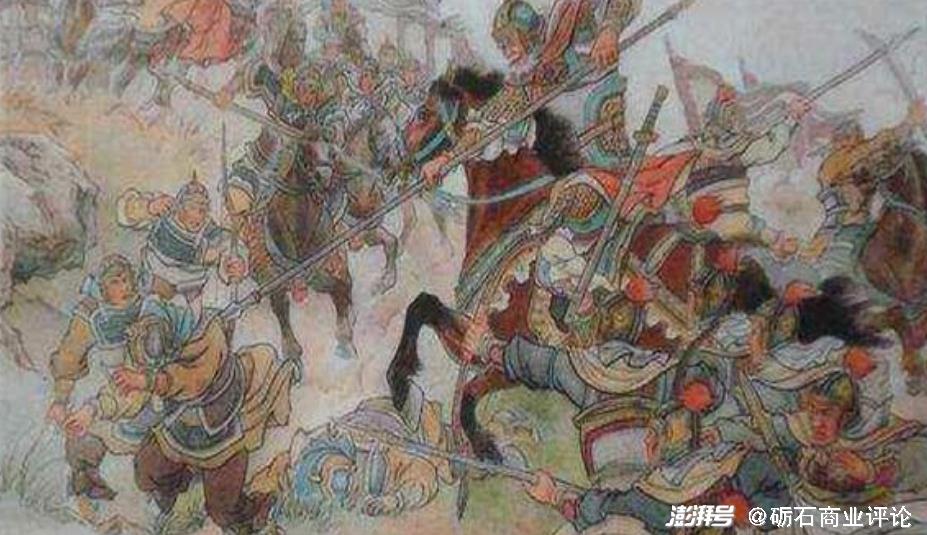
Expert: I have had flu-like symptoms recently. It is recommended to get flu vaccine as soon as possible after recovery.

  People’s Daily Online, Beijing, December 10 (Reporter Qiao Yeqiong) Today, the National Health and Wellness Commission held a press conference to introduce the prevention and treatment of respiratory diseases in winter and answer questions from reporters.

  At the meeting, a reporter asked whether the flu vaccine should be continued if the flu-like symptoms have already appeared, but they have not been diagnosed and recovered by themselves. When should I be vaccinated?

  In this regard, Xia Gang, director of the Department of Health and Immunity of the National Bureau for Disease Control and Prevention, said that if flu-like symptoms have already appeared, it is still recommended to continue to vaccinate against influenza after being diagnosed and recovering.

  Xia Gang explained that, first, the symptoms of respiratory tract infection are not specific, and flu-like symptoms such as fever and headache may occur in various pathogenic infections. However, these symptoms are not necessarily caused by influenza virus, but also by other pathogens, the most common being the common cold. Second, there are many types and subtypes of influenza virus that can cause epidemic. For example, there are both A and B, and in A, there are both H1N1 subtype and H3N2 subtype. After being infected with a certain type or subtype, there may be the risk of being infected with other types or subtypes. Influenza vaccine is a multivalent vaccine covering many different types and subtypes, which are commonly used trivalent and tetravalent vaccines. If you are vaccinated after being infected with a certain type of influenza, which contains other types of influenza components, you can still play a role in preventing this type of influenza.

  Xia Gang said that in addition, in the same epidemic season, different types and subtypes are usually prevalent together. For example, at present, influenza A (H3N2 subtype) is the main strain, followed by influenza B. In the past, there have been cases in which the dominant strains gradually changed from one type to another in the same epidemic season. Therefore, even if flu-like symptoms have appeared recently, it is recommended to get flu vaccine as soon as possible after recovery, especially for key groups such as the elderly. Vaccination can reduce infection and reduce the risk of severe illness and death.

Beijing: From 2024, six art majors will implement the city-wide unified examination.

  Beijing Education Examinations Institute issued the Notice of Beijing Municipality on Further Strengthening and Improving the Enrollment of Art Majors in Colleges and Universities yesterday. In 2024, Beijing will fully implement the unified professional examinations for six art majors, including music, dance, performance, broadcasting and hosting, art and design, and calligraphy.

  According to Beijing Education Examinations Institute, the city adheres to education-oriented, classified guidance, fairness and justice, further promotes classified examinations for different majors, and improves the quality of talent selection. By 2024, it will establish an enrollment system for college art majors based on the unified college entrance examination, with the unified professional examinations in the city as the main body, based on the cultural achievements of the college entrance examination, professional examination results, with reference to students’ comprehensive quality evaluation, classified examinations, comprehensive evaluation and multiple admissions, which will basically form a fair, scientific talent selection and strong supervision.

  Art majors in colleges and universities implement the evaluation method of "cultural quality+professional ability"

  In terms of improving the professional examination methods, the city has vigorously promoted the classified examination of art majors. The enrollment of art majors in colleges and universities adopts the examination evaluation method of "cultural quality+professional ability". The cultural quality uses the examination results of the college entrance examination and the professional ability uses the examination results of the artistic professional ability. The art professional ability examination includes the city-wide unified examination and the college examination, and the classified examination is implemented according to the requirements of selecting and cultivating different art professionals. The city’s unified examination is organized by Beijing Education Examinations Institute, and the college examinations are organized by relevant universities.

  At the same time, the city will improve the city-wide unified examination system for art majors. According to the requirements of the relevant documents of the Ministry of Education, we will study and formulate the unified examination methods for art majors in the city, and by 2024, we will fully implement the unified professional examinations for six art majors, including music, dance, performance, broadcasting and hosting, art and design, and calligraphy. Improve grading methods, strengthen grading management, and enhance the discrimination of examinations to meet the needs of talent selection in colleges and universities of different levels and types.

  The number of on-site school exams does not exceed 6-mdash of the enrollment plan of related majors; 8 times

  In addition, the "Notice" also clearly stipulates that the scope and scale of school examinations should be strictly controlled. For the art enrollment majors that have been covered by the unified examination in this city, in principle, colleges and universities enrolling students in Beijing should directly adopt the results of the unified examination. For a few art colleges with distinctive professional characteristics and high quality of personnel training, and high-level art majors with high requirements for candidates’ artistic talent, professional skills or basic skills, they can apply for organizing school examinations on the basis of the city’s unified examinations according to procedures. Colleges and universities in Beijing that organize school examinations should actively take online examinations or use the results of provincial unified examinations for primary elections, and strictly control the number of on-site school examinations. In principle, it should not exceed 6-mdash of the enrollment plan of relevant majors; Eight times.

  The "Notice" also mentioned that it is necessary to improve and perfect the selection mechanism for appraisers. Expand the selection scope of appraisers, establish and improve the information database of appraisers in art majors, and promote the co-construction and sharing inside and outside Beijing. Optimize the composition of examiners, gradually increase the number of examiners, and expand the proportion of off-campus personnel outside Beijing to more than half. Explore the gradual establishment of a declaration system for the special relationship between examiners and candidates in art professional examinations. All examiners and candidates who are guided, guided or have relatives and other interests within the specified time shall declare as required, and strictly implement the avoidance system.

  From 2024, high-level art troupes in colleges and universities will no longer be selected from the enrollment process of colleges and universities.

  In improving the enrollment mechanism, it is clear that we should improve the enrollment methods. Art majors that use the results of the city’s unified examination as their professional examination results should be admitted to parallel volunteer on the basis that both the scores of the college entrance examination and the unified examination have reached the minimum control score line for the admission of art majors in this city, and the proportion of the scores of the college entrance examination and the city’s unified examination is not less than 50% in principle. The art majors that organize the school examination will be selected according to the candidates’ school examination results on the basis that the candidates’ scores in the college entrance examination and cultural courses reach the minimum control scores for the batch admission of ordinary majors in this city, the results of the city’s unified examination are qualified and meet the minimum performance requirements set by the school.

  Since 2024, art majors such as art history, drama, film and television literature in colleges and universities have been selected according to the results of the cultural courses in the college entrance examination and the comprehensive quality evaluation of candidates. Except for the art majors that organize school examinations, all art majors should arrange provincial enrollment plans. Since 2024, high-level art troupes in colleges and universities will no longer be selected from the enrollment process of colleges and universities, but will be selected and trained by relevant colleges and universities from the students.

  Gradually improve the admission scores of cultural courses in college entrance examination for art majors.

  It is also clear in the Notice that the requirements for cultural achievements should be gradually raised. According to the requirements for the selection and training of talents of different art majors, the minimum control scores for the admission of cultural courses in the college entrance examination of art majors should be classified and gradually improved (the requirements for dance majors and performance majors can be appropriately lowered), and the tendency of "emphasizing majors over culture" in the selection of talents of art majors in some colleges and universities should be gradually reversed. Colleges and universities that organize school examinations can formulate exceptional admission methods for the scores of cultural courses in the college entrance examination in accordance with relevant regulations for a very small number of candidates who have excellent professional examination results or outstanding talents and performances in related professional fields.

  The "Notice" emphasizes strengthening the standardized governance of art education and training institutions, and severely cracking down on illegal activities such as training institutions organizing or participating in cheating in exams and interfering with the enrollment order of exams.

  Text/reporter Wu Wenjuan

Changsha FAW-Volkswagen CC price reduction news, a discount of 60,000! Today’s juhui

On the [car home Changsha Preferential Promotion Channel], we brought an exciting news: the high-profile luxury car-an unprecedented preferential activity is under way. As a car model deeply loved by consumers, at present, in Changsha, the maximum discount amount is as high as 60,000 yuan, and the minimum starting price has been adjusted to an attractive 189,900 yuan. This undoubtedly provides consumers in Changsha with an excellent opportunity to buy a car. Want to seize this rare preferential opportunity and experience the charm of FAW-Volkswagen CC as soon as possible? Please be sure to click the "Check Car Price" button in the quotation form to get the latest and most favorable car purchase conditions.

长沙一汽-大众CC降价消息,优惠6万!今日钜惠

FAW-Volkswagen CC is deeply impressed by its dynamic design. The front face adopts a family-style design, and the angular air intake grille and LED headlights complement each other, creating a strong visual impact. The overall body lines are smooth, elegance and strength coexist, showing the elegance of an advanced sports car.

长沙一汽-大众CC降价消息,优惠6万!今日钜惠

FAW-Volkswagen CC creates an elegant and dynamic profile with its slender body size, specifically, the length of 4865mm, the width of 1870mm and the height of 1459mm, and the wheelbase of 2841mm. The front and rear wheel tracks are 1586mm and 1572mm respectively, which ensures good driving stability. Its tyre size is 245/45 R18, and the matching of tire and rim shows its athletic performance and exquisite feeling. On the whole, the side lines of FAW-Volkswagen CC are smooth and powerful, providing excellent visual enjoyment for drivers and passengers.

长沙一汽-大众CC降价消息,优惠6万!今日钜惠

The interior design of FAW-Volkswagen CC focuses on luxury and technology, and adopts an exquisite leather steering wheel, which provides manual up and down+front and rear adjustment functions to ensure the comfort and convenience of drivers. The 9.2-inch central control screen stands in the center of the instrument panel, equipped with advanced voice recognition control system, which supports multimedia, navigation, telephone and air conditioning operations. The seat is made of leather /Alcantara, which is comfortable and rich in texture. The main and auxiliary seats are equipped with front and rear, backrest, height adjustment and lumbar support functions, and the main seat also provides additional heating function. At the same time, the car is equipped with USB and Type-C interfaces, with three in the front row and two in the back row to meet the multimedia needs and charging needs of passengers.

长沙一汽-大众CC降价消息,优惠6万!今日钜惠

For FAW-Volkswagen CC, its 2.0T engine can output the maximum power of 137 kW and the maximum torque reaches 320 Nm. This engine is equipped with 186 horsepower and 7-speed wet dual-clutch gearbox, which provides drivers with strong power performance and smooth driving experience.

To sum up, car home car owners are full of enthusiasm and satisfaction with the evaluation of FAW-Volkswagen CC. He particularly emphasized the dynamic performance of the vehicle, saying that the power surge in Sport mode met his driving needs. In terms of appearance, he is obsessed with the unique sliding back body and borderless door, which makes him feel proud every time he opens the door. Such praise has undoubtedly added more charm and attraction to FAW-Volkswagen CC, making it an ideal car integrating power and aesthetics.

22 Land Rover Range Rover Executive Eurocode P400 Tianjin Port 1.28 million

  The appearance of 22 executive cars is sharp and sharp, and all of them show unparalleled leadership temperament. The coordination and design of headlights, bumpers and aluminum decorative parts make tough straight lines glow the whole body.

  22 Range Rover Executive 3.0 Gasoline P400 Plus Edition Color: Black/Black 1.268 million

  Configuration: HSE, all-in-one black, visual aid, head-up display, driver’s aid package, 360-ring car image, radar ranging, 825W audio, front seat massage, front and rear seat ventilation and heating, four-wheel drive air conditioning, air purification, refrigerator, second-generation terrain feedback, windshield heating, 22-inch diamond wheel hub, black piano wood interior, mahogany steering wheel and trailer package.

  The overall interior of 22 Land Rover Range Rover Executive 3.0T gasoline is close to the direction of "luxury", which combines the characteristics of SUV and the essence of luxury car. Everything that can be touched and touched in the car reflects Land Rover’s perfect pursuit of details, and the personalized interior design echoes the appearance, which makes the body exude a confident, calm and poised king temperament.

  The rear row of the 2 Land Rover Range Rover Executive 3.0T gasoline is basically unchanged, with ample seating space and no problem for four adults at the same time. The whole vehicle seat is wrapped in top-grade leather, but instead of using high-grade Oxford perforated leather like the old one, it is replaced with perforated Windsor leather, adopting a new seat style, and the whole interior will bring you a brand-new feeling, and the padding is also sufficient, so the seat is very comfortable and supportive.

  The 22 Land Rover Range Rover Executive Edition is equipped with a V6 3.0T engine with 400 horsepower L6 and an 8-speed automatic manual transmission. The body size is 5020*2073*1868mm, the maximum speed is 225, the acceleration per 100 kilometers is 6.5s, the comprehensive fuel consumption is 8.8L, the wheelbase is 3120mm, the fuel tank volume is 104L, the maximum power is 294, and the maximum power speed is 5500-6500.

  Our company promises: We won’t make the lowest price in the market, the lowest price is not guaranteed, the highest price is not guaranteed, and the highest price is unfeeling. We only earn what we should earn, pay what we should, do things seriously, and win-win cooperation. If we cooperate with you, we can’t guarantee that you will spend the least money. I can guarantee that you will save the greatest heart and get the situation of quality, efficiency, interests and win-win. We look forward to the cooperation of every new and old customer! Serve with your heart and pass on trust! I am willing to cooperate with you for a long time!

  Cao Yi’s telephone number is 15122436666 with WeChat.

  Disclaimer: The above car purchase preferential information is provided by the comprehensive dealers of this website, and the price fluctuates greatly due to market factors, which is only for car purchase reference; The distributor is responsible for its authenticity, accuracy and legality, and this website does not provide any guarantee or assume any legal responsibility.

Liu Qingyun exposed that "Detective War" was difficult to play, and Ah Sa invited Joey Yung to help out

1905 movie network news On the evening of July 6, the film premiered in Beijing. The director, director, and other creators interacted with the audience through an online meeting. The heroine, Ah Sa, also appeared in the previous live broadcast.


The story of "Detective Wars" revolves around Liu Qingyun’s role as "Detective Crazy". In serial murders, preview murders and other incidents, he and the "Detective Couple" composed of Ah Sa and Lin Wei engage in fierce confrontations.


The plot of the film is ups and downs and confusing, and Liu Qingyun also exchanged notes of "I am a madman" and "I am a detective" to "confuse" the audience at the scene. When it comes to the shooting of "Detective War", he bluntly said that many scenes were very impressive, but the most memorable is the war at the end. He has been tearing this important scene before shooting, and it is very difficult to complete how to control the emotions and how to bring them in. It seems that the acting skills of "Crazy Guy" are also a great test for Liu Qingyun.


Ah Sa, who is on vacation, also helped out for the new film "Detective War" through live broadcast. Gillian, who is on vacation together, also appeared in surprise to play Call for the film. Joey Yung also actively confessed to her idol Liu Qingyun, revealing that she has been a fan of Wei Jiahui and Liu Qingyun since "The Big Times". "When I debuted, I also wrote that Liu Qingyun was my idol, Prince Charming."


On July 8, "Detective War" will be officially released. As a crime suspense film, director Wei Jiahui also hopes that everyone will not spoiler and walk into the theater to experience this exciting story together.


Beijing BJ60 in Beijing area is being discounted, and the discount is 30,000! Great discount today

In the [Autohome Beijing Discount Promotion Channel], this much-watched SUV model is ushering in a strong promotion. At present, the car series is attracting buyers with a maximum discount of 30,000, and the minimum starting price has been adjusted to 209,800 yuan. This undoubtedly provides consumers in Beijing with a very competitive car purchase opportunity. For more details or to get higher discounts, just click the quotation form below to check the latest car pickup price in real time and seize this rare car purchase opportunity.

北京地区北京BJ60正在优惠,优惠3万!今日钜惠

The exterior design of the Beijing BJ60 draws on the essence of classic and modern. The front face part adopts a tough and atmospheric shape, and the large air intake grille adopts a family-style polygonal design. With a wide front bumper, it shows a strong sense of visual impact. The overall style combines off-road and urban elements, with smooth and muscular lines, highlighting the hard-edged temperament and practicality of the BJ60 as an SUV.

北京地区北京BJ60正在优惠,优惠3万!今日钜惠

The side lines of the Beijing BJ60 are smooth and powerful, the body size is quite atmospheric, the length, width and height are 5040mm*1955mm*1925mm, and the wheelbase reaches 2820mm. The front wheelbase is 1620mm and the rear wheelbase is 1640mm, which ensures good stability. The double 18-inch wheel design, with 265/65 R18 size tires, not only enhances the visual impact of the vehicle, but also provides good grip and comfort for driving. Overall, the side design of the Beijing BJ60 highlights its hard-nosed off-road style, while balancing practicality and aesthetics.

北京地区北京BJ60正在优惠,优惠3万!今日钜惠

The interior design of the Beijing BJ60 combines attention to detail with a sense of luxury. It uses delicate leather materials to create a steering wheel, providing a good grip and handling experience. The 12.8-inch central control screen stands in the center of the cockpit, with a clear interface and advanced automatic speech recognition control system, which is convenient for the driver to easily operate multimedia functions. As for the seat, the main driver’s seat supports multi-directional adjustment of front and rear, backrest, height, leg rest and waist support, and is equipped with heating, ventilation and massage functions to enhance the ride comfort. The passenger seat also has a number of adjustment options, and the driver’s seat also has a power seat memory function, providing passengers with a personalized ride experience.

北京地区北京BJ60正在优惠,优惠3万!今日钜惠

The Beijing BJ60 is equipped with a 2.0T engine with a maximum power of 120 kilowatts, providing 163 horsepower output, and its torque performance is also quite strong, reaching 400 Nm. This engine, combined with an 8-speed automatic transmission, not only ensures a smooth driving experience, but also brings efficient performance.

In the feedback from Autohome owners, the interior design of the Beijing BJ60 undoubtedly adds a sense of warmth and luxury to family life, and the lighting of the ambient light at night has won the car owners’ deep love. The elegant interior materials and the comfort of the seats are impressive. Whether it is the thickness of the seat or the heating function, it has been highly praised by the car owners. The air conditioning performance is also excellent, and it can respond quickly to both cooling and heating to meet various climate needs. Although the legroom in the second row is slightly compact, overall, the car owners are very satisfied with the comfort of the Beijing BJ60 and the effect of the interior ambient light, and think it is particularly charming and impressive at night.