Kangxi and Changchun Garden
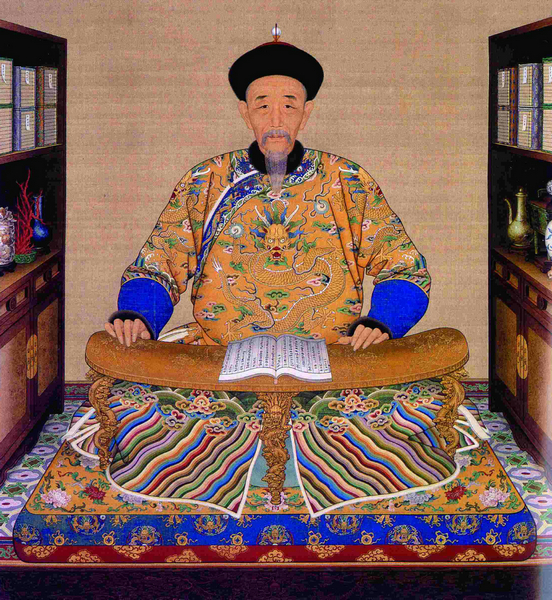
Portrait of Emperor Kangxi

  Since February 22nd, 26th year of Kangxi (April 3rd, 1687), Emperor Xuanye of Kangxi lived in Changchun Garden for the first time, he loved this beautiful imperial garden very much. I came to the park for 44 days that year. According to the statistics of relevant scholars, Xuanye has lived in Changchun Garden every year since then, with the least year being the thirty-fifth year of Kangxi (1696) and 29 days. The most is the forty-seven years of Kangxi, which lasted for 202 days. Most of him came to the suburban garden after handling the important ceremonial banquet in the first half of the first month, and he lived in Changchun Garden eight times on the second day of the first month. Usually, I have to stay in November or even late December before I leave the park and return to the palace. Among them, I left the park for eight times from the 25th to 28th of the twelfth lunar month. Of course, quite a lot of time was spent visiting Jiangsu and Zhejiang in the south, paying homage to the ancestral tombs in the east, visiting Wutai in the west and the paddock in the north, and not all of them lived in Dianyuan. Xuanye’s birthday is March 18th, and he spent the Wanshou Festival in Changchun Garden for 24 times. Until he died of illness in Qingxi Bookstore in Changchun Garden, he lived in Changchun Garden for 257 times in 36 years, totaling more than 3,870 days.

  The main content of Xuanye’s life in Changchun Garden is to avoid noise and listen to politics, to support himself and enjoy the scenery in summer. In addition, there are festivals to celebrate, banquets to give food, trees to spread the world, and parents to teach children.

  Avoid noise and listen to politics

  Daily government affairs include selecting officials, introducing people, reading and approving books, summoning ministers, and discussing orders. During his stay in Chang Chun Garden, Emperor Kangxi spent almost every day in Lian Ning’s residence listening to political directors and handling all kinds of government affairs. For example, Emperor Kangxi was stationed in Changchunyuan for the first time in the 26th year of Kangxi, and he went to the inner gate of Changchunyuan three times in nine days, that is, he took charge of the government inside and outside the Hall of Nine Classics and Three Events. Another example is: Around 30 to 36 years of Kangxi, many political affairs of personal expedition to Junggar were agreed in Changchun Garden. Another example is: I lived in the Imperial Garden for thirteen days from the first day to the thirteenth day of December in the fifty-fourth year of Kangxi (1715), and lived in the court for six days, and handled dozens of matters that needed to be decided. On the first day of junior high school, nine urgent problems were solved in succession. The last one is about Cao Yin and Li Xu’s debt to silver.

  And meet foreign envoys. For example, in the forty-fourth year of Emperor Kangxi (1705), Emperor Kangxi received the special envoy of the Holy See, Dorothy, in Changchun Garden, without kneeling and giving him a seat. He also ordered people to take gifts from the imperial court and go to Rome to answer for employment. On the Mid-Autumn Festival the following year, Kangxi called the Roman special envoy Doro into the garden to give food and watch the lights. Please invite Doro to visit Changchun Garden in five months. Another example is: In the fifty-ninth year of Kangxi (1720), the envoy of the Western countries (Portugal) Pei Lali came to the DPRK, and Xuanye received and gave tea in the Hall of the Nine Classics and Three Events. Another example is: In the month of December 59, Kangxi received Karoku, the special envoy of the Holy See, eight times in Qingxi Bookstore in Changchun Garden, and received gifts from the Pope and presented gifts to the Pope and the Portuguese king. In the meantime, Karoku was also given a sable gown, snuff bottle, sable crown, blue robe, enamel bowl and other things and given a banquet.

  And watch martial arts. Since the forty-fifth year of Kangxi (1706), Emperor Kangxi has been able to watch the martial arts players riding and shooting in the West Factory in Changchun Garden in October or November. Sometimes, a ceremony of biography is held in the park, and the first place of Jinshi, such as Wu Zhuangyuan, is promulgated. For example, in the fifty-fourth year of Kangxi (1715), from November 13th to 16th, Emperor Kangxi came to Changchunyuan West Factory to read the martial arts. Leading the guards’ ministers, reading officials, university students’ loose columns, etc., arranged in a row, and the emperor rose to sit down. Before the assistant minister of the Ministry of War Jue and others entered, 170 people, including Xu Slow, who played martial arts, were divided into 11 classes to test their riding and shooting. The emperor ordered the ministers to sit down. So read Xu Shu and others, ride and shoot in turn, and remember the best. After reading the test, the emperor ordered the princes to ride and shoot. The next day, I continued to read and try to shoot with steps, pull hard work, dance knives and throw stones. On the third day, we continued to test fire in the West Factory. Select 15 best candidates from the martial arts and repeat them, and divide them into different grades. Ministers will select the top three of the 15 people as A, the other 12 as Dimethyl and the rest as Top Three, and present the papers of 15 people.

  study science

  During the Ming and Qing Dynasties, it was the first climax of cultural exchanges between China and the West, also known as the first spread of Western learning to the East. During this period, Emperor Kangxi came into contact with some missionaries who were familiar with western science and technology, and he began to have a strong interest in western science and technology. Bai Jin, a French Jesuit, recalled in his book: "Kangxi studied western science with great interest, spending several hours with us every day, and spending more time on self-study during the day and night." At this time, Emperor Kangxi had dimly realized the importance of natural science. In order to cultivate talents specializing in astronomical observation and natural science and compile large-scale scientific and technological works, he set up a Mongolian-supported vegetarian and mathematical museum in Changchun Garden. This was called "Royal Academy of Sciences" by French missionaries.

  Emperor Kangxi studied very hard and had a wide range of knowledge. He dabbled in human geography, calendar, arithmetic, hundred schools of thought, medicine, natural science, Buddhism, Confucian classics and Taoist books, and was a generalist. There are three sources of knowledge in Kangxi: First, Manchu culture. As the emperor of Manchu, learning the culture of his own nation is a basic accomplishment. Kangxi followed the Manchu master to speak Manchu, learn Manchu and practice riding and shooting. The second is the Han culture. As a minority ruler who entered the Central Plains, in order to gain the recognition of the Han people, Kangxi studied Confucian classics with the Han master, read a lot of historical books, became familiar with the Confucian "study of emperors" and was influenced by Confucian culture. The third is western technology. European Catholic Jesuits came to China to preach, bringing advanced western science, technology and knowledge. Emperor Kangxi, with an open mind, invited Zhang Cheng, Bai Jin and others to Changchun Garden many times to teach western science: mathematics, astronomy, engineering, surveying, medicine and even human anatomy. For example, on the eighth day of March in the 28th year of Kangxi (1689), Emperor Kangxi called Zhang Cheng, a French missionary, to teach geometry at Qingxi Bookstore in Changchun Garden. Looking for Zhang Chengfu to teach in the park many times.

  The establishment time of Mengyangzhai Mathematics Museum was the second day of June in the fifty-second year of Kangxi (1713). It is clearly recorded in Records of the Holy Father of Qing Dynasty that in June, Ding Chou "ordered Prince Yin Zhi of Shuocheng to set up a museum in the palace". However, the research scope of Meng Yangzhai is not limited to mathematics, but also calendar and music. In September of the fifty-second year of Kangxi, Emperor Kangxi issued another decree: "Yu and Prince Yin Zhi of Shuocheng, etc., compiled books on the algorithm of Lu and Lv, wrote a library in Mengyangzhai, and tested the musical instruments in the temple and palace." In October of the 58th year of Kangxi (1719), Wang Lansheng, a juren from Mengyangzhai, was ordered to write "Positive Rhyme".

  Mengyangzhai Mathematics Museum has translated more than a dozen Manchu-Chinese mathematics books, such as Geometry Original, Proportion Solution, Usage of Measuring High Instruments, Eight-line Table Roots, Method of Pythagorean Seeking, Excerpt of Borrowing Roots Algorithm, Record of Western Mirrors, etc., and has also completed works such as The Origin of Laws and Calendars, and trained a number of people such as Mei Juecheng, Minggatu and He Guozong. It also promoted the almanac and geographical mapping of the whole country.

  As early as the first day of October in the fifty-first year of Kangxi (1712), Emperor Kangxi "instructed the third son of Emperor Huang and Prince Yin Zhi of Shuocheng, etc.: the height of the North Pole and the distance from Huang Chi are the most important in the calendar, and they should be measured daily after living in Lianning". And immediately got a few princes to play back. In November of the same year, Prince Ying Cheng invited him to send someone to Guangdong, Yunnan, Sichuan, Shaanxi, Henan, Jiangnan and Zhejiang provinces for surveying and mapping.

  Unfortunately, out of the need of rule, Emperor Kangxi only recruited students from the Mongolian Institute of Arithmetic in a small area such as the palace, which was not popularized among the people, and the advanced western science and technology failed to play its due role in the whole country. With the end of the Kangxi Dynasty, the study of Sino-Western communication also ended, and China missed a historical opportunity of innovation in science and technology.

  Editing and editing books

  Kangxi loved not only reading books, but also compiling books. It can be said that the compilation and publication of books is a major feature of Kangxi’s Wen Zhi, and Kangxi paid special attention to China’s traditional culture. When he lived in Jingxi Garden, he presided over or organized the compilation of many series of books, which made great contributions to the construction of Chinese traditional culture.

  Compile the hadith. On the 10th day of August in the 21st year of Kangxi (1682), when Kangxi was stationed in Yuquan Mountain, he approved the invitation of Dai Wangyu, an imperial historian of Fujian Road, to compile the sacred instruction of Emperor Taizong Gao, Emperor Taizong Wen and Emperor Sezuzhang, and thought: "The sacred instruction of Taizu, Taizong and Sezuzhang is of great significance and should be compiled." In the twenty-fifth and twenty-sixth years of Kangxi, four volumes of the Hadith of Emperor Taizong Gao, six volumes of the Hadith of Emperor Taizong Wen and six volumes of the Hadith of Emperor Shizuzhang were successively completed.

  Yuanjianzhai is the place where Emperor Kangxi advocated and guided the compilation of vast ancient books in Changchun Garden. Here, Emperor Kangxi ordered Xu Qianxue to compile and annotate Yuan Jian, and organized Zhang Ying, Wang Shi and others to compile a large-scale book, Yuan Jian Lei Han.

  Yuan Jian of Imperial Selection of Ancient Chinese Literature is an anthology of ancient Chinese literature. Among them, there are more than 1300 articles by nearly 800 authors from the Spring and Autumn Period to the Song Dynasty. Each article is printed on the top of the book, and the ministers are attached to it. The capital of each article has Xuanye’s royal approval, and each article has the emperor’s introduction and comments on the article. There is a preface written by Xuanye in front of the book.

  Yuan Jian lei Han is a kind of book that focuses on checking the rhetoric of articles. Zhang Ying, Wang Shi and others further expanded the scope of collection on the basis of the book Tang Lei Han in the Ming Dynasty, making the book more comprehensive and complete in time. The book, with 445 volumes, was published in 1710 by Xuanye himself.

  Peiwenzhai is the hall where Emperor Kangxi collects ancient and modern books and paintings, the painting and calligraphy room where he reads, appreciates paintings and calligraphy, learns books and practices calligraphy, and the workshop where he compiles books and paintings. Based on Peiwenzhai, Emperor Kangxi carried out a large-scale and continuous compilation of poetry, calligraphy and painting. Among them, the books with the title of "Pei Wenzhai" include Selected Poems about Objects of Pei Wenzhai, Prose of Guang Qun of Pei Wenzhai, Prose of Paintings and Calligraphy of Pei Wenzhai and Pei Wenyun House.

  Be nurtured by others

  Kangxi once said: "When I was in the womb, I told the Pope Prince that I was alert to the classics, diligent in raising my life, studying the classics every day, making me recite them, and reuniting with my relatives to explain them. I never stopped asking questions." Wang Shizhen’s "Continuation of Juyi" also records: "When I was in the palace, I taught the four books and five classics for the East Palace. Before I served the imperial gate every day, I had to recite and repeat the books I had given the day before, so that I could get through be adept at." It was not until June, the 26th year of Kangxi (1687) that Xuanye chose three masters for the princes: Shang Shu Da Hata, Tang Bin and Shao Zhan Shi Geng Jie, and obtained the approval and support of the scholars Mingzhu and Wang Xi. Xuanye’s selection of teachers is very strict, which requires both profound knowledge and noble morality. He also selected Brinton, Xiong Cilv, Li Guangdi, Xu Yuanmeng, Gu Eight Dynasties, Fahai and others as the master of the Prince, all of whom lived in Confucianism.

  On the seventh day of June, the 26th year of Kangxi, Xuanye summoned three masters, namely Dahata, Tang Bin and Geng Jie, while the Crown Prince and the Prince were on standby, and the ministers, guards and residence officials were left and right. The emperor issued a decree: "Since ancient times, emperors have always taken pre-education and saving two as the foundation of their country. I am afraid that the Crown Prince will not be knowledgeable, that is, he will not be able to understand the body, but will be diligent in teaching and training since childhood, so as not to make a day of leisure … The Crown Prince never knows anything but reading and playing. ….. You are well-known abroad, and we hereby order you to discipline the East Palace. " Regarding the subjects of study, he said: "I sincerely know the family precepts of my ancestors, and the civil and military affairs are in parallel, and I dare not neglect riding and shooting. Therefore, the crown prince and the prince are taught poetry books, and they are also taught to ride and shoot." Although Tang Bin repeatedly refused to say that he could not shoulder this heavy responsibility, he still failed to change the emperor’s decision.

  From the ninth day of the ninth lunar month, the Crown Prince and the princes began to study in Wuyizhai under the guidance of three masters. Degele and Peng Sunqi, officials of Juju Notes, wrote down the learning situation of the princes in Wuyizhai: In the early morning, the Crown Prince and the princes were studying in Wuyizhai, reading several sections and a chapter on the classics. Tang Bin held a book and listened to the Crown Prince recite it without leaving a word. Read a new book again. The crown prince wrote a piece of regular script, about hundreds of words. At dawn, the emperor arrived and rose to the throne. Ask the Juzhu official: How does the prince study? Yes, "the prince is rich in quality and profound in knowledge." Xuanye made a comment: "If you can’t read, you think you can read, you can’t talk, but you think you can talk. If this person is not human." After the emperor returned to the palace, the Crown Prince wrote another piece of regular script. After lunch, the Crown Prince wrote a piece of paper in full, that is, reviewed the Book of Rites and the classics, and read them one hundred and twenty times each. At this time, the emperor came to Wuyizhai again, and the Crown Prince Yun Wan, the eldest son Yun Wan, the third son Yun Zhi, the fourth son Yin Zhen, the fifth son Yun Qi, the seventh son Yun You and the eighth son Yun You? Stand by. The emperor took out ten Yu Ben from the case and handed it to Tang Bin, saying, "You can take it out by hand and let the princes read it." Tang Bin opened the scriptures, and Yun Zhi, Yin Zhen, Yun You, and Yun Yu went in first, and each reading was loud and clear. He also ordered me to explain the chapters of "Knowing the Things" and "The Analects of Confucius", which were word for word and integrated with the righteousness. The emperor ordered Yunqi to read a Manchu article with clear paragraphs and bright sentences. The emperor said: "I must study at the rate of 120 times when I was young. If I don’t cover it like this, I can’t be overwhelmed. Therefore, it is the same for teaching princes and princes to study." He also said,He often erases the words of the Crown Prince, adding few words and never adding circles. The emperor asked the master and the near minister to write, and the handwriting of Tang Bin and Geng Jie was very common. The emperor personally sprinkled Chen Han, and wrote a seven-character poem by Song Rucheng and a piece of paper with the words "Cun Cheng". The beautiful silk characters, vigorous Chinese characters, all have statutes, and all the ministers are full of praise. Later, the emperor led all the scholars to practice archery, and personally pulled the bow and arrow, and all the shots were successful; I also ordered the ministers and guards to learn to shoot. At this time, it was dusk, and the all-day study of the Crown Prince and the princes came to an end. The emperor also went back to Qingxi Bookstore. After such continuous study, the Crown Prince and the princes have a high level of culture and Manchu language and writing, and they are not only familiar with ancient China classics, but also have a high level of painting, calligraphy and riding. Later, the Crown Prince moved to the West Garden to live and study, and the princes also moved to No.4 Lotus Pond in the south of the West Garden.

  Planting rice for rain

  In the Qing dynasty, the rulers attached great importance to agricultural production, which was regarded as the foundation of national stability. Kangxi once planted imperial rice in Changchun Garden and promoted it vigorously. The rulers also paid special attention to the rainfall situation that directly affected agricultural output, and carried out rain-seeking activities in Haidian area.

  As a spring-rich place in the west of Beijing, Haidian has a long tradition of planting rice. In the early years of Kangxi, Prince Dan Zhen, the owner of the garden in tsinghua campus, changed the lotus pond in the garden into a paddy field, and the annual profit could reach hundreds of taels of silver. Kangxi’s earliest activity in the western suburbs was to watch the growth of rice in the west of Beijing. During the construction of Changchun Garden, Emperor Kangxi set aside a paddy field in the west wall of Changchun Garden to test and cultivate excellent rice seeds himself. From Wuyizhai Tushan to the north, until Daximen, located in the northwest of the garden, there are about hundreds of acres of fields, which is the "experimental field" for Kangxi to plant imperial rice. According to "Kangxi’s Collection of Leisure Things", rice seeds are early rice selected and cultivated by Kangxi himself, named "Imperial Rice". It is also called "rouge rice" because its rice awn is lavender, its rice grains are reddish and long, its smell is fragrant and its taste is poor, and it can be cooked twice a year. This is also the originator of "Jingxi Rice" in Haidian District.

  In the fifty-third year of Kangxi (1714), the imperial rice at the foot of Yuquan Mountain grew to 600 mu, plus Liulangzhuang, Wanquanzhuang, Heilongtan, Gaoliangqiao, Shijingshan and Nanyuan, totaling nearly 10,000 mu. The planting range of imperial rice has not only been further expanded, but also the area has increased several times, and it has become the main source of imperial rice in the court. In order to ensure the production of royal rice, in the same year, Fengchenyuan, the Ministry of Internal Affairs, set up a "rice field factory" in Qinglong Bridge to manage royal rice fields.

  There are sixty-four rice paddies, which are government offices, warehouses and mills. At the same time, there are two official places, one in Gongde Temple and the other in Liulangzhuang. "Yongxian Record" said: When Kangxi was in Kangxi, "it served imperial meals, saying that it served imperial rice and went out to the western hills of the capital", and Changping Prefecture produced rice everywhere, but Yuquan Mountain was better than Yuquan Spring, so rice was needed. The "Qing Hui Dian" also records: "The jade grains above are taken from the rice fields of Yuquan Mountain."

  In the later period of Kangxi’s rule, the society was stable and the population began to increase sharply. Kangxi was deeply worried about this population expansion: "Since the unification of the area, in 678 this year, all the people have enjoyed peace, and the fertility has increased day by day. Although the registered permanent residence has increased, the land has not increased. If one person’s property is used by several families, how can he make a living?" The rapid population growth and predatory development have brought great pressure to the surrounding environment of Gyeonggi. The ecological environment has become extremely fragile, and floods and droughts have started to break out frequently. Therefore, in the middle and late period of Kangxi’s rule, emperors were more concerned about sunny and rainy days, and more and more words were found in historical materials. For example, on June 25th, the 45th year of Kangxi (1706), during Emperor Kangxi’s tour to the north, Yin Zhi, the third son of Emperor Huang, invited the emperor to pay his respects, and made a special presentation on the rainy situation in the capital area: "There has been a lot of rain in the capital area, Changchun Garden, Cirja Camp and other places recently. Yu: There is enough rain here. " The feeling of concern is on the paper.

  The belief in praying for rain and sunshine by the dragon gods, which was valued by the rulers of past dynasties, was also maintained in the Kangxi Dynasty. As the most common measure to resist disasters, praying for rain was valued by Emperor Kangxi and included in the national sacrifice code. When Changchun Garden was built, Kangxi built the Longwang Temple in the garden as a special place to pray for rain. In case of drought, Kangxi often sent princes, county kings, Baylor, Beizi and ministers to the Longwang Temple to pray for rain. Each rain praying ceremony is very grand and has established procedures. For example, on May 13th, the forty-ninth year of Emperor Kangxi (1710), Yin Zhi, the third son of the Emperor, and others gave orders: At Longwang Temple in Changchun Garden, pray for rain as the twelve sons of the Emperor prayed for rain.

  The history of rice in the west of Beijing has a long history. According to historical records, Haidian, which is fertile and beautiful, began to build canals to grow rice during the Cao and Wei Dynasties in the Three Kingdoms, and it has a history of more than 1,700 years. According to the Records of the Three Kingdoms, in the second year of Cao Fangjiaping, the king of Wei Qi, Jing Liu stopped water to build a dam on the Luohe River (now Yongding River) and built a carriage canal. "Irrigation thistle (city) north and south, planting rice in the third night, and benefiting the border people." It was not until Guo Shoujing, a water conservancy scientist in Yuan Dynasty, opened Tonghui River, and sufficient water ensured the growth of rice, that farmers on both sides of the strait began to plant rice on a large scale.

  Kangxi was the emperor who really turned Jingxi rice into "Imperial Rice". Emperor Kangxi skillfully integrated the "pastoral scenery" shown by intensive cultivation into the garden landscape, which not only provided materials for life, but also created the artistic conception of pastoral life, so that garden dwellers could experience the seclusion interest of pro-farming. Emperor Kangxi attached great importance to agriculture, and with his support, the cultivation of rice in western Beijing was further developed. He also personally experimented, compared the rice between the north and the south, and cultivated excellent varieties as royal royal rice, and vigorously promoted planting. Even set up a rice field factory to manage these royal imperial rice.

  Kangxi once experimented with rice on the side of Fengze Garden in Zhongnanhai, Beijing, and sent people to plant a small experimental field under Yuquan Mountain, which was successful and later called "Jingxi Rice". In his poem "Early Imperial Rice", he wrote: "The purple awn is half a hectare of green and shady, and I love the early imperial rice. If you make the prescriptions more widely distributed, you may see the needles twice. " (Lu Qin’s Song of the Dragon-Poems of the Emperors in China) Here he expressed his heartfelt joy after watching the rice fields, and he longed for the rice area to expand constantly and strive to harvest twice a year.

  The whole story is like this: One day in June, when Kangxi was patrolling the rice fields in Fengzeyuan, he came across a rice that was "above the rice" and the grain was ripe. Originally, Yutian rice was planted here, and it will not mature until September of the lunar calendar, but this rice in front of us is two months ahead of schedule, which is beyond Kangxi’s expectation. He used it as a seed to try planting in the next year, and it really matured in June. This early-maturing new rice has reddish color and long grains, and tastes delicious. (See Kangxi’s Faulty Style) Because it was discovered and cultivated by Kangxi himself, it is called Imperial Rice. Later, people called it Jingdao.

  Kangxi’s poem "On the 11th of July when he was watching rice in Changchun Garden" also wrote: "In July, the purple mountain is fragrant with five miles, and the near-garden remains a species of Zhu Zhenxiang. Yan Fang and Saibei are all called Rui, and they are happy and happy. " July in the lunar calendar is equivalent to August in the solar calendar. Seeing the purple awn in the rice field is associated with the fragrance of a grain, which shows that he attaches great importance to rice. People in both the hot places in the south and the colder places in the north of Saibei praised the transplantation of this cereal crop as a good omen. In particular, it is a great wish to plant rice in the northern part of the Great Wall, which has become a reality through hard work.

  According to relevant documents, in the 42nd year of Kangxi, the Qing government built chengde mountain resort, and imperial rice seeds were first transplanted here, which was located in the north of the Great Wall. Generally, rice could not mature after the Millennium, but the imperial rice seeds matured before the Millennium, so the experiment was successful. So it opened a new record of planting rice north of the Great Wall. Kangxi once said: "The rice fields in the villa still have a surplus for summer use every year."

  Kangxi’s cultivation of rice can be said to be affectionate. Therefore, he has a specific description of the whole process of rice breeding, seedling pulling, transplanting, harvesting and ear picking, and all of them have persistent pursuit and deep desire. There is a detailed description in his group poem titled Farming Map:

  The first seedling: "A year’s farming is in the depth of spring, and the family is looking forward to the new year." I love the clear weather, and the green fields are thousands of hectares. " Pulling out the seedlings: "The green onions are full of water, and the transplanting of Xichou is even more furious. The order of the festival is shocking, and the seedlings must be divided into early summer days. " Transplanting: "There are thousands of beds in Shui Ze, and the competition for transplanting new seedlings is afraid of the future. The Asian brigade is happy to work together, and it is not too late to go home in the next month. " Harvesting: "Huang Yun is full of dew, and the waist sickle is blessed with rice. Children collect the ears everywhere, and every family in the village bears the burden. " Holding the ear: "Nanmu Qiu Lai celebrates Fucheng, but Qu Qu has not released the old peasants’ feelings. The frost rises from the neighborhood and listens to the sound of rice in the village. "

  Here is a series of scenes of farmers growing rice, with vivid language. Early seedling, describing farmers’ hard work in order to seize the farming season, "green fields are thousands of hectares", the scene is huge and quite imposing. Pull out the seedlings and describe the busy scene of rice transplanting. The paddy fields are full of thick green, showing a vibrant scene. Transplanting rice seedlings describes the scene of "Yalv" (small officials and village officials) working with farmers in the vast farmland, and the moon rises before returning home without complaint. The purpose of this hard work in Dai Yue is to get a good harvest. Harvesting depicts reaping with sickle, young and old doing their best, children picking up the ears of rice skillfully, and farmers returning with great strength, which sets off a jubilant atmosphere after a bumper harvest. Holding the ear outlines the scene of rice harvesting in the countryside, highlighting the feeling of hearing, and the joy of harvest is stirring everywhere in the village. Kangxi had personal experience in growing rice. His poems are not extraordinary masterpieces, but they are close to life and smell of earth. They are more lively and interesting than some literati who write poems by imagination in their study.

  In a word, Kangxi had a close relationship with Jingdao, which was unparalleled among hundreds of emperors in ancient China. His contribution is to promote the transplanting of rice to the north of the Great Wall and advocate the promotion of double-cropping rice in the south. The descendants of Kangxi, namely Yongzheng and Qianlong, also attached great importance to agricultural production. At the beginning of spring ploughing, Yongzheng and Qianlong held the ceremony of "borrowing farmland" in the small experimental field of "Fengzeyuan" successively, and demonstrated by themselves to help farmers. Yongzheng’s poem "Tillage" wrote: "Spring turns in Yuanji, and it is warm and comfortable in Jutz. The green dove cries for rain, and the yellow calf drives the plow at the beginning. There is no escape for every mu of people, and they dare to work hard. Care about the lessons and help the village market. " This poem expresses sincere desire for the hard work of farmers in the busy season of spring ploughing. There is a poem "Fengze Garden" in Qianlong: "After gardening, I will farm the fields, and the name of the garden is Fengze, Myanmar and Yaonian." Here, the layout of rice fields and vegetable gardens in Fengze Garden is described, and his concept of attaching importance to agriculture is expressed, which is quite meaningful to Sun Jizhu’s career.

  Dinner banquet

  In ancient China, a fine ethical concept of respecting the elderly and caring for the young was formed very early, and the older people are, the more respected they are by the society. Therefore, it often attracted the attention of feudal emperors in the past dynasties. In the "King System", there is a ritual system of respecting the elderly by emperors who "give sticks" to the elderly. Ren Fang (460-508), a famous litterateur in the Southern Dynasties, who was Cheng in the imperial history and the prefect of Yixing, once left a famous sentence: "Laojun still cares about his teeth, but he regrets this staff’s nostalgia" (see Answer to Jian ‘an Pay Staff). During the reign of Kangxi and Qianlong in the Qing Dynasty, the national strength was strong, which was called "the prosperous time of Kanggan" in history. The activities of respecting, respecting and loving the elderly were paid special attention to by Emperor Kangxi and Emperor Qianlong, so there were four grand and spectacular "thousand banquets" in history. In the fifty-second year of Kangxi, the sixty-first year of Kangxi, the fifty years of Qianlong and the first year of Jiaqing, respectively, two thousand banquets during the reign of Kangxi were held in Changchun Garden.

  In March of the fifty-second year of Kangxi (AD 1713), the 60th birthday of Emperor Kangxi, the holy ancestor of Qing Dynasty (also known as Wanshou Festival), he thought: "Since the Qin and Han Dynasties, there have been 190 emperors, and they have enjoyed a long time, and there is no one like me." Therefore, we decided to hold a grand and ostentatious celebration of Wanshou. (See Record of Kangxi, Volume 254) In Beijing, the colorful shed set up for the celebration extends from Xizhimen to Changchun Garden for 20 miles. The Ministry of Rites has made a special provision: "It is unusual to meet anniversary who is 60 years old this year." From the first day of March to the end of the month, Beijing officials have to wear embroidered robes and make up their gowns, breaking the routine of wearing only royal clothes for seven days. The most striking thing is that Emperor Kangxi announced that in aged person, people over 65 years old, regardless of government or people, can get to Beijing on time to attend the banquet in Changchun Garden.

  On March 25th, Emperor Kangxi hosted the first banquet for ministers, officials and scholars of Han nationality in front of the main gate of Changchun Garden. There were 33 people over 90 years old, 538 people over 80 years old, 1823 people over 70 years old and 1846 people over 65 years old. All the princes, grandchildren and descendants of the imperial clan who were over 10 years old and under 20 years old came out to toast the old people, distribute food, help the old people over 80 years old to drink in front of Emperor Kangxi to show their favor, and reward them with silver.

  On this day, the scene of the Imperial Palace was unusually solemn and grand. Under the eaves of the Imperial Palace, there is a display of Zhonghe Shaole; In Ningshou Gate, there is Dan Bi Da Le. Inside the temple, there are seats for princes and ministers. Under the temple, the envoys of North Korea and other vassal countries were arranged; The seats with the banquet are under the steps outside the temple.

  On March 27th, in front of the main entrance of Changchun Garden, a wine banquet was held to entertain ministers, officers and soldiers of the Eight Banners and idlers, including 7 people over 90 years old, 192 people over 80 years old, 1,394 people over 70 years old, and 1,012 people over 65 years old. On March 28th, in front of the Empress Dowager Palace in Changchun Garden, a banquet was held for the Eight Banners old women over 70 years old. Those over 90 years old were seated at the palace gate, those over 80 years old were seated at Xidan Gate, and the rest were outside the palace gate. More than 6,600 people attended the banquet in aged person, Manchu, and an unknown number of eight banners old women, certainly no less than 7,000 people, and its grand occasion was passed down as a much-told story.

  In the first lunar month of the sixty-first year of Kangxi (1722), Emperor Kangxi was 69 years old. In order to celebrate his 70th birthday, he held a second banquet in Ganqing Palace. At that time, 12-year-old Hongli attended the banquet as the emperor’s grandson. This year is the last year of Emperor Kangxi’s life journey.

  On the first day of the first month of the first month, the palace held a New Year’s gift to the DPRK. The old emperor, who had weathered the storm and was quite satisfied with his sixty-year imperial career, wrote the poem "Sixty-one Spring Fasting Book", which said: the nature is towering, and the classics assist the DPRK. Don’t do your best, don’t make the vulgar atmosphere noisy. Don’t miss farming and mulberry, you must be timid inside and outside. The wind is high and the birds are quiet, and the rain is enough and the road is clear. How can the inspection be hidden, and how can the loose-packed be shaken? Although it is dusk in Sang Yu, the pine and cypress wither with frost. Long-term cultivation of spring is prosperous, and it is lenient and strict. Tiredness should be unavoidable, and the more ashamed you are, the more obvious you are.

  The reason for this banquet is that the world is peaceful and the people’s livelihood is rich. On the second day of the first month, in front of the Forbidden City, a banquet was held to entertain 680 civil and military ministers, officials and officials of the Eight Banners, who were over 65 years old and retired. Kings and idle imperial clan members came out to confer titles on the old people to persuade them to drink and distribute food. On the fifth day of the fifth lunar month, another banquet was held for 340 ministers of civil and military affairs and officials of the Han nationality who were over 65 years old.

  Records in Zhang Cheng Diary

  On the 15th day of the first month of the 30th year of Kangxi (1691), Xuanye hosted a banquet for Zhang Cheng and other foreign teachers in the bedroom. The emperor ordered the imperial court to prepare horses, gave them a ride into Changchun Garden, and then was introduced to Qingxi Bookstore. They saw "cold dishes, fruits, pastries and sweets on the table". After the meal, Zhang Cheng also witnessed Xuanye’s banquet for the clan here. "Zhang Cheng Diary" recorded the grand banquet in detail: after we ate, the internal supervisor arranged for the emperor to have a banquet with 12 to 15 relatives in the imperial palace today. Tea and food used on the table are placed at the other end of the hall. There is a big square table in the center of the temple, covered with red lacquer and gold, and decorated with dragon flowers. Tatars and Han Chinese don’t use tablecloths and napkins. They only spread yellow satin embroidered with golden dragons on the table. There are two tables around the front of the table, and the edges are decorated with colored stone beads inlaid with silver wire. These are all made of ordinary stones with no luster. On both sides of the hall, a ruler is set for the pro-expensive ministers, and the cushions are placed on the floor. They took their seats here for dinner. There are pyramids of cold meat in the food, and cold dishes made of aspic, beans, cauliflower or Chinese cabbage. The imperial table is full of colorful flowers, and flowers and trees are planted in large porcelain pots or painted wooden barrels all winter, which are displayed in the emperor’s bedroom. This is the main decoration in his inner bedroom. Other than that, everything is plain. The corner of the hall is separated by a screen, and a band is set here. A group of 10-to 12-year-old eunuchs, dressed as clowns, performed various martial arts in front of the table. Two of them bent their heads backward, almost touching their heels, and then stood upright at the beginning, without moving their positions or using their hands or feet …

  On the Lantern Festival in the 30th year of Kangxi (1691), Xuanye invited his foreign teacher Zhang Cheng and others to watch the fireworks with him. Zhang Cheng Diary wrote: In the evening, we went to watch fireworks. The fire was set up opposite the queen’s bedroom. The emperor led the princes to watch in person. There are more than 20 pro-expensive ministers in the audience. Our seats are right next to them. There is nothing special about fireworks, only a string of lamps lit by artillery in series, which are soaring and dazzling, like many planets. The rest are just spray flowers, rain stars, tube explosions, rockets and so on. The first rocket was launched before the emperor arrived, and they said that he lit it himself. This rocket, like a sharp arrow off the bowstring, hit and ignited another fireworks 30 or 40 paces away. In this fireworks, a second rocket flew out, triggering a third fireworks and shooting a third rocket. Several fireworks are like a series of machines. The fireworks lasted for an hour.

  Kangxi died in Changchun Garden.

  Xuanye is a wise monarch, and he can handle a lot of difficult government affairs with ease, but the matter of abolishing the crown prince has caused him a lot of trouble and broken his heart, which seriously damaged his health. In the fifty-sixth year of Kangxi (1717), on November 21st, Xuanye, who was seriously ill, summoned the princes, Manchu and Han university students, etc.Palace of Heavenly PurityDongnuange, issued a long and sincere message. He claims that he has been ill recently, his mind is in a trance, and his body is very tired. It is difficult to get up and walk without support. He also said that he is now seriously ill and forgetful, and he is very afraid of doing things right and wrong and doing something wrong. In 1957, Xuanye said that when he got up a little early, he "shook his hands and looked indecent, or his face suddenly changed when his heart beat." In April, 1958, he said that his "qi and blood are gradually declining, his spirit is gradually decreasing, he feels tired in doing things, and his writing hands are trembling". In the spring of 1961, I visited Jidian, and the provincial party asked the customs and inspected the officials and the people; In the summer, I toured the northern part of the Great Wall. After returning to Beijing at the end of September, I was busy with various government affairs. His hard work is running out.

  On October 21, 61, Kangxi, Xuanye rushed to Nanyuan Hangwei again. Being tired for many days in a row, I feel even weaker, and it is the middle of winter, so I feel cold. On the seventh day of November, Xuanye returned to Changchun Garden to treat his illness. Traditionally, on the Winter Solstice Festival on November 15th, the emperor had to go to the southern suburbs to hold a ceremony to worship heaven. Because of illness, Yin Zhen, the fourth son of Emperor Yong, made sacrifices on his behalf and ordered him to fast in advance. On the 10th, 11th and 12th of this month, during his fast, Yin Zhen sent eunuchs and guards several times to greet his father’s illness, and Xuanye only replied casually: "I feel a little better." Late at night on the 12th, Xuanye’s condition deteriorated sharply. Just after midnight, Yin Zhen, the fourth son of the Emperor, was summoned to the lent house, and he was ordered to return to Changchun Garden quickly. The Southern Suburb Sacrifice Code was reassigned to Wu Erzhan. At the same time, we also called Prince Yun Zhi of the Third Son of the Emperor, Wang Yun You of the Seventh Son of the Emperor, Baylor Yun You of the Eighth Son of the Emperor, Bei Zi Yun You of the Ninth Son of the Emperor, and Wang Yun of the Tenth Son of the Emperor. The twelve sons of Emperor Bei Zi Yun, the thirteen sons of Emperor Yun Xiang, and the minister of Li Fan Yuan Long Keduo all came to the side of the royal couch of Qingxi Bookstore and announced the heir to the throne, saying, "The four sons of Emperor are noble in character, and they are deeply humble, so they will be able to form a unified system, and I will be the emperor after them." At that time, the emperor’s five sons allowed Qi to pay homage to Xiao Dongling on the winter solstice and failed to listen to the testamentary edict impromptu. Because of their age and status, the fifteenth son of the Emperor allowed disaster, the sixteenth son of the Emperor allowed Lu, the seventeenth son of the Emperor allowed Li and the twentieth son of the Emperor allowed Yi to wait outside the bedroom, so they could not go in for training. At this time, Yin Zhen, the fourth son of the Emperor, came from the den to greet him. Xuanye also reported his growing illness. Yin Zhen had to comfort the emperor’s father with tears in his eyes.

  Xuanye’s life has come to an end. On the same day (13th) night, this generation of British master died in Qingxi Bookstore in Changchun Garden at the age of 69.

  That night, under the strict guard of the emperors, the ministers of Li Fan Yuan, and the commander of Long Keduo, the emperor’s body was transported from Changchun Garden to Ganqing Palace in the Forbidden City, and later buried in the Qingling Mausoleum of Qing Dynasty. On November 20th, the Royal Hall of Supreme Harmony in Yin Zhen was crowned as the third emperor after the Qing Dynasty entered the customs-Yong Zhengdi.
China’s Military Strategy

China’s Military Strategy 
(May 2015)
People’s Republic of China (PRC) the State Council press office

catalogue

foreword

I. National security situation

Second, the military mission and strategic tasks

Third, the strategic policy of active defense

Fourth, the construction and development of military forces

V. Preparation for Military Struggle

VI. Military security cooperation


foreword

Today, the world is facing unprecedented changes, and contemporary China is at a critical stage of reform and development. In the struggle to realize the Chinese dream of the great rejuvenation of the Chinese nation, the people of China hope to work with other countries to safeguard peace, seek common development and share prosperity.

China is closely linked to the fate of the world. World prosperity and stability are opportunities for China, and the peaceful development of China is also an opportunity for the world. China will unswervingly follow the path of peaceful development, pursue an independent foreign policy of peace and a defensive national defense policy, oppose all forms of hegemonism and power politics, and never seek hegemony or expansion. China’s army has always been a staunch force for maintaining world peace.

Building and consolidating national defense and a strong army is the strategic task of China’s modernization and the security guarantee for the country’s peaceful development. Military strategy is the general strategy for planning and guiding the construction and application of military forces, which is subordinate to and serves the national strategic objectives. Standing at a new historical starting point, China’s armed forces adapt to the new changes in the national security environment, closely focus on realizing the Communist Party of China (CPC)’s goal of strengthening the armed forces under the new situation, implement the military strategic policy of active defense under the new situation, accelerate the modernization of national defense and the armed forces, resolutely safeguard national sovereignty, security and development interests, and provide a strong guarantee for realizing the goal of "two hundred years" and the Chinese dream of great rejuvenation of the Chinese nation.

I. National security situation

In today’s era, world multipolarization, economic globalization and social informatization are developing in depth, and the international community is increasingly becoming a community of destiny in which you have me and I have you. Peace, development, cooperation and win-win have become an irresistible trend of the times.

The international situation has undergone profound evolution, and the international power balance, global governance system structure, Asia-Pacific geostrategic pattern and international economic, scientific, technological and military competition pattern are undergoing historic changes. The forces for maintaining peace are rising, and the factors restricting war are increasing. In the foreseeable future, there will be no world war, and the overall peace situation is expected to be maintained. However, hegemonism, power politics and neo-interventionism will have new development, the struggle of various international forces around the redistribution of power and rights and interests will become fierce, terrorist activities will become increasingly active, ethnic and religious contradictions, border and territorial disputes and other hot spots will be complex and changeable, skirmishes, conflicts and frequent crises will remain the norm in some regions, and the world will still face realistic and potential local war threats.

China’s development will still be in an important period of strategic opportunities, and the external environment is generally favorable. The country’s comprehensive national strength, core competitiveness and ability to resist risks have been significantly enhanced, its international status and influence have been significantly improved, people’s lives have been significantly improved, and the overall social situation has remained stable. As a large developing country, China still faces multiple and complex security threats, with increasing external resistance and challenges. The issues of survival security and development security, traditional security threats and non-traditional security threats are intertwined, and the task of safeguarding national unity, territorial integrity and development interests is arduous and arduous.

With the acceleration of the shift of the world economy and strategic focus to the Asia-Pacific region, the United States continues to promote the Asia-Pacific "rebalancing" strategy and strengthen its regional military presence and military alliance system. Japan actively seeks to get rid of the post-war system and substantially adjust its military security policy. The development trend of the country has attracted great attention from regional countries. Individual maritime neighbors have taken provocative actions on issues involving China’s territorial sovereignty and maritime rights and interests, and strengthened their military presence on the illegally "occupied" Chinese island reefs. Some foreign countries are also trying their best to intervene in the South China Sea affairs. Some countries keep high-frequency air and sea close to China for reconnaissance, and the struggle for rights protection in the maritime direction will exist for a long time. Some land territorial disputes still exist. There are many unstable and uncertain factors in the situation on the Korean Peninsula and Northeast Asia. The rampant terrorism, separatism and extremism in the region have also adversely affected the security and stability around China.

The Taiwan Province issue is related to national unity and long-term development, and national unity is the historical necessity of the Chinese nation’s great rejuvenation. In recent years, cross-strait relations have maintained a good momentum of peaceful development, but the root causes affecting the stability of the situation in the Taiwan Strait have not been eliminated. The "Taiwan independence" separatist forces and their separatist activities remain the biggest threat to the peaceful development of cross-strait relations. The task of maintaining national political security and social stability is arduous and arduous, and the separatist forces of "East Turkistan" and "Tibet independence" are doing serious harm. In particular, the threat of violent terrorist activities in "East Turkistan" has escalated, and anti-China forces are plotting to create a "color revolution", which poses more challenges to national security and social stability. With the continuous expansion of national interests, international and regional turmoil, terrorism, piracy, major natural disasters and disease epidemics may all pose threats to national security, and overseas interests security issues such as energy resources, strategic passage security and overseas institutions, personnel and assets security are prominent.

The world’s new military revolution is developing in depth, and the weapons and equipment are becoming more precise, intelligent, stealthy and unmanned. Space and cyberspace have become the new commanding heights of strategic competition among all parties, and the form of war has accelerated to an information-based war. Major countries in the world actively adjust their national security strategies and defense policies, step up military transformation, and reshape their military power systems. Revolutionary changes in military technology and war forms have had a great impact on the international political and military situation and brought new and severe challenges to China’s military security.

Second, the military mission and strategic tasks

China’s national strategic goal is to achieve the goal of building a well-off society in an all-round way in the centenary of the founding of the Communist Party of China (CPC) and a prosperous, strong, democratic, civilized and harmonious socialist modern country in the centenary of the founding of New China, which is the Chinese dream of realizing the great rejuvenation of the Chinese nation. The Chinese dream is a dream of a strong country, and it is a dream of a strong army for the military. A strong army can defend the country, and a strong country must strengthen the army. In the new historical period, China’s army takes the Communist Party of China (CPC)’s goal of strengthening the army under the new situation as the general program, unswervingly adheres to the party’s absolute leadership over the army, always regards combat effectiveness as the only fundamental standard, vigorously carries forward the glorious tradition and fine work style, and builds a people’s army that listens to the party’s command, can win battles and has a good work style.

In the new era, the connotation and extension of China’s national security are richer than at any time in history, the space-time field is broader than at any time in history, and the internal and external factors are more complicated than at any time in history. We must adhere to the overall national security concept and make overall plans for internal security and external security, homeland security and national security, traditional security and non-traditional security, survival security and development security, and self-security and common security.

Realizing the national strategic goal and implementing the overall national security concept have put forward new demands for innovative development of military strategy and effective performance of military missions and tasks. It is necessary to adapt to the new requirements of safeguarding national security and development interests, pay more attention to using military forces and means to create a favorable strategic situation, and provide a strong security guarantee for peaceful development; Adapt to the new requirements of the development of the national security situation, constantly innovate strategic guidance and operational thinking, and ensure that we can fight and win the battle; Adapt to the new requirements of the new military revolution in the world, pay close attention to the challenges in the new security field, and strive to grasp the strategic initiative in military competition; Adapt to the new requirements of the development of national strategic interests, actively participate in regional and international security cooperation, and effectively safeguard the security of overseas interests; Adapt to the new requirements of the country’s comprehensive deepening reform, adhere to the road of military-civilian integration, actively support the country’s economic and social construction, resolutely safeguard the overall social stability, and make the army always become the backbone of the party’s consolidation of its ruling position and a reliable force for building Socialism with Chinese characteristics.

China’s army has effectively fulfilled its military mission in the new historical period, resolutely safeguarded the Communist Party of China (CPC)’s leadership and the Socialism with Chinese characteristics system, resolutely safeguarded national sovereignty, security and development interests, resolutely safeguarded the period of important strategic opportunities for national development, resolutely safeguarded regional and world peace, and provided a strong guarantee for building a well-off society in an all-round way and realizing the great rejuvenation of the Chinese nation.

China’s army mainly undertakes the following strategic tasks: responding to various emergencies and military threats and effectively safeguarding the sovereignty and security of the country’s territory, airspace and territorial waters; Resolutely defend the reunification of the motherland; Safeguard the security and interests of new fields; Safeguard the safety of overseas interests; Maintain strategic deterrence and organize nuclear counterattacks; Participate in regional and international security cooperation and safeguard regional and world peace; Strengthen the struggle against reverse osmosis, separatism and terrorism, and safeguard national political security and social stability; Responsible for emergency rescue and disaster relief, safeguarding rights and interests, security alert and supporting national economic and social construction.

Third, the strategic policy of active defense 

The strategic thought of active defense is the basic point of the Communist Party of China (CPC)’s military strategic thought. In the long-term revolutionary war practice, the people’s army has formed a set of active defensive strategic ideas, adhered to the unity of strategic defense and offensive in battle, adhered to the principle of defense, self-defense and taking the initiative after the enemy, and adhered to the principle that "people will not attack me, and I will not commit crimes; If people commit crimes against me, I will commit crimes. "

After the founding of New China, the Central Military Commission established the military strategic policy of active defense, and made many adjustments to the content of the military strategic policy of active defense according to the development and changes of the national security situation. In 1993, the military strategic policy for the new period was formulated, with winning local wars under modern technology, especially high technology, as the basic point for military struggle. In 2004, the military strategic policy in the new period was enriched and improved, and the basic point of preparation for military struggle was further adjusted to win local wars under the conditions of informationization.

The socialist nature of China, the fundamental interests of the country and the objective requirement of taking the road of peaceful development determine that China must unswervingly adhere to the strategic thought of active defense, and at the same time constantly enrich and develop the connotation of this thought. According to the national security and development strategy, adapt to the requirements of the situation and tasks in the new historical period, adhere to the military strategic policy of active defense, keep pace with the times, strengthen military strategic guidance, further broaden strategic vision, update strategic thinking, move forward the focus of guidance, make overall plans for preparing for and stopping wars, safeguarding rights and maintaining stability, deterring and actual combat, war actions and the use of military forces in peacetime, pay attention to far-reaching strategies, shape favorable situations, comprehensively control crises, and resolutely curb and win wars.

Implement the military strategic policy of active defense under the new situation and adjust the basic point of preparation for military struggle. According to the evolution of war forms and the national security situation, the basic point of military struggle preparation should be to win information-based local wars, highlight maritime military struggles and preparations for military struggles, effectively control major crises, properly deal with chain reactions, and resolutely defend national territorial sovereignty, unity and security. Implement the military strategic policy of active defense under the new situation and innovate the basic operational thinking. According to the security threats in all directions and the actual situation of military capacity building, we should adhere to the principle of flexibility and self-determination, and use the integrated combat forces of various services and arms to implement the system of information-led, strategic and joint victory.

Implement the military strategic policy of active defense under the new situation and optimize the military strategic layout. According to China’s geo-strategic environment, security threats and military strategic tasks, we should build a strategic deployment and military situation with overall planning, regional responsibility, mutual coordination and integration; Respond to new security threats such as space and cyberspace and safeguard common security; Strengthen international security cooperation in overseas stakeholder areas and safeguard the safety of overseas interests.

Carry out the military strategic policy of active defense under the new situation and adhere to the following principles: obey and serve the national strategic objectives, implement the overall national security concept, strengthen preparations for military struggle, prevent crises, contain wars and win wars; Create a strategic situation conducive to the peaceful development of the country, adhere to a defensive national defense policy, adhere to close cooperation in political, military, economic, diplomatic and other fields, and actively respond to the comprehensive security threats that the country may face; Maintain the balance of safeguarding rights and maintaining stability, coordinate the two overall situations of safeguarding rights and maintaining stability, safeguard the country’s territorial sovereignty and maritime rights and interests, and safeguard the surrounding security and stability; Strive for the strategic initiative of military struggle, actively plan military struggles in all directions and fields, and seize the opportunity to accelerate the construction, reform and development of the army; Use flexible strategies and tactics, give full play to the overall effectiveness of joint operations, concentrate superior forces, and comprehensively use tactical means; Based on dealing with the most complicated and difficult situations, adhere to the bottom line thinking, do a good job in all preparations, and ensure proper response and handling; Give full play to the unique political advantages of the people’s army, adhere to the party’s absolute leadership over the army, attach importance to the cultivation of fighting spirit, strictly organize and discipline the army, purify and consolidate the army, close the relationship between the military, the government and the people, and boost the morale of the army; Give full play to the overall power of the people’s war, adhere to the people’s war as an important magic weapon to defeat the enemy, expand the content and methods of the people’s war, and promote the transformation of war mobilization from human mobilization to scientific and technological mobilization; Actively expand the space for military security cooperation, deepen military relations with big countries, neighboring countries and developing countries, and promote the establishment of regional security and cooperation frameworks.

Fourth, the construction and development of military forces

To carry out the military strategic policy under the new situation, we must closely focus on realizing the Communist Party of China (CPC)’s goal of strengthening the army under the new situation, take the country’s core security needs as the guide, focus on building an information-based army and winning an information-based war, comprehensively deepen the reform of national defense and the army, strive to build a modern military force system with China characteristics, and constantly improve the army’s ability to respond to various security threats and complete diversified military tasks.

Development of services and armed police forces

In accordance with the strategic requirements of mobile operations and three-dimensional attack and defense, the Army has realized the transformation from regional defense to global mobility, accelerated the development of miniaturization, versatility and modularization, adapted to the needs of different tasks in different regions, organized the construction of combat forces in different categories, built a combat force system that meets the requirements of joint operations, and improved the capabilities of precise operations, three-dimensional operations, global operations, multi-functional operations and sustained operations.

In accordance with the strategic requirements of offshore defense and offshore protection, the navy has gradually changed from offshore defense to offshore defense and offshore protection, built a comprehensive, multi-functional and efficient maritime combat force system, and improved its strategic deterrence and counterattack, maritime mobile operations, maritime joint operations, comprehensive defense operations and comprehensive support capabilities.

According to the strategic requirements of air and space integration and both offensive and defensive, the Air Force has realized the transformation from national air defense to both offensive and defensive, built an air and space defense force system that meets the needs of information operations, and improved its strategic early warning, air strikes, air defense and anti-missile, information confrontation, airborne operations, strategic delivery and comprehensive support capabilities.

The Second Artillery Corps, in accordance with the strategic requirements of being lean and effective, with both nuclear and conventional capabilities, accelerated the information transformation, promoted independent innovation of weapons and equipment by relying on scientific and technological progress, enhanced the safety, reliability and effectiveness of missile weapons, improved the power system with both nuclear and conventional capabilities, and improved the strategic deterrence, nuclear counterattack and medium-and long-range precision strike capability.

According to the strategic requirements of multi-functional integration and effective stability, the Armed Police Force develops the forces of duty security, emergency stability, anti-terrorism assault, emergency rescue, emergency support and air support, improves the power system with duty emergency and anti-terrorism stability as the main body, and improves the ability to complete diversified tasks with the duty emergency capacity as the core under the information conditions. Power development in major security fields.

The ocean is related to the long-term stability and sustainable development of the country. We must break through the traditional thinking of attaching importance to land and neglecting the sea, and attach great importance to managing the sea and safeguarding sea power. We will build a modern maritime military force system that is compatible with national security and development interests, safeguard national sovereignty and maritime rights and interests, safeguard the safety of strategic channels and overseas interests, participate in international cooperation in the ocean, and provide strategic support for building a maritime power.

Space is the commanding height of international strategic competition. The weaponization of space is beginning to show signs about the development of space forces and means by countries concerned. China has always advocated the peaceful use of space, opposed the weaponization and arms race in space, and actively participated in international space cooperation. Closely follow and master the space situation, respond to the threats and challenges of space security, safeguard the safety of space assets, serve the national economic construction and social development, and safeguard space security.

Cyberspace is a new pillar of economic and social development and a new field of national security. The international strategic competition in cyberspace is becoming increasingly fierce, and many countries are developing cyberspace military forces. China is one of the biggest victims of hacker attacks. The security of network infrastructure is facing severe threats, and the influence of cyberspace on military security is gradually rising. Accelerate the construction of cyberspace power, improve the ability of cyberspace situational awareness, cyber defense, support national cyberspace struggles and participate in international cooperation, curb major cyberspace crises, ensure national network and information security, and safeguard national security and social stability.

Nuclear power is the strategic cornerstone for safeguarding national sovereignty and security. China has always pursued the policy of no-first-use of nuclear weapons, adhered to the nuclear strategy of self-defense, unconditionally refrained from using or threatening to use nuclear weapons against non-nuclear-weapon States and nuclear-weapon-free zones, and never engaged in a nuclear arms race with any country. Its nuclear power has always been maintained at the lowest level required for safeguarding national security. We will improve the nuclear power system, improve the capabilities of strategic early warning, command and control, missile penetration, rapid response and survival protection, and deter other countries from using or threatening to use nuclear weapons against China.

Military strength building measures

Strengthen ideological and political construction. Always give priority to ideological and political construction in all aspects of military construction, strengthen and improve military political work under the new situation, carry forward and practice socialist core values, continuously cultivate contemporary revolutionary soldiers’ core values, carry forward glorious traditions and fine work style, adhere to a series of fundamental principles and systems of the party’s absolute leadership over the military, enhance the creativity, cohesion and combat effectiveness of party organizations at all levels, vigorously cultivate a new generation of revolutionary soldiers with soul, ability, blood and morality, and ensure that the troops resolutely obey the Party Central Committee and morality at all times and under all circumstances.

Promote the construction of modern logistics. Deepen the reform of logistics policy system and logistics support force, optimize the strategic logistics layout, innovate the support mode, develop new support means, enrich the reserve of combat readiness materials, integrate the construction of logistics information system, improve the system of laws and regulations, carefully organize supply support, and build logistics to win the modern war, serve the modernization of the army and transform into information.

Develop advanced weapons and equipment. Adhere to information-oriented, system construction, independent innovation and sustainable development, make overall plans and give prominence to key points, speed up the upgrading of weapons and equipment, and build a weapons and equipment system that meets the requirements of information warfare and mission performance.

Do a good job in training new military talents. Vigorously implement the talent strategy project, improve the military human resources system, deepen the reform of military academies, improve the new military talent training system of military academy education, military training practice and military vocational education, attract more outstanding talents, and cultivate and cultivate talent groups that meet the needs of information war.

We will further promote the rule of law and strictly manage the army. Focus on comprehensively strengthening the revolutionization, modernization and regularization of the army, innovate and develop the theory and practice of governing the army according to law, build a perfect military rule of law system with China characteristics, and improve the level of rule of law in national defense and army building.
  Promote innovation in military theory. Adhere to the guidance of the Party’s innovative theory, strengthen the research on operational issues, deeply explore the winning mechanism of modern wars, innovate flexible strategies and tactics, develop the theory of army building under the new situation, and form an advanced military theoretical system suitable for winning future wars.

Strengthen strategic management. Optimize the functional allocation and institutional setup of the leading organs at the headquarters of the Military Commission, improve the leadership management system of various services and arms, and adhere to demand-driven planning and planning leading resource allocation. Strengthen the overall planning and coordination, improve the planning system, and build a planning management mechanism. Strengthen the overall supervision of strategic resources and strengthen the process supervision and risk control of major projects. Improve the strategic evaluation mechanism, establish and improve the evaluation system and supporting standards and norms.

Integration of defense and civilian technologies’s deep development.

We will carry out the policy of combining the military with the people, further promote the development of military-civilian integration, constantly improve the integration mechanism, enrich the integration forms, expand the integration scope and upgrade the integration level, and strive to form a comprehensive, multi-field and high-efficiency deep development pattern of integration of defense and civilian technologies.

Accelerate the integration of military and civilian development in key construction areas. We will increase policy support, comprehensively promote the common use of military and civilian standards in basic fields, key technical fields and major industries, and explore ways and means to cultivate military talents by relying on the national education system, develop weapons and equipment by relying on the national defense industry system, and promote socialized logistics support by relying on the social security system. We will extensively carry out joint military-civilian infrastructure construction, promote the rational development and cooperative use of military-civilian marine, space, airspace, surveying and mapping, navigation, meteorology, spectrum and other resources, and promote the mutual complementarity and mutual use of military-civilian resources.

Improve the operation mode of overall military and civilian construction. At the national level, we will establish a unified leadership, military-civilian coordination, demand docking and resource sharing mechanism for integration of defense and civilian technologies’s development, improve the management responsibilities of relevant military-civilian departments, improve the general military-civilian standard system, explore the construction of a policy system of government investment, tax incentives and financial support, accelerate the legislative process of military-civilian coordinated construction, and gradually form an overall pattern of military-civilian coordinated development. We will promote the comprehensive use of military forces and forces in various fields, and establish and improve an operational mechanism for joint military and civilian response to major crises and emergencies.

Improve the system and mechanism of national defense mobilization. Strengthen national defense education and enhance the national defense concept of the whole people. Strengthen the construction of reserve forces, optimize the structure of reserve forces, increase the proportion of reserve forces of arms and services and forces undertaking support and support tasks, and innovate the grouping and application mode of reserve forces. Strengthen the scientific and technological content of national defense mobilization, do a good job in the preparation of information resource requisition support mobilization, strengthen the construction of professional support team, and build a national defense mobilization system that is suitable for winning the information war and integrated with emergency response.

V. Preparation for Military Struggle 

Preparation for military struggle is the basic practical activity of the army and an important guarantee for maintaining peace, containing crises and winning wars. To expand and deepen the preparations for military struggle, we must adhere to the requirements of being able to fight and win the battle, adhere to the orientation of solving key and difficult problems, be practical and ready, and comprehensively improve the deterrence and actual combat capability of the army.

Enhance system capabilities based on information system. Accelerate the transformation of combat power generation mode, integrate various combat forces, combat units and combat elements into an overall combat capability by using information systems, and gradually build an integrated joint combat system with seamless links of combat elements and independent cooperation of combat platforms. Efforts will be made to solve the outstanding contradictions and problems that restrict system capabilities, promote the in-depth development and efficient utilization of information resources, strengthen the construction of reconnaissance and early warning systems and command and control systems, develop medium-and long-range precision strike forces, and improve the comprehensive security system. In accordance with the requirements of authority, competence, flexibility and efficiency, establish and improve the joint operational command organization of the military commission and the joint operational command system of the theater.

Make overall plans to advance preparations for military struggle in all directions and fields. China’s geo-strategic environment is complex, and there are different threats and challenges in all strategic directions and security fields. We must make overall plans, highlight key points, promote comprehensive and coordinated development of military struggle preparations, and maintain overall strategic balance and stability. Coordinate preparations for military struggle in the traditional and new security fields, and do a good job in safeguarding national sovereignty and security, safeguarding national maritime rights and interests, and responding to armed conflicts and emergencies. Adapt to the upgrading of weapons and equipment and the development and change of combat style, further optimize the battlefield layout and strengthen strategic preset.

Maintain a constant state of readiness. Improve the daily combat readiness level in an all-round way, maintain a high alert posture, and carefully organize border air defense combat readiness patrols and duties. The army forces have built a system of combat readiness forces that are linked in various strategic directions, combined with multiple arms, and supported by operational support, and maintained a good state of prompt, dynamic and effective response. The naval forces organize and implement normalized combat readiness patrols to maintain a military presence in relevant sea areas. The air force adheres to the principle of integration of peacetime and wartime, global response and arrival in Xinjiang, and maintains a sensitive and efficient combat readiness. The Second Artillery Corps maintains a moderate alert state at ordinary times, and builds an operational duty system with integrated elements, complete functions, sensitivity and high efficiency in accordance with the principles of combining peacetime and wartime, being always ready to fight at any time.

Improve the actual combat level of military training. Adhere to the strategic position of actual combat military training, train troops from difficulties to strictness based on actual combat needs, strictly follow the program, strengthen the innovation of tactics and training methods, improve military training standards and laws and regulations, speed up the construction of large-scale comprehensive training bases, and build an actual combat training environment. We will carry out in-depth simulation training based on actual combat needs, simulation training based on information technology, and actual combat training that meets actual combat standards, strengthen command training of the head office and joint training of various services and arms, and increase training in complex electromagnetic environment, complex unfamiliar areas and complex meteorological conditions. Establish and improve the training supervision and inspection system, and strive to integrate training with actual combat.

Organize preparations for non-war military operations. It is an inevitable requirement for the army to perform its duties and missions in the new period and an important way to enhance its combat capability to carry out non-war military operations such as emergency rescue, anti-terrorism, maintaining stability, safeguarding rights and interests, security alert, international peacekeeping and international rescue. Incorporate the construction of non-war military operational capability into the overall planning and implementation of military modernization and military struggle preparation, and do a good job in emergency command mechanism, emergency force construction, professional personnel training, applicable equipment support, and improve relevant policies and regulations. Promote the coordinated operation of the military emergency command mechanism and the national emergency management mechanism, and adhere to unified organization and command, scientific use of troops, rapid and efficient action and strict adherence to policies and regulations.

VI. Military security cooperation

China’s armed forces adhere to the security concept of common security, comprehensive security, cooperative security and sustainable security, develop military relations that are non-aligned, non-confrontational and not directed against third parties, promote the establishment of a fair and effective collective security mechanism and military mutual trust mechanism, actively expand the space for military security cooperation, and create a security environment conducive to the peaceful development of the country.

Develop all-round foreign military relations. Deepen the exchanges and cooperation between the Chinese and Russian armed forces under the framework of the comprehensive strategic partnership of cooperation between the two countries, gradually build a comprehensive, diversified and sustainable mechanism framework, and promote the development of relations between the two armed forces in a wider field and at a deeper level. We will build a new military relationship that is compatible with the relationship between China and the United States, strengthen dialogue, exchanges and cooperation in the field of defense, improve the mechanism of mutual notification of trust measures for major military operations and the code of conduct for the safety of sea and air encounters, and enhance mutual trust, prevent risks and control crises. Consolidate and develop military relations with neighboring countries in accordance with the neighboring diplomatic concept of sincerity and tolerance. Improve the level of military relations with European countries and develop traditional friendly military relations with African, Latin American and South Pacific countries. Deepen the defense and security cooperation of the Shanghai Cooperation Organization, participate in multilateral dialogue and cooperation mechanisms such as the ASEAN Defense Ministers’ Expansion Meeting, the ASEAN Regional Forum, the shangri-la dialogue Conference, the Jakarta International Defense Dialogue, and the Western Pacific Naval Forum, and hold multilateral activities such as the Xiangshan Forum to promote the establishment of a new security and cooperation framework conducive to peace, stability and prosperity in the Asia-Pacific region.

Promote pragmatic military cooperation. On the basis of mutual respect, equality and mutual benefit, and win-win cooperation, we will carry out pragmatic cooperation with the armed forces of all countries in the world. Adapt to changes in the situation, constantly explore new areas, new contents and new modes of cooperation, and jointly respond to various security threats and challenges. Conduct extensive dialogues and exchanges with foreign troops in the fields of defense policy, service and arms construction, college education, logistics construction, etc., enhance mutual understanding and mutual trust, and learn from each other. We will strengthen cooperation with the armed forces of relevant countries in personnel training, military material assistance, equipment technology and other fields, support each other, and improve their respective defense capabilities. We will carry out multi-level, multi-field and multi-service joint training, promote the expansion of training subjects from non-traditional security fields to traditional security fields, and improve the ability of joint action. Actively participate in international maritime security dialogue and cooperation, and persist in cooperation to deal with traditional and non-traditional maritime security threats.

Fulfill international responsibilities and obligations. Participate in UN peacekeeping operations, fulfill the mandate of the Security Council, commit to peaceful settlement of conflicts, promote development and reconstruction, and safeguard regional peace and security. Actively participate in international disaster relief and humanitarian assistance, send professional rescue forces to disaster-stricken countries to rescue and reduce disasters, provide relief materials and medical assistance, strengthen international exchanges in rescue and reduction, and improve the ability and professionalism of carrying out tasks. Faithfully fulfill international obligations, continue to carry out escort operations in the Gulf of Aden and other sea areas as needed, strengthen exchanges and cooperation with multinational escort forces, and jointly safeguard the safety of international sea lanes. Participate extensively in regional and international security affairs, and promote the establishment of mechanisms such as emergency notification, military danger prevention, and crisis conflict control. With the continuous strengthening of national strength, China’s army will increase its participation in international peacekeeping and international humanitarian relief, undertake more international responsibilities and obligations within its capacity, provide more public safety products, and make greater contributions to maintaining world peace and promoting common development.

Forty years of agitation, the past, present and future of SAIC Volkswagen

It is always difficult for people to remember the second and third, but they can always remember the first clearly.

You may forget what it feels like to hug the opposite sex for the second time, but you must remember the throbbing of the first hug. Just like you may not remember the second car you took and drove, but you are impressed with the first car.

So, do you remember what was the first car you sat in and drove? I believe most people’s answer is only three words:.

People who came from the era of "owning Santana and traveling all over the world are not afraid" always have a memory in their minds, that is, the square front, the VW logo carved on the plastic grille and the classic "Shanghai Volkswagen" tail logo …

When the time train galloped past forty platforms, the meaning of "SAIC Volkswagen" was very different for China automobile industry and even everyone. During these forty years, SAIC-Volkswagen witnessed the rise of China’s automobile industry and the great achievements of reform and opening up. At the same time, it also gained its own prosperity as the first joint venture automobile company in China.

Yesterday, SAIC Volkswagen opened a neon for the China auto market.

Let’s temporarily adjust the time back to the time node that crossed in the 1970s and 1980s.

At that time, there were not many small cars running in China, except for Beijing 212 and Shanghai brand cars. Old friends who came from that era probably have the impression that there are always several dark green 212 cars and several white or blue-green Shanghai cars parked in the tree-lined government compound.

In that era when the global automobile industry entered prosperity, China automobile industry can still be described as "barren".

After the tide of reform and opening up came, the state decided to vigorously develop the automobile industry. So in 1978, China made initial contact with German audi ag. After many arguments, in 1984, Shanghai Car Factory and German Volkswagen formally signed the joint venture and cooperation regulations, and the two sides jointly established Shanghai Volkswagen Co., Ltd.

The first car introduced into China market by Shanghai Volkswagen Joint Venture Company is the "Santana" which will be popular all over the country in the next 30 years. However, as the first joint venture car in China, Santana’s landing road is also quite tortuous.

China in the 1980s did not have a modern automobile industry base. Therefore, the first batch of Santana cars launched by Shanghai Volkswagen for the China market can only be produced by CKD parts imported and assembled. On the assembly line, the workers of Shanghai Volkswagen can only assemble the whole vehicle by hand.

In fact, while bringing Santana, Shanghai Volkswagen also shoulders an important mission, which is to bring advanced production technology and manufacturing technology of western automobile industry to China after the establishment of the factory. In other words, Shanghai Volkswagen shoulders the responsibility of "starter" of China Hyundai Motor Industry.

After a period of "extensive production", Shanghai Volkswagen invited experts from German Volkswagen to Shanghai for guidance in order to improve production capacity and efficiency, and introduced international manufacturing standards and production equipment. Through the intensive production line upgrade, Shanghai Volkswagen has increased the annual production scale of Santana to more than 50,000 vehicles in just six years. However, at this time, Shanghai Volkswagen still lags behind the development goal of "within 7 years, the localization rate of Santana will exceed 80%".

Then, after establishing the modern production process and manufacturing technology, the next plan of Shanghai Volkswagen is to establish a complete automobile supporting supply chain industry in China based on Santana.

In the TV series Blossoms Shanghai, No.120 Jinxian Road left an impression on the audience.

In reality, No.120 Jinxian Road is the original site of Shanghai Piston Factory. When Shanghai Volkswagen was determined to establish a modern automobile supply chain system, Shanghai Piston Factory signed a technology license transfer contract with German Kolbenschmidt Co., Ltd. to introduce piston manufacturing technology to purchase key manufacturing planes and test equipment.

Starting from the piston factory, Shanghai Volkswagen has also established a large number of spare parts suppliers since the 1990s, and established quality standards in China that meet German Volkswagen and international standards. At this point, China automobile supply chain industry has also entered a stage of prosperity and development.

It can be said that Shanghai Volkswagen, which started in the 1980s, not only brought brand-new Santana cars to the China market, but also brought a brand-new beginning to the automobile industry in this ancient land.

This joint venture car company is the first to introduce foreign capital, global standards and advanced manufacturing systems into China’s automobile industry. To some extent, the development history of Shanghai Volkswagen is the development history of China automobile industry marketization. As a pioneer of the whole industry, Shanghai Volkswagen is worthy of the title of "industry beacon".

Today, SAIC Volkswagen sets an industry benchmark with tens of millions of trust.

Today, the production and sales scale of SAIC Volkswagen has already exceeded 10 million, and it has become the first passenger car enterprise in China with a cumulative output exceeding 28 million. 40 years, 28 million, these data reflect the stable and prosperous development of SAIC Volkswagen.

Today, SAIC Volkswagen has three brands, Volkswagen, Audi and Skoda, and continues to play a leading role as a joint venture car company with an annual sales of one million. Of course, the achievements made by SAIC-Volkswagen in the past 40 years are not only remarkable achievements in the market.

More importantly, SAIC Volkswagen has always created a new situation in the automobile industry.

If we say that during the period from the 1980s to the 1990s, SAIC-Volkswagen was introducing advanced technologies from the western automobile industry to help China’s modern automobile industry grow sturdily; Then, during the period from 2000 to 2000, SAIC Volkswagen made more wonderful contributions to the automobile industry with its own progress.

Since the Santana 2000 project at the beginning of the new century, SAIC-Volkswagen has started the road of independent research based on the global technical and design advantages of Volkswagen and the actual demand of China local market. As the first joint venture car company in China, SAIC Volkswagen has also become the first joint venture car company in China to independently develop new models.

When SAIC Volkswagen has the tradition of independent research, it has brought many refreshing products.

Volkswagen, through its insight into the needs of domestic household consumers, has created a large-space body and brought a quality experience to a total of 5 million home users; Volkswagen, on the other hand, deeply observes the young user groups and has become a travel partner of more and more young people with high value built by face value and performance; Volkswagen, as a large-size SUV with superior volume, is deeply favored by domestic middle and high-end users, and has gone abroad to dominate the North American market under the name of Atlas.

In fact, SAIC Volkswagen has many self-developed models, such as today’s L Pro, which not only brings a new experience to domestic consumers. More importantly, this new car pioneered the in-depth cooperation between SAIC Volkswagen and DJI, a China science and technology enterprise, and helped SAIC Volkswagen, which has a history of 40 years, formally enter the intelligent era with its intelligent performance comparable to that of new forces.

"Innovation" is the best summary of SAIC Volkswagen today.

From self-developed models to the development of advanced intelligent technology, SAIC Volkswagen has been at the forefront of the times every time. Undoubtedly, with the spirit of innovation as the basis of enterprise development, SAIC Volkswagen will definitely open up a new situation in the future.

What will the future of SAIC Volkswagen look like in 2040?

On the 40th anniversary of the establishment of SAIC Volkswagen, SAIC Motor Group, which came from Shanghai Car Factory step by step, signed an extended joint venture agreement with audi ag. According to the agreement, the joint venture period of SAIC Volkswagen will be extended for another 15 years to 2040.

The decision of the two parties to the joint venture also directly opened the door to the future for SAIC Volkswagen. We can’t help wondering what kind of situation SAIC Volkswagen will create when the era of intelligence and electrification comes.

The pulse of the times is constantly beating, and SAIC Volkswagen is always moving forward. As early as 2021, when, and ID.3 slowly drove off the production line of Anting MEB factory, SAIC Volkswagen opened the prelude to the future.

It can be seen that in the face of the surging intelligent electric era, SAIC Volkswagen has actively planned the enterprise transformation layout. At the same time, the three major ID. series models built on MEB platform have stood firm in the joint venture camp. In November, SAIC Volkswagen ID.3 delivered more than 14,000 new cars and became the king of pure electricity sales among joint venture brands.

When SAIC Volkswagen’s new energy pace is getting faster and faster, this joint venture car company has also begun to think about a "philosophical question" that all traditional car companies must consider-facing the future, should we take the new energy route or keep the fuel route?

SAIC Volkswagen, which has developed for 40 years, has already accumulated a strong system strength, and the answer it brings is "all want". In the field of fuel vehicles, SAIC Volkswagen is committed to promoting environmental protection, high efficiency and intelligence of fuel vehicles. After popularizing more efficient 300TSI power, SAIC-Volkswagen also launched the strategy of combining oil with electricity. The Volkswagen Tiguan L Pro, which has the same intelligent performance as the smart electric model, has also become a popular model at present.

Based on the sales support of fuel vehicles, SAIC Volkswagen can also explore the new energy field more quickly. In November 2024, SAIC Volkswagen launched a brand-new luxury brand AUDI on the basis of Audi, and made its debut in the first concept car. After starting the alphabet, SAIC Volkswagen will further promote the transformation of high-end new energy.

It is reported that AUDI’s first new car, AUDI E, was designed by Audi’s German team. At the same time, the core three electrical components and intelligent system of this car came from SAIC Volkswagen’s supply chain system. In the close cooperation between SAIC and Volkswagen, we believe that the brand-new AUDI brand can create intelligent electrification products with strong strength for China users.

Of course, SAIC Volkswagen also showed a faster speed.

In 2025, AUDI E, the first model of the new brand, will be delivered in mass production. At the same time, within three years, the AUDI brand under SAIC Volkswagen also plans to launch three electric vehicles, covering the B-class market and the C-class market, and quickly seize the high-end smart power camp highland.

Conclusion:

?

From the time when the first Santana was produced by knocking, to the time when Pro/ Tiguan L Pro and other models were rolled off the assembly line from a clean and tidy smart factory, SAIC Volkswagen took 40 years to set countless firsts in the history of China automobile industry.

I believe that many friends’ love for SAIC Volkswagen comes from their feelings. But what the author wants to say is that when we get out of the feelings of the years and the memories of the past, SAIC Volkswagen has always been a trendsetter standing on the top of the wave.

Nowadays, what SAIC Volkswagen is facing is not only the glory of the past forty years, but also the opportunity of the next fifteen years and the next fifty years. We are also willing to believe that in the next era, SAIC Volkswagen will bring us more touches and more surprises.

Country Garden, emergency response

Country Garden’s response came.

On June 5th, in response to the news that its Country Garden Venture Capital may sell the equity of Changxin Storage, a memory chip manufacturer, thus raising 2 billion yuan, Country Garden responded to a reporter from China, a brokerage firm, saying that the company is actively considering various strategies aimed at optimizing the asset-liability structure, including carefully evaluating the asset portfolio and exploring potential asset disposal opportunities.

Country Garden is still in difficulties. Due to the failure to publish the 2023 annual report on schedule, Country Garden has suspended trading since April this year. At the same time, Country Garden is also facing a debt liquidation hearing. At present, the Hong Kong High Court has ordered that the petition hearing be postponed until June 11.

Respond to the sale of Changxin Storage Equity.

Country Garden, which is in trouble, heard the news of disposing of assets.

Some foreign media reported that Country Garden Venture Capital, a subsidiary of Country Garden, is seeking to sell its shares in Changxin Storage Technology Co., Ltd. (referred to as "Changxin Storage"), raising about 2 billion yuan. However, the sale time is still under negotiation, and the final result is inconclusive.

According to official website, Changxin Storage is an integrated memory manufacturing company, focusing on the design, research and development, production and sales of dynamic random access memory chips (DRAM). It is a competitor of Micron Technology and Samsung Electronics. Changxin Storage was founded in 2016. Changxin Storage is headquartered in Hefei, Anhui, and has several R&D centers and branches at home and abroad.

In response to the above news, Country Garden insiders told China, a brokerage firm, that the company is committed to actively exploring various strategies to optimize the asset-liability structure, including prudent assessment of the asset portfolio and potential asset disposal opportunities.

"If there is any substantial progress or specific decision, we will disclose it to the market in a timely manner in accordance with relevant regulations." The above insiders said.

According to Tianyancha information, Country Garden holds 1.6805% of the shares of Changxin Technology Group Co., Ltd. (hereinafter referred to as "Changxin Technology") through the equity investment partnership (limited partnership) of No.5 Huibi, Nanhai District, Foshan City under Country Garden Venture Capital, and the latter holds 100% of the shares of Changxin Storage.

In March this year, the listed company Zhaoyi Innovation (603986.SH) announced that it planned to make a strategic capital increase of 1.5 billion yuan for Changxin Technology. After the capital increase is completed, Zhaoyi Innovation will hold about 1.88% of the equity of Changxin Technology. Before this capital increase, Zhaoyi Innovation held about 0.95% equity of Changxin Technology, which also indicated that the valuation of Changxin Technology may increase from the previous 139.982 billion yuan to 161.29 billion yuan, and Country Garden held more than 2 billion yuan.

Country Garden seeks to save itself from difficulties.

In fact, due to its predicament, it is not surprising that Country Garden sold its equity to cash in funds to save itself.

On June 5th, Country Garden announced that in May this year, the contracted sales attributable to shareholders’ equity of the Company reached 4.29 billion yuan. The contracted sales floor area attributable to shareholders’ equity of the Company is 440,000 square meters.

In the first five months of this year, Country Garden realized the contracted sales attributable to shareholders’ equity of the Company of 21.65 billion yuan, down 80.8% from 112.76 billion yuan in the same period of last year; The contracted sales floor area attributable to shareholders’ equity of the Company was 2.251 million square meters, down 84.39% from 14.42 million square meters in the same period of last year.

On May 13th this year, at the monthly management meeting of Country Garden, Yang Huiyan, chairman of the Board of Directors of Country Garden, said that although the company was experiencing market tests, its balance sheet remained relatively healthy. She revealed that the Group is actively optimizing its asset structure and reducing financial risks to ensure that it can quickly seize opportunities when the market recovers.

Yang Huiyan also said that the policy is gradually improving. As long as we persist in the trough, the real estate industry will surely usher in spring.

Country Garden announced on the Hong Kong Stock Exchange in March this year that it is expected that it will take longer to complete the preparation of the consolidated financial statements for 2023, and it will not be able to publish the annual results for 2023 on schedule. In view of this, Country Garden has been suspended since the beginning of April this year.

Country Garden will also face a liquidation hearing. The petitioner, Ever Credit Limited (Jiantao Group), filed a liquidation petition with the High Court of Hong Kong in February this year due to the unpaid term loan and emergency interest of about HK$ 1.6 billion, and the first hearing was held on May 17.

In May this year, after the two parties went to court, Country Garden applied for an adjournment to prepare more evidence. The two sides subsequently agreed to postpone the case until June 11th.

Editor: Tactical constancy

Proofreading: Li Lingfeng

Happy birthday, little prince.

Comparative literature in three key words

Time:June 25th (Friday) 19:00-21:00.

Location:Tencent conference (ID: 850267852)

Speaker:Zhang Hui (Professor and Doctoral Supervisor, Chinese Department, Peking University)

Taking examples as the guide, this lecture reviews the definitions of comparative literature by Bosnett, Brunel and remarque, and analyzes the uncertainty and interdisciplinary characteristics of this subject. Furthermore, starting from some basic consensus that comparative scholars have formed, this paper deepens and extends the new understanding of "what is comparative literature" around three key words: "leap", "plural" and "the other". At the same time, with the help of the perspectives of Levinas, Muzil and others, the philosophical thinking on comparative problems is further triggered.

The story of a blind girl and a small town in Malay —— A new book sharing meeting of Li Zishu’s Land of Vulgarity

Time:19:00 on June 26th (Saturday)

Location:Hey, Beijing News APP, Weibo, Aauto Quicker, Tik Tok, etc.

Guest:Wang Anyi (writer), Chen Sihe (senior professor of liberal arts and doctoral supervisor of Fudan University), Zhai Yejun (professor of Chinese Department of Zhejiang University) and Li Zishu (writer).

In recent years, Malaysian Chinese literature (referred to as "Malaysian Chinese literature") has gradually entered our field of vision. Li Zishu, the protagonist of this activity and the author of "Vulgar Land", turned the big problem into an obscure obsession from the trivial daily life of dressing and eating through grotesque, delicate and realistic stories from her female perspective. On June 26th, Chen Sihe, a professor at Fudan University, Zhai Yejun, a professor at Zhejiang University, and Li Zishu, a Malaysian writer and author of "Land of Vulgarity", were invited by the Beijing News Book Review Weekly and Cultural Living Room in conjunction with Beijing October Literature and Art Publishing House to talk about Malaysian literature and a story about a blind girl and a small Malay town …

Breakthrough: Recitation and Dialogue Scene 4-International Poetry Nights in Hong Kong Series

Time:20:00 on June 26th (Saturday)

Location:Phoenix net

Guest:Gao Qiao Mu Lang (poet) and Tian Yuan (poet)

Gao Qiao Mulang, born on December 15th, 1937, is one of the most outstanding and prolific male poets, essayists and writers in contemporary Japan. He has more than 30 books of poetry, several prose works, dozens of prose monographs and several important literary awards. In the fourth scene of International Poetry Nights in Hong Kong series, we invited Gao Qiao Mulang to talk with China poet Tian Yuan, and invited musician Zhong Lifeng as the guest performer.

Conceiving and standardizing time: a cross-cultural historical discussion

Time:19:00 on Tuesday, June 29th.

Location:Tencent conference (ID: 203705266, password: 112233)

Guest:Guo Jinsong (postdoctoral fellow, Department of History, Peking University), Li Fupeng (Associate Professor, School of Law, China University of Political Science and Law), Liu Jinyu (Professor, Department of World History, Shanghai Normal University, Professor, Department of Classics, Depot University, USA), Wang Xianhua (Professor, Doctoral Supervisor, Shanghai International Studies University), Wang Yuanchong (Associate Professor, Department of History, University of Delaware, USA), etc.

What are the ways and paths to regulate time in history? Is there any essential difference between the time under the framework of empire and the time of polis? What historical enlightenment can we get from comparing the societies in different time frames? How do the ways of constructing and regulating time between different cultures influence each other? Is there any difference or change in individual’s cognition of time due to different social, economic and political status? This round-table forum adopts the perspective of seeing the big from the small, and takes dialogue as the main form, expecting the knowledge collision between researchers from two river basins, ancient Egypt, ancient India, Judaism, ancient Greece and Rome, the Middle Ages, China and other different cultures or different historical periods.

Attachment: Preview of offline activities

Beijing | How Far Is It? —— A New Book Sharing Meeting of Countless Plum Blossoms Falling on the Wild Bridge

Time:June 26th (Saturday) 15:00-17:00.

Location:SKP RENDEZ-VOUS, 4th floor, Beijing SKP Shopping Center, No.87 Jianguo Road, Chaoyang District

Guest:Qiao Ye (writer), Zhou Xiaofeng (writer), Liang Hong (scholar, writer, professor of China Renmin University) and Yan Hui (deputy editor-in-chief of Writers Publishing House).

Countless Plum Blossoms Falling on the Wild Bridge is the first collection of beautiful travel essays by Qiao Ye, a famous writer, and many of them have been selected for senior high school Chinese reading analysis and senior high school Chinese examination papers. How far is it? It can be in the sky or in front of you. Fortunately, in the days when the mind can’t soar, there are still good books that can put wings on us. Let travel become a habit, and let all journeys be accompanied by beautiful scenery. On June 26th, we invited writer Zhou Xiaofeng, scholar and writer Liang Hong, Yan Hui, deputy editor-in-chief of Writers Publishing House, and Qiao Ye, the author of "Numerous Plum Blossoms Fall on the Wild Bridge", to visit SKP in Beijing to talk about the distant and immediate scenery.

Beijing | When you come to the world, you should see what it looks like —— A new book sharing session of "Chasing the Hidden"

Time:June 26th (Saturday) 19:00-21:00

Location:SKP RENDEZ-VOUS, Floor 2, Beijing SKP-S Shopping Center, No.86 Jianguo Road, Chaoyang District

Guest:Liang Zi (photographer), Han Fei (former travel channel producer), Yu Su (media person)

In 2021, when the epidemic is still raging, have you been away for a long time to see what the world looks like? On June 26th, we invited Liang Zi, the author of Africa Decade, a photographer, Han Fei, a former travel channel producer, and Yu Su, a professional media person and the author of Chasing the Hidden Story, to visit SKP-S and talk about the distant place where our hearts are.

Beijing | hitting the water in the middle stream —— Young Mao Zedong’s reading thinking and life world

Time:June 27th (Sunday) 19:00-21:00.

Location:Room 441, Mengminwei Humanities Building, Tsinghua University, No.30 Shuangqing Road, Haidian District

Guest:Yuan Xianxin (Associate Professor of Chinese Department of Tsinghua University College of Humanities), Li Yurong (Ph.D. student of Peking University Department of History), Dong Yanyan (Ph.D. student of political science of Tsinghua University College of Social Sciences), etc.

In the early 20th century, China forged its youth era in the drastic social transformation. As a cultural symbol, "youth" not only symbolizes the most dynamic ideological form in the new world, but also reflects the national mentality of seeking change and striving for survival; At the same time, it is a thorough revaluation of all cultural values. The discussion in this salon focuses on the graduate students who are both in their youth. In the resonance of historical feelings, we will try to understand and think about the ideological change and revolutionary motivation of young Mao Zedong in combination with specific regional culture and characteristics of the times, so as to add a vivid and profound thinking material for us to understand the internal logic of modern history of China.

Beijing | A good story is a gift of life.

Time:June 27th (Sunday) 19:00-21:00.

Location:SKP RENDEZ-VOUS, 4th floor, Beijing SKP Shopping Center, No.87 Jianguo Road, Chaoyang District

Guest:Jing Li (deputy editor-in-chief of Sanlian Life Weekly) and Zhou Yijun (reporter and director)

On June 27th, Li Jing, deputy editor-in-chief of Sanlian Life Weekly, with a good story, and Zhou Yijun, a famous journalist and director, were in SKP, Beijing, to talk with you about books and hearts. Of course, in addition to the stories in the book, you also have the opportunity to hear the stories of the two guests themselves-about career, about family, about walking and about life. What is an excellent modern independent female benchmark? Maybe they are the answer.

Shanghai | Literature and News

Time:June 25th (Friday) from 14: 00 to 16: 00.

Location:The first meeting room on the 20th floor of The Paper, No.839 Yan ‘an Middle Road, Jing ‘an District.

Speaker:Shen Weirong (Professor and Doctoral Supervisor, Chinese Department, Tsinghua University)

In the afternoon tea, Professor Shen Weirong from Tsinghua University was invited to give a lecture on Chinese literature and news.

Shanghai | Under the cloak of night, the story sails to an unknown place —— Sharing meeting of Bola? o’s collection of short stories "Return to the Night"

Time:June 25th (Friday) 19:00-21:00.

Location:3/F, No.150 Pucheng Road, Pudong New Area, Shanghai Pudong Library Rong Study Room

Guest:Zhao Song (writer), btr (writer, translator, cultural critic)

In the collection of short stories "Back to the Dark Night", the characters in Bola? o’s novels still retain the background color of wanderers, but their identities and appearances have become more diverse. On Friday night, writer Zhao Song and writer and translator btr will visit Lujiazui Reading Club, starting from Return to Night, and take everyone to explore Bola? o’s literary universe.

Shanghai | If you don’t come, it’s going to snow —— Sharing Meeting of Mr. Mu Xin’s Chronicles

Time:June 25th (Friday) 19:00-21:00.

Location:Sinan Bookstore, No.517 Fuxing Middle Road, Huangpu District

Speaker:Xia Chunjin (scholar, reading promoter)

On the evening of June 25th, Xia Chunjin, the author of Mr. Mu Xin’s Chronicles, will be a guest at Sinan Bookstore, taking you to read this masterpiece of Mu Xin’s research, which has accumulated for eight years, and taking readers back to Mu Xin’s life.

Shanghai | The Blooming Moment of Daily Life —— A New Book Sharing Meeting of Little Sisters by Huang Yongmei

Time:June 26th (Saturday) 14:00-16:00.

Location:Sinan Literature House, No.505 Fuxing Middle Road, Huangpu District

Guest:Huang Yongmei (novelist), Guo Shuang (writer), Huang Dehai (deputy editor-in-chief of Sinan Literature) and Fang Yan (deputy editor-in-chief of Sinan Literature)

Daily hardships and difficulties, inner distance and longing often constitute a double-line narrative in Huang Yongmei’s novels, which makes her daily life look vast and Shu Lang, like a fierce and enthusiastic aunt, a persistent and sensitive female writer, a wandering and tenacious father … It is difficult for us to fix a face for Huang Yongmei’s stories. We can only say that this is life itself. In the 21st-century literary novels, in which gender is gradually abandoned, and under the tide of Internet culture, mature female writers represented by Huang Yongmei are trying to go deep into the vast spiritual world in the new century and hold up a changeable and determined world. On the afternoon of June 26th, Huang Yongmei will take her latest anthology of novels, Little Sisters, and discuss those blooming moments of daily life with writer Guo Shuang, critics Huang Dehai and Fang Yan.

Philosophy Course in Shanghai | Downtown (I) —— Philosophy in China: Past, Present and Future

Time:June 26th (Saturday) 14:00-16:00.

Location:No.333 Huaihai Road, Huangpu District Xintiandi F4 Shanghai Sanlian Bookstore READWAY

Guest:Peng Guoxiang (seeking truth from distinguished professor, Zhejiang University), Sun Xiangchen (Dean and Professor, School of Philosophy, Fudan University) and Liu Liangjian (Dean and Professor, Department of Philosophy, East China Normal University).

Philosophy begins with curiosity, and everyone is a philosopher when looking up at the stars; Philosophy grew up in the city, and Socrates laid the foundation of philosophy in the noisy market of Athens. Philosophy is around us, and everyone has their own understanding of the world more or less. Even in this bustling downtown, we know that you care about more than the immediate prosperity. On the afternoon of June 26th, the first lecture of a series of lectures on "Philosophy in the Downtown" was given by Peng Guoxiang, a teacher from Qiushi distinguished professor, Zhejiang University. Not long ago, he just published a masterpiece "Methodology of China Philosophy: How to Treat" China Philosophy "; The two guests were Professor Sun Xiangchen, Dean of the School of Philosophy of Fudan University, and Professor Liu Liangjian from the Department of Philosophy of East China Normal University. The theme will revolve around the proposition "China’s Philosophy".

Shanghai | The Integration of Shanghai Culture and Jiangnan Culture

Time:14:00 on June 26th (Saturday)

Location:Academic lecture hall on the third floor of Putuo District Library, No.1800 Daduhe Road, Putuo District

Speaker:Cherish Jane (writer)

Cities have temperatures, blocks are suitable for walking, and buildings can be read. When we walk around the block and read the buildings, we can feel the foreign-style Shanghai in people’s eyes everywhere. In fact, it is also full of strong Jiangnan customs, which are covered by the buildings themselves and endowed by people living in them. This is unique to Shanghai, which is full of rivers and rivers, and is also created by Shanghai’s urban spirit. In this lecture, Shanghai writer Xi Zhen talks with you about the integration of Shanghai culture and Jiangnan culture.

Shanghai | Left-handed Finance, Right-handed Love —— The Press Conference of the New Book Between Rise and Fall

Time:June 26th (Saturday) 14:00-15:30.

Location:No.1834 Huaihai Middle Road, Xuhui District -1 Dayin Bookstore

Guest:Bei Bei (college teacher), Mu Ye (literary critic and poet), Wu Mei (editor-in-chief of Shanghai Education Press) and Ge Shuyi (novelist)

From the perspective of Shanghai World Financial Center, Beibei’s Between Ups and Downs depicts the bitter ups and downs in the financial market. On June 26th, we will hold "Left-handed Finance, Right-handed Love —— Between the Ups and Downs" in Wu Kang Road Store of Da Yin Bookstore to discuss the new form of social life under the financial wave.

Shanghai | Xu Guangqi and the Great Changes in the Late Ming Dynasty

Time:June 26th (Saturday) 14:00-15:30.

Location:Multi-function Hall, Building B, China Publishing Lanqiao Creative Industrial Park, No.838 Guangji Road, Hongkou District

Speaker:Jia Xuefei (Deputy General Manager, Shanghai Juzhen Company, Zhonghua Book Company)

As a scholar who grew up in the traditional society of China, Xu Guangqi paid attention to the practice of solving people’s livelihood problems in the process of taking the imperial examination, treated the emerging western science and technology with an open mind and a pragmatic attitude, and tried to integrate it into Chinese culture for our use. The late Ming Dynasty experienced the first step of China’s integration into the world, which prompted a great change in the late Ming Dynasty, and Xu Guangqi was one of the representatives who promoted this change.

The Pure Confucian Style in Shanghai | Tang Poetry

Time:14:30 on June 26th (Saturday)

Location:China Space, 18th Floor, Xinhua Center, No.331 Caoxi North Road, Xuhui District

Speaker:Chen Shangjun (Professor, Chinese Department, Fudan University)

Professor Chen Shangjun specializes in literature and classical philology of Tang and Song Dynasties. He has devoted much effort to the collection and textual research of literature in Tang Dynasty and the study of writers’ lives and works in Tang and Song Dynasties. He is also engaged in the study of historical philology and stone carving philology. This Xinhua Zhiben Reading Club invited Mr. Chen Shangjun to give a lecture on the mellow Confucian style in Tang poetry.

Shanghai | On Zhang Liang’s Knowledge Structure and the Essentials of Taigong’s Art of War —— Reading Historical Records: A Family Leaving Hou’s Family

Time:June 26th (Saturday) 15:00-16:30.

Location:Zhida Bookstore, Floor 1.5, Fuhua Science and Technology Building, No.525 Guoquan Road, Yangpu District, Activity Space

Speaker:Zhang Wenjiang (School of Humanities, Tongji University, distinguished professor)

In this lecture, Professor Zhang Wenjiang, a guest, will discuss the knowledge structure of Zhang Liang, the first hero of the Western Han Dynasty, and discuss the spread and essence of The Art of War, so as to understand what my father taught me.

Shanghai | "True" and "False" Novelists —— Sharing Meeting of Double Time: Dialogue with Western Literature

Time:June 26th (Saturday) 15:00-17:00.

Location:4F Biography Library of Investment Press was built on the first floor of Jiayu Building, Building 8, No.18 Gongping Road, Hongkou District.

Guest:Bai Lin (cultural journalist and writer) and Zhao Song (writer)

In "Double Time", Berlin asks questions to dozens of writers who are well-known in the contemporary literary world, but not only talks about literature with them, but also often "wanders into social issues and moral issues". She not only pays attention to the writers’ status as "writers", but also presents readers with their diverse faces as humanists, investigative journalists, critics and even political participants, and their views on the world through these faces. For Zhao Song, the novel itself contains infinite possibilities. In this world, he is an "architect", constantly trying to build a new reality with words; He is also a "chemist", observing the chemical reactions brought about by fresh word combinations. On the afternoon of June 26th, Jiantou Bookstore, in conjunction with movable type culture, invited Bai Lin, who had interviewed many novelists, and Zhao Song, a novelist, to visit Jiantou Bookstore and Shanghai Pujiang Store to have a talk on the topic of "True and False Novelists". The so-called "truth" and "falsehood" are not meant to define "writer", and it is even possible that this dialogue will make this identity more chaotic.

Shanghai | Dialogue between Tea and Porcelain —— Sharing Meeting of the New Book "Fundamentals of Tea"

Time:June 26th (Saturday) 15:00-16:30.

Location:Da Yin Jing She, No.308 Chongqing South Road, Huangpu District

Guest:Zhou Zhonglin (tea culture scholar) and Tu Ruiming (ceramic culture researcher and writer)

As we all know, tea begins with Lu Yu’s Tea Classic. The Book of Tea is the earliest, most complete and comprehensive monograph on tea in the world, and is known as the "encyclopedia of tea". The production of tea utensils is inseparable from ceramics. Tea and porcelain are both the essence of Chinese civilization and China’s great contribution to world material civilization, and they are closely related. On June 26th, Mr. Zhou Zhonglin, a well-known tea culture scholar and spokesperson of Yuncha, and Mr. Tu Ruiming, a well-known porcelain person and ceramic culture researcher, will visit Da Yin Bookstore and bring us their in-depth interpretation of the topic of tea and porcelain.

Shanghai | How to deal with yourself in the technological age

Time:10:30 on Sunday, June 27th.

Location:The bookstore 2F at the foot of the mountain, No.58 Foshan Road, Songjiang District.

Guest:Yang Qingfeng (Professor, Research Center for Biomedical Ethics, Fudan University), Yan Hongxiu (Professor, Institute of Science History and Science Culture, Shanghai Jiaotong University), Duan Weiwen (Researcher, Institute of Philosophy, China Academy of Social Sciences) and Liu Yongmou (Professor, School of Philosophy, China Renmin University).

Enjoy the consequences of technology, or give up the convenience of technology, everyone living in modern society, I’m afraid there is no choice-technology, agent of a variety of lifestyles. Yang Qingfeng, Yan Hongxiu, Duan Weiwen and Liu Yongmou, the professionals of philosophy of technology, are willing to talk about people in the future of technology in a semi-serious and semi-ridiculous way. They thought about 8 topics and wrote 32 semi-propositional compositions, expressing their similar or opposite views and wrestling with each other. This group of articles, some of which have been published in "澎湃 Ideological Market", has a click-through rate of 1 million+under the internet technology. Now several authors have compiled these articles into a small book. On the morning of June 27th, at the bookstore at the foot of the mountain (Foshan Road Store), please listen to their topic: the technological age and human enhancement.

Shanghai | The vast sea in the heart, who is alone with the sail-Saito Maoji and his short songs 

Time:June 27th (Sunday) 14:00-15:30

Location:Shanghai Library, No.1555 Huaihai Middle Road, Xuhui District, 3F creates a new space.

Speaker:Gao Haiyang (poet and translator)

"Short Song" began in the 6th and 7th centuries, and it is one of the many poetic styles of Japanese Wakayama. In modern times, many singers tried to innovate the traditional harmony songs. Shigeyoshi Saito is one of the leading figures in the modernization of short songs, and later has the reputation of "the sage of modern songs". On the afternoon of June 27th, Mr. Gao Haiyang, the translator of the first Chinese version of Shigeyoshi Saito’s short song anthology "My heart is still like a distant mountain fire: Shigeyoshi Saito’s short song 300", will be a guest at the sharing meeting of the above picture, reading the short song and haiku, the life of Shigeyoshi Saito, and his short songs full of emotion and tension, so as to lead readers to appreciate the red light shining in modern Japanese poetry circles.

Shanghai | 1908-1925 —— The violent age when hundreds of rivers returned to the sea.

Time:June 27th (Sunday) 14:00-16:00

Location:4F Biography Library of Investment Press was built on the first floor of Jiayu Building, Building 8, No.18 Gongping Road, Hongkou District.

Speaker:Wang Weiming (writer, urban culture critic)

On the afternoon of June 27th, Jiantou Bookstore, together with Shanghai Shuangping Charity Foundation, invited Wang Weiming, a writer and critic of urban culture, to visit Jiantou Bookstore, Shanghai Pujiang Store, to unveil the historical features of the radical era from 1908 to 1925, to depict the figures in the background of the changing era, and to tell the evolution of ideological trend in the awakening era.

Shanghai | Re-understand "West" and "Modern"

Time:June 27th (Sunday) 19:00-20:30.

Location:4F Biography Library of Investment Press was built on the first floor of Jiayu Building, Building 8, No.18 Gongping Road, Hongkou District.

Guest:Liu Qing (Professor, Department of Political Science, East China Normal University), Zhang Xiaoyu (Researcher, Center for World Politics Studies, East China Normal University) and Ming Jiang (Historian).

How should we re-recognize and re-position the "West"? What happened in the west in the first 20 years of the 21st century, and what will happen in the future? This is discussed by Professor Liu Qing, a highly acclaimed tutor of Qipa Theory, in his new book "The West since 2000". Today in history, do we subconsciously think that the premise of "what is modern" is clear, the content already exists, and the benchmark has lived in reality? Zhang Xiaoyu, a young political scientist, put forward such a question in his new book Technology and Civilization: What exactly is a modern society? How did modern society come into being? Will different understandings of modern society tear the world apart? On June 27th, Jiantou Bookstore jointly invited Professor Liu Qing, the tutor of Qipa Shuo, Zhang Xiaoyu, a young political scientist, and Ming Jiang, a well-known historical scholar, to visit Jiantou Bookstore, Shanghai Pujiang Store, to share their observations on the West and their understanding of modern society over the years.

Chongqing | Towards Reproduction: Why Does Writing Survive?

Time:15:00 on Friday, June 25th.

Location:Wisdom Classroom, Floor 2, Building D, sichuan fine arts institute Design Institute, No.28 University Town South Road, Shapingba District

Guest:Bei Xiaorong (lead writer of Sanlian Life Weekly) and Pu Shi (lead writer of Sanlian Life Weekly)

Literature may belong to writers, but writing should belong to everyone. Today, new technology seems to bring diversified possibilities to writing. From blog to Weibo, online literature and artificial intelligence writing, writing has become more attractive. However, the technology and process of this production are still firmly controlled by the system, that is to say, under this more detailed control, writing (production) will inevitably lead to a boring. Why does writing survive? It seems to be urgent. Therefore, we look forward to becoming a real writer, to regain possession of these technologies and processes, and thus to reproduction.

Hangzhou | The Miracle of Language —— A New Book Sharing Meeting of HanDong’s Miracle

Time:June 26th (Saturday) 14:30-16:30

Location:One-way space 2F, B201, Yuanyang Ledigang Cultural Experience Zone, No.58 Lishui Road, Gongshu District

Guest:HanDong (poet and novelist), Potato Brothers (poet), Fang Xianhai (poet and artist) and Yuan Wei (poet and artist).

What is the way of nature? What is the way of poetry? How to write "the artificial language of nature" On June 26th, HanDong will take the latest collection of poems "Miracle", which was launched after six years, and visit Hangzhou Ledigang Store with the poets Potato Brothers, Fang Xianhai and Yuan Wei to talk about the latest achievements of this poem creation and language exploration. Talk about the use of concrete, simple and clear words in poetry writing; Talk about the miracle of poetry created by language skills.

Hangzhou | Not Lagging Prophecy —— A B’s New Book Sharing Meeting of "The Liar Comes to the South"

Time:June 26th (Saturday) 19:00-21:00

Location:One-way space 2F, B201, Yuanyang Ledigang Cultural Experience Zone, No.58 Lishui Road, Gongshu District

Guest:A Yi (writer), Guo Honglei (professor and doctoral supervisor of School of Humanities, Hangzhou Normal University), Lv Yanlin (lecturer of School of Humanities, Hangzhou Normal University) and Xu Zhaozheng (doctor of Beijing Normal University).

In 2019, after writing the novella "The Liar Came to the South", A B defined it as: a lagging reflection of the social fact that the liar became a disaster. In 2021, A Yi found that fraud was still rampant, and the swindlers even had a great readiness to fight with us for a long time. This novel became a "not lagging prophecy". On the evening of June 26th, novelist A Yi took his new book "Liars Come to the South" as a guest in one-way space, and shared the contents of the new book and "not lagging behind" with scholars such as Guo Honglei, Lu Yanlin and Xu Zhaozheng.

Hangzhou | Peach Blossom Fan and The Lancet —— A New Book Sharing Meeting of My Sea: Selected Poems of Zhu Zhu 

Time:June 27th (Sunday) 14:30-16:30

Location:One-way Space B201, Yuanyang Ledigang Cultural Experience Zone, No.58 Lishui Road, Gongshu District

Guest:Zhu Zhu (poet) and Jiang Weak Water (poetry critic)

Zhu Zhu formed his elegant, subtle and restrained style in the 1990s. After entering the new century, his inner lyricism blended narrative, drama and other artistic elements. Through a series of more creative texts, he conveyed the depth of personal experience and the breadth of collective memory in the context of historical changes and contemporary life. In 2021, Yazhong Poetry Collection newly published the first anthology of Zhu Zhu’s 30-year writing-"My Sea: Selected Poems of Zhu Zhu". On the afternoon of June 27th, the poet Zhu Zhu and the poetry critic Jiang Ruanshui will visit the One-way Space Hangzhou Ledigang Store, and take this anthology of poems as the thread to lead everyone into Zhu Zhu’s poetry world.

Hangzhou | Restatement of the Basics of China Tea —— A New Book Sharing Meeting of the Basics of Tea in Zhou Zhonglin

Time:June 27th (Sunday) 19:00-21:00.

Location:One-way space 3F, B201, Yuanyang Ledigang Cultural Experience Zone, No.58 Lishui Road, Gongshu District, literary scene

Guest:Zhou Zhonglin (tea culture scholar) and Pan Cheng (scholar and writer)

Lu Yu wrote Tea Classic in order to liberate tea from the secular way of eating, while Zhou Zhonglin wrote The Basics of Tea in order to regain the elegant tradition of tea in China and spread the tea culture in China. On the evening of June 27th, Zhou Zhonglin, a scholar of tea culture, and Pan Cheng, a scholar and writer, visited Hangzhou Ledigang Store, a one-way space, to talk about the enlightenment of Lu Yu’s Tea Classic and trace back to the source of tea culture in China.

Nanjing | Happy birthday, little prince-Saint Exupery’s birthday commemoration

Time:19:00 on Friday, June 25th.

Location:Pioneer bookstore, No.173 Guangzhou Road, Gulou District

Guest:Huang Hong (Professor, Doctoral Supervisor, French Department, Nanjing University), Dan Hansong (Professor, English Department, Nanjing University), Qin Wen (Lecturer and Translator, School of Foreign Languages, Nanjing University)

June 29th is the birthday of Saint Exupé ry, a famous French writer. The Little Prince written by him has been translated into more than 300 languages and touched countless hearts. On the evening of June 25th, Huang Yong, a professor of French Department of Nanjing University, will visit pioneer bookstore with his translations The Little Prince and The Encyclopedia of the Little Prince, and The Stars and Roses of the Little Prince: A Biography of Saint Exupé ry by Schiff, a Pulitzer Prize winner, to review the romantic life of Saint Exupé ry and share the depth of his works.

Nanjing | past lives of Xuanwu Lake —— Looking at the historical context of Xuanwu Lake from the evolution of its name

Time:June 27th (Sunday) 14:00-15:30

Location:Building 16, Yuedong Xinmenxi, No.52 Fengyou Temple, Qinhuai District, Xiaoshuguan

Speaker:Huang Yongwu (former member of the Development Research Office of Xuanwu Lake Management Office)

In the long history of nearly two thousand years, Xuanwu Lake has become a hotbed of culture and art, which has had a certain impact on the historical and cultural development of Nanjing. Many people of the hour have left immortal legends and poems for Xuanwu Lake. On June 27th, Big Roof Culture invited Huang Yongwu, a former member of the Development Research Office of Xuanwu Lake Management Office, to visit Nanjing Xiaoshu Library, and "look at the historical context of Xuanwu Lake from the evolution of its name" with readers on the theme of "past lives of Xuanwu Lake".

Nanjing | Meiyuan Classic Reading Group No.34: "Nine Kings Seize the Office"

Time:June 27th (Sunday) 15:00-17:30

Location:Wanxiang Bookstore, No.8 Jinyinjie, Gulou District

Speaker:Zheng Xiaoyou (Deputy Research Librarian of National Library), Li Xiaobo (Lecturer of History Department of Nanjing Normal University) and Xia Xia (History and Culture Lover).

"Nine Kings Seize the Office" is Dr. Zheng Xiaoyou’s third popular reading of political history in Qing Dynasty, which is a bridge between academic history research and public history reading. Behind it is the author’s desire to break the shackles of people’s procedural and facebook thinking when observing history, which is admirable. The thirty-fourth salon of Meiyuan Classic Reading Group will focus on this book by Zheng Xiaoyou.

Xi ‘an | Research on Ancient Stone Inscriptions and Medieval History of China in Japanese Collection.

Time:June 25th (Friday) 19:00-21:00.

Location:Meeting room (Room 1-11) on the first floor of History College, History Building, Chang ‘an Campus, Northwest University, No.1 Xuefu Avenue, Chang ‘an District

Speaker:Xia Yan (Professor and Doctoral Supervisor, School of History, Nankai University)

Professor Xia Yan’s main research directions are social history, environmental history and institutional history of Wei, Jin, Southern and Northern Dynasties, Sui and Tang Dynasties. In the fourth lecture of "Chen Zhi Memorial Lecture", we invited Professor Xia Yan to give a lecture on the ancient stone carving materials in China and the study of medieval history.

Xi ‘an | Awakens the warm memory of food and local conditions.

Time:June 26th (Saturday) 15:00-17:00.

Location:SKP RENDEZ-VOUS, activity area, 9th floor, Xi ‘an SKP Shopping Center, No.261 Chang ‘an North Road, beilin district.

Guest:Zhu Xuedong (freelance writer and columnist) and Duan Wanjin (lawyer)

The taste of Jiangnan drifting away, the simple love and affection for food and dishes, the respect and admiration for nature in seasonal solar terms, and the feedback from nature to people’s tenacious will to survive continue from life to this book "People’s Diet". What’s your favorite food after climbing mountains and crossing the sea? What are your childhood memories? In the land of Guanzhong, where the wine is warm and the ears are hot, which store do you often drink and chat with your friends? On June 26th, Zhu Xuedong will take his new book "People’s Diet" to visit SKP RENDEZ-VOUS in Xi ‘an, and show us his food map, hometown food notes and private food list.

Xi ‘an | Cross-cultural Dialogue: From Fudan to Oxford —— Sharing Meeting of Oxford Notes in Xi ‘an

Time:June 26th (Saturday) 19:00-20:30

Location:SKP RENDEZ-VOUS, activity area, 9th floor, Xi ‘an SKP Shopping Center, No.261 Chang ‘an North Road, beilin district.

Guest:Zhang Lifen (Professor and Doctoral Supervisor of School of Journalism, Fudan University), Xu Jiabiao (Vice President, Professor and Doctoral Supervisor of School of Journalism and Communication, Shaanxi Normal University), Liu Xiaorong (writer and media person).

Different from other notebook works, Zhang Lifen’s Oxford Notes has brought us a long-lost stranger experience. His language is like floating ice in the sea of Wang Yang, which is fragmented, warm and eloquent at the same time. By reading his words, we can feel his lovely soul and broad vision. On June 26th, Zhang Lifen, the author of the new book "Oxford Notes", talked with guests Xu Jiabiao and Liu Xiaorong about Britain and Oxford that you didn’t know, and shared the story behind the creation with readers.

Xi ‘an | Drama and Movies —— Reasons for the Beginning of 13 Stories

Time:June 26th (Saturday) 19:00-20:30

Location:SKP RENDEZ-VOUS, activity area, 10th floor, Xi ‘an SKP Shopping Center, No.261 Chang ‘an North Road, beilin district.

Guest:Gong Yeqian (screenwriter and director) and Xia Ci (screenwriter and director)

On June 26th, we invited playwright and drama director Gong Yeqian and Xia Ci. They will compare and analyze the opening ways of quentin tarantino’s works and many other drama works, a legend in film history, so as to let everyone participate in it and feel the corresponding embodiment of the opening ways of the film in the drama on the basis of demonstrating examples.
Xi ‘an | Restoring the Gorgeous World of the Ancient People —— Sharing Meeting of New Books of Beauty Map and Interesting Archaeology

Time:June 27th (Sunday) 14:00-16:00

Location:Fang Fangli Laboratory, Floor 1, Laochenggen Gpark Shopping Center, No.22 Xinghuo Road, Lianhu District

Guest:Meng Hui (researcher and writer of China traditional material culture) and Xu Weihong (researcher and writer of Shaanxi Archaeological Research Institute).

This Sunday, Meng Hui, a researcher and writer of China’s traditional material culture, will come to Xi ‘an Fangfang Bookstore with her new work "The Picture of Beauty" to understand the ancients’ pursuit of beauty from the details of ancient daily life and arouse readers’ re-imagination of classical beauty.

Chengdu | Sex and the City and Modern Life in Jin Ping Mei

Time:June 26th (Saturday) 14:30-16:30

Location:No.918, South Section 1 of Tianfu Avenue, Tianfu New District Luhu Art Exhibition Center A4 Academic Lecture Hall

Guest:Liu Xiaolei (writer) and Li Qian (vice president of App, linguist)

On June 26th, Liu Xiaolei, a writer, will take her new work "Jin Ping Mei as Desire" as a guest, and together with Li Qian, a vice president and linguist, will show you this great book of life and death of mortals. Welcome readers to read Jin Ping Mei carefully with Liu Xiaolei, see people’s hearts and gain insight into the world; Think about life and death, stay away from fear, let go of arrogance and prejudice, and gain the ability to love.

Chengdu | Creating in Travel —— Sharing the New Books of Single Reading 26 Global True Stories Collection

Time:June 26th (Saturday) 14:30-16:30

Location:No.918, South Section of Tianfu Avenue, Tianfu New District Luhu Art Exhibition Center A4 Small Theater

Guest:He Yujia (translator), Ren Ning (founder of venture capital fund) and Wu Qi (editor-in-chief of Single Reading)

Finding the topic during the trip is the favorite way of Single Reading. "Single Reading 26 Global True Stories Collection" can be said to be born by a trip. Today’s three guests are not only lovers of travel, but also beneficiaries of travel. So, is it possible to create while traveling? What kind of influence did travel bring to them? Under the epidemic, how did they change the direction of travel and what new discoveries did they make? On the afternoon of June 26th, let’s talk about travel and creation together.

Chengdu | There is a bright future hidden in science fiction.

Time:June 27th (Sunday) 14:30-16:30

Location:Qingyang District Kuanzhai Lane No.30 Sanlian Taofen Bookstore

Guest:Yu Xiyun (editor of cultural English book in Baguangfen) and Tian Xinghai (editor of cultural literature in Baguangfen and author of science fiction)

On June 27th, Dai Haoran, a senior sci-fi editor, will invite Tian Xinghai and Yu Xiyun, editors of "The Inheritor of the Stars", to reveal the origin of human civilization for you. What kind of future are we going to? We are still willing to believe that life will always find a way out! The driving force that drove the fish to climb ashore hundreds of millions of years ago pushed us to struggle for a lifetime! No matter where humans come from, these billions of stars have been handed over to us to inherit!

Chengdu | "Casting Sword": A Visual Freshman of Literary Classics —— A Meeting of Picture Book Writers with Yesterday’s Wine

Time:14:30 on Sunday, June 27th.

Location:Step activity area on the first floor of Wenxuan BOOKS, Jiufang Shopping Center, No.88 Middle Section of Fucheng Avenue, High-tech Zone

Speaker:Xijiu (picture book writer)

On June 27th, the first meeting of Casting Sword was held. We invited the picture book writer-Xijiu, who took us back to Lu Xun’s classic stories with her colorful brushstrokes, to visit Wenxuan BOOKS Jiufang Store and share the mystery and novelty behind the image creation with us.

Zhengzhou | The Aesthetic World in the Shaking of Chai Skirt —— Sharing Meeting of the New Book of Beauty Map

Time:June 26th (Saturday) 15:00-17:00.

Location:Jinshui District Wenhua Road No.2 Songshe Bookstore

Guest:Meng Hui (researcher and writer of traditional material culture in China) and Li Hong (vice president of Chinese Han Painting Society)

Meng Hui’s latest work, Beauty Map, not only focuses on the clothes of ancient people, but also reveals how ancient women used aesthetic wisdom to all levels of food, clothing, housing and transportation. This Saturday afternoon, she will be a guest at Songshe Bookstore, and together with teacher Li Hong, she will explain "the aesthetic world of hairpin skirt swaying".

Zhengzhou | When Revenge and Love Meet in a Narrow Way —— Sharing Meeting of Zhi ‘an’s Novel "Being Ordered"

Time:June 27th (Sunday) 15:00-17:00

Location:Jinshui District Wenhua Road No.2 Songshe Bookstore

Guest:Zhi ‘an (writer and scholar) and Dai Dahong (translator)

Being ordered is the first novel of Zhian, which is about memory and love. Memory comes from the past and has not yet left. Love points to new life, but it cannot grow. On Sunday afternoon, writer, Zhang Ailing researcher Zhi ‘an and translator Dai Dahong will visit Songshe Bookstore to share the revenge and love in The Order with readers.

Chinese New Year movies are booming! Movie channel Spring Festival series planning opens


Special feature of 1905 film network In 2023, the film market was booming, and in 2024, the best films in the Spring Festival were coming — — Excellent domestic films such as "Huang Qi: God’s Cat from Heaven" are scheduled for the Year of the Loong New Year’s Day, and the 2024 Spring Festival movie market has been opened.


Help the Spring Festival movie cluster propaganda, and the "Six Princesses" and the Spring Festival main creation will be shot again! From January 29th to February 17th (the eighth day of Lunar New Year’s Eve), the film channel specially launched a 20-day series of planning activities for the Spring Festival of 2024, focusing on the film works, the main filmmakers and market performance of the Spring Festival in a full-time, all-round and multi-angle way, with multiple forms such as TV programs, live broadcast on the whole network of media, short videos of new media and graphic information.


A year’s plan starts with spring. In the booming China film market, the significance of the Spring Festival file is self-evident. Driven by well-received films, the Spring Festival in 2023 created a total box office of 6.758 billion yuan, and the number of people watching movies exceeded 129 million, laying a good start for the booming film market throughout the year. In 2024, the Spring Festival movies have distinct themes and diverse types, with high reputation and heavy filmmakers, and the audience expectation index remains high. The movie channel is duty-bound to do a good job in promoting the Spring Festival movies.


Breaking the communication mode of many films in previous years, the film channel will scan the 2024 Spring Festival movies in a matrix with a brand-new propaganda mode, and bring together the differences and diversification of each film into the complementary advantages of the whole schedule, so as to maximize the cluster effect of the Spring Festival as the "first schedule".


Like the diversified Spring Festival films, the planning sections with their own characteristics will attack all the lines in the series of activities.


The brand column "Blue Feather Living Room" is newly upgraded, which will run through the whole activity and play the communication channel of media live broadcast and TV broadcast programs. Lan Yu, the host of the movie channel, talked with the main creator of the Spring Festival movie at the round table, and discussed the cultural value of the Spring Festival movie with the "airborne" guests from different fields, and explored the original creative heart of the main creator, and will present a different Spring Festival experience in combination with the intangible culture.


The camera keeps turning on all the time, and the "Six Princesses" will always be on the front line of "live". No matter the new film conference site or the special announcement activities, the live footage of the movie channel will not be absent. The audience will not only be on the scene through live broadcast, but also have the opportunity to visit the scene and have a direct dialogue with the creators present in front of the camera.


What is the experience of spending the Spring Festival in the cinema? The film channel "Roadshow Log" has once again opened a new chapter in the Spring Festival, and the life-oriented documentary shows all the crews are behind the scenes of roadshows all over the country. Watching movies has become a "New Year custom" in Chinese for the Spring Festival. During the Spring Festival, filmmakers and movie channels that take cinemas as their home are ready!


Apart from the live footage, creative short videos don’t miss any details. The authoritative first-hand graphic information reports the movie market dynamics, and two ace programs, China Film Report and Today Film Review, will present a screen light and shadow feast for the national audience every reunion night during the Spring Festival holiday.


Chinese New Year movies are booming, and the family reunion is safe and sound. From now on, the planning activities of the 2024 Spring Festival file series of the "Spring Festival movie is booming" movie channel officially kicked off. From January 29th to February 2nd, the first stage of the event will be broadcast live, and film masters such as Pegasus 2, Boonie Bears: Time Twist, Article 20 and The Movie Emperor will take the lead in the Blue Feather Living Room, and bring press conferences, premieres and more special activities to the audience of the whole network. Please lock the movie channel into the whole network platform of media matrix, and cheer for the outstanding domestic films in the 2024 Spring Festival!


Cadillac XT5 in Putian is being discounted, and the discount 130,000! Quantity is limited

[Autohome Putian Discount Promotion Channel] brings you real-time car market dynamics. At present, this luxury SUV is conducting an unprecedented promotion in Putian. It is reported that car buyers can enjoy up to 130,000 cash concessions, making the already high-profile XT5 have a more affordable starting price. At present, the minimum starting price has been adjusted to 242,700, which undoubtedly provides consumers with more choices and cost-effective car purchases. Friends who want to seize this preferential opportunity, be sure to click the "Check Car Price" button in the quotation form to get a more competitive car purchase price, and act now!

莆田地区凯迪拉克XT5正在优惠,优惠13万!数量有限

The exterior design of the Cadillac XT5 is full of movement and luxury. The front face features the family’s signature diamond-cut design, the air intake grille is wide and delicate, and the chrome decoration enhances the visual impact. The body lines are smooth, showing the perfect combination of power and elegance. The overall style is steady and modern, fully demonstrating the luxury and technology of the Cadillac brand.

莆田地区凯迪拉克XT5正在优惠,优惠13万!数量有限

The side lines of the Cadillac XT5 are elegant and dynamic, with a body size of 4813mm x 1903mm x 1682mm and a wheelbase of 2857mm, providing passengers with a spacious interior space. The front and rear wheels are 1645mm, and the 235/65 R18 size tires not only ensure stability and comfort, but also make the overall body proportions more coordinated. The streamlined body design and the delicate wheel style work together to create a unique visual beauty of the XT5.

莆田地区凯迪拉克XT5正在优惠,优惠13万!数量有限

The interior design of the Cadillac XT5 shows the perfect blend of luxury and technology. In the spacious cabin, the steering wheel is made of excellent leather material, which supports manual up, down and back adjustment, providing a comfortable operating experience for the driver. The center console is equipped with an 8-inch high definition touch screen, integrated multimedia system, navigation and phone functions, which is convenient for users to operate, and supports automatic speech recognition to enhance the convenience of driving.

In terms of seats, the XT5 is made of imitation leather and genuine leather, and the seat configuration is rich. The front seat provides front and rear adjustment, backrest adjustment, and 4-way height and 2-way waist support to ensure the comfort of long-distance driving. The driver’s seat also has an electric memory function, which is convenient for the driver to customize the personal sitting posture. The passenger seat also has a variety of adjustment options. The second row of seats supports front and rear adjustment and backrest adjustment, which brings a good riding experience to the rear passengers. The heating function of the seat is particularly practical in cold seasons, while the proportional rear seats provide flexible loading space. The overall interior design is both practical and luxurious, creating a high-quality riding environment.

莆田地区凯迪拉克XT5正在优惠,优惠13万!数量有限

The Cadillac XT5 is powered by a 2.0T turbocharged engine capable of releasing a powerful 237 horsepower and a maximum torque of 350 Nm. This powertrain, combined with a 9-speed automatic transmission, not only provides abundant power output, but also provides a smooth driving experience.

Summarizing the evaluation of the Autohome owner, the Cadillac XT5 successfully attracted his attention with its unique atmosphere and power style. The owner praised its American design sense and high-grade air intake grille, which undoubtedly strengthened the image of the XT5 in the hearts of consumers. Therefore, for drivers who pursue personality and texture, the Cadillac XT5 is undoubtedly a driving experience not to be missed.

"Moscow Action" roadshow, Huang Xuan interprets the role, Andy Lau sings

1905 movie network news The movie directed by, co-produced and directed is being screened all over the country! Film critics lead the National Day file in word-of-mouth, and they are praised for "the plot has been twists and turns, the sensory experience is very good, it can be said to be the coolest part of the National Day file, and the cast is really star-studded, and the acting adds a lot to the film". On October 5th, the leading star and starring star came to Shenyang to meet and interact with the cinema audience. The National Day roadshow ended, and co-producer and special actor Andy Lau also recorded a special video, singing to thank the audience for their support along the way.

Huang Xuan’s interpretation of the role relationship soothes the audience’s "uneasy" 

Zhao Bingrui: When filming, it seems to be living in 1993


The movie "Moscow Action" is being released, with hard-core explosive action scenes and exciting plot stories, presenting a fierce National Day gift to the audience of this small holiday! Since its release, the related topics of the film have continued to rush into the hot search, and the characters in the movie, such as Cui Zhenhai, Miao Qingshan, and Vasily, have aroused deep empathy among the audience, and the relationship between the characters has also aroused extensive discussion.


In the film, Huang Xuan plays Miao Qingshan, who is called a spiritual PUA master, who uses different methods to control his master Vasily, his younger brother Miao Ziwen and others. At the Shenyang roadshow, when asked about Miao Qingshan’s feelings for Vasily, Huang Xuan explained: "I trusted my master very much before, but later I was betrayed, so I hated him and threatened him with my daughter. If they really cooperated and went to Cyprus, the relationship might change, but Vasily betrayed him again, so in the end they all hated him, and it was that kind of deformity." When asked which one Qian and his younger brother would choose, Huang Xuan did not hesitate to say that he chose his younger brother, which relieved the audience’s "intention" in the play.

Zhao Bingrui, Huang Xuan (right)

The cast and crew of the film "Moscow Action" restored 1993 – except for scenes such as the 1:1 real-life construction of the groundwater palace, rocket base, Sino-Russian train changing station, etc., the song selection and costume styling in the film have a strong sense of age and regional characteristics. Zhao Bingrui said: "It can be said that during that time, I lived in 1993. The shooting scene was full of shadows from the 1990s, from buildings to costumes and props. Even the fans and clocks on the train were restored. And those scenes, they tried to restore the most realistic appearance of that year."

Writer Ban Yu

Ban Yu, a famous writer who is very good at describing the memory of the times, commented after watching the movie: "The scene took me back to the 1990s as soon as the movie came out. This is a story based on true events 30 years ago. I think 30 years ago and now are two completely different worlds. After the reform and opening up, people’s naked desires under the mobile economic system were very intense. Huang Xuan’s performance of Miao Qingshan very well interpreted that era, and Zhao Bingrui’s performance also contributed a completely different image."


Roadshow concludes Andy Lau Huang Xuan thanks the audience  

The most suitable movie for parents to watch


During the roadshow of the movie "Moscow Action", the actors witnessed many audiences who took their parents to watch the movie and chase stars, and many parents and audiences in cinemas across the country also walked into the cinema to watch "Moscow Action" and relive their youth in 1993 through the movie. Huang Xuan said: "Many friends told me that they took their parents and children to watch" Moscow Action "together. Mom and Dad listened to the old Soviet songs and Chinese songs in the movie and went home to sing them all the time. They also told them the story of riding the green leather train and the news of seeing the K3 robbery.

As an actor, I am really happy to hear this. Thank you to all the parents for their support of the movie. I also hope that the children can take their parents to watch the movie when they have time. "Zhao Bingrui also said:" If the scenes in’Moscow Action ‘, the music in the film, the small details of the big brother, the leather bag, and the Walkman in the film can allow the audience to retrieve the memories of 1993 and immerse themselves in the past for 127 minutes, then the hard work of all the staff of the crew will be valuable. As an actor, I am also very happy and grateful. I hope that more young audiences will have the opportunity to take their parents into the theater to watch’Moscow Action’, watch the shock, the resonance, and the memories! "


At the end of the film’s national roadshow, co-producer and special performance Andy Lau specially thanked all the actors and staff for their efforts, and expressed his gratitude to all the audience with the Asian Games cheer song "Appearance": "There are never tears in vain, it witnesses your upward desire, stubborn injury, that is also a young medal, so what if you go to fight again, lose again and fight again." Huang Xuan also expressed his deep gratitude to the audience for their support since the film’s release: "We have received a lot of encouragement and positive recognition along the way, and we have also received a lot of applause and flowers. I think this is my wish for Miao Qingshan in the play."


The film "93 International Train Robbery: Operation Moscow" is directed by Qiu Litao, co-produced by Han Sanping, co-produced and special performance Andy Lau, screenwriter, lead starring, Huang Xuan, lead starring, starring, Zhao Bingrui,,,,. The film is being screened nationwide!


Hero Entertainment CEO Talks About "Black Myth: Wukong": Successful Investment, Fancy Scarcity

Recently, Hero Entertainment CEO Wu Dan was interviewed by the domestic CG industry media. In the interview, he also mentioned the reasons for investing in "Black Myth: Wukong". Let’s take a look.

Interview video:

Original content:

Nomad Starry Sky

"Making world-quality games is what I want to do now."

– Wu Dan

With the development of the times and the progress of social needs, the game industry is now gradually changing on the way forward, and major game manufacturers are increasingly paying attention to the quality of games.

Although not many games have been released this year, it is obvious that there is an "undercurrent" surging fiercely behind the game industry.

A certain manufacturer has acquired a game developer.

How many shares did a certain manufacturer invest in a certain company?

A well-known person in the game industry joined a factory…

All kinds of news like this have come out in 2021, and it seems that major manufacturers are hiring and investing.

Nomad Starry Sky

With questions about the current investment situation in the game industry, we contacted Hero Games and interviewed the former Vice President of Zhen Fund and current CEO of Hero Games: Mr. Wu Dan (Daniel).

I hope to learn from the CEO of this game company about the attitude of big companies towards game art, his ideas for investing in games and management teams, and the quality and requirements of the CEO of a game company for talents and their own game products. This will bring some experience to game art practitioners and reveal how the most successful game investors choose to invest in games.

Daniel Wu, co-founder of Hero Entertainment and CEO of Hero Games, graduated from the University of Toronto with a degree in business administration.

After one and a half years of joining Zhen Fund, he was promoted to Vice President of Zhen Fund. On behalf of Zhen Fund, he has successfully invested in games such as "Blade of Shadows", "Superheroes", "National Shootout", and "MT Gaiden", including the mobile game "Vanity" recommended at the Apple iPhone 6 conference.

Nomad Starry Sky

It is difficult to let go of past achievements at will.

Long before the birth of Hero Games, Wu Dan was already a very good game investor and achieved high professional achievements. After a year and a half of joining Zhen Fund, he became the youngest vice president of Zhen Fund.

This resume can be said to be very dazzling, but he doesn’t think so.

Nomad Starry Sky

During the interview, facing such a "legendary" figure, we were driven by curiosity and wanted to ask him about his previous achievements.The hero does not mention the courage of the year"He said with a faint smile:" Those achievements are not very high, even if I think it is now, it is only a drop in the ocean. "

Nomad Starry Sky

Then he naturally began to tell us about his experience in making games after changing roles.

From a pure investor to an entrepreneur and manager, making all the decisions, the change of identity has actually made him make a lot of changes.

Compared with the previous investment, he did not need to tear down personnel structure management and project direction control. Now he obviously pays more attention to strategic direction and organizational management capabilities.

In the chat, he also told us bluntly that the wrong strategic direction was chosen, and the team’s three years were wasted. If the management ability is insufficient, then a team of hundreds of people will have many problems.

Nomad Starry Sky

Although he carried more responsibilities, when we talked about the mission of the hero game and the game he made, he instantly became refreshed and said eight words casually. "World quality, made in China".

In fact, it can be seen from the introduction on the official website of Hero Games that they are a game manufacturer that has always strived for world quality.

And from this interview, we found that they are a company where everyone adheres to this philosophy.

"Of course, this road is definitely long, but we are definitely aiming for this."

Nomad Starry Sky

In recent years, a number of large game companies have launched investments in various small and medium-sized game companies, and some have even directly acquired and merged.

Among them, hero games are among the best in terms of investment.

Under the leadership of Wu Dan, Hero Games has been successful in foreign investment in recent years. Among them, "Black Myth: Wukong" is a very successful investment.

This not only demonstrates Wu Dan’s unique vision, but also further demonstrates that he is a successful game investor.

"The first element of investment is the team, not the direction."

Nomad Starry Sky

The second is to prioritize scarcity.

In the interview, he said that the team of "Black Myth: Wukong" can handle the industrial management of more than 250 people, and the members of the team themselves have rich experience in game production and can control large-scale 3D MMO games, which is extremely rare.

With his unique vision, he took a fancy to the team and the scarcity of the game "Black Myth: Wukong" and decided to participate in the investment.

Nomad Starry Sky

The third is the commercial nature.

Art and business, in his opinion, are one and inseparable. He takes this very seriously in his investments, he believes, "If an art does not have commercial laws, it is easy to die".

Nomad Starry Sky

When talking about the nature of art and business, it can be seen that he very much agrees with the concept of "you have me" in art and business.

Whether a game can be popular or not, in addition to the delicacy of the game and the exquisite art, the commercial attributes behind it have always been in Wu Dan’s consideration. For him, investing in games cannot be completely divorced from the laws of business.

Nomad Starry Sky

Should the development of a game focus more on content, technology, or art?

Different people may have different understandings, and when it comes to choosing, there may be some torn.

But for Wu Dan, this problem is not a problem. He told us that hero games are all about finding art first, then planning and technology.

"Art must be the player’s first perception, and the first perception determines many things"…"

Nomad Starry Sky

In his understanding, the art style may not determine the success or failure of a game, but it can determine the initial power of the game and the final ceiling of the product.

He and Hero Games place more emphasis on whether art can achieve an extreme effect, not limited to "What style of game is popular?","What style of game sells well?"From a popular style perspective.

He believes that when the art style of a game reaches its peak, there are no small-style games, but rather large-style games.

Nomad Starry Sky

Nomad Starry Sky

At the same time, for him, the choice of artistic style is equivalent to personal taste and brand.

He believes that in the process of making a game, the further back you go, basically a lot of things have to revolve around art, with art as the center for subsequent development.

Nomad Starry Sky

"In fact, the management style of our entire company, whether it is planning, technology, or producers, all respect art. We don’t like to make particularly strong propositional essays. We usually have a big set direction. What kind of world view and what kind of style of artistic expression are actually determined by art."

Nomad Starry Sky

Nomad Starry Sky

For hero games, there have always been three tracks.

One: Sandbox survival game.

Two: high-quality content games.

Three: high-quality numeric-centric games.

These three tracks are the direction in which Hero Games has always been developing, and they are also the key development directions of Hero Games.

Nomad Starry Sky

In today’s game market, many game companies have multiple or multiple types of successful products.

But it doesn’t seem to be the case for him. Instead of pursuing diverse development, he chose to focus the hero game on these three tracks.

Rooted, solid, and focused, in the process of chatting, you can see his perseverance and the clear direction of the future development of hero games in him.

Nomad Starry Sky

And among these three tracks, sandbox games are the key track for hero games.

When we talked about the hero game in 2022, it seemed that there was a game about to be launched with the theme of "Create it! Our Planet", Wu Dan became very excited.

He told us that this is one of the key projects of Hero Games on the sandbox track, and it is a game they have iteratively upgraded based on the game "Creation and Magic".

"We want to create a world with no limits and countless flashes of style."

Nomad Starry Sky

Nomad Starry Sky

He introduced us to the game in great detailWorld view, design style, creative philosophy, degree of freedom, etcInformation, and even during the commentary, you can see his love and anticipation for this game in his eyes.

From his eyes, it could be seen that Wu Dan was full of confidence in this game that had not yet been launched. His confidence also made us look forward to a world full of imagination and creativity.

Wu Dan: "We want the player’s imagination and the space to create and play, the default is unlimited."

Nomad Starry Sky

This interview lasted a total of one and a half hours, only 90 minutes. In fact, it is difficult to show this "legendary" game entrepreneur in three dimensions.

A simple black suit could not conceal his love and persistence for the game.

He revealed the characteristics of gamers, allowing us to see every gamer who is persevering and working hard in this industry.

He gives people a sense of ease and composure, but his words are very firm and powerful.

Seven o’clock:"After working on the sandbox for so long, have you ever thought of giving up or doing something else?"

Dan Wu:"The country has invested so much time in the realistic sandbox. In fact, there is no other one except us. There is no second one."

Nomad Starry Sky

For more relevant information, please pay attention to:

Tai’ an Tiggo 8 cuts prices and offers a discount of 20,000! just this once

In car home Tai ‘an preferential promotion channel, we are pleased to announce that Chery Automobile is carrying out preferential activities! As a popular SUV model, the discount range of Tiggo 8 in Tai ‘an area is as high as 20,000 yuan, and the starting price is only 92,900 yuan. This is an excellent opportunity for you to own a car with excellent performance and rich configuration at a more favorable price. If you want to know more details about the Tiggo 8, please click "Check the car price" in the quotation form to get a higher discount!

https://car2.autoimg.cn/cardfs/product/g26/M02/E4/66/autohomecar__ChxkjmU3K2yAPIHZAFnII-ThlkE912.jpg

Tiggo 8 is an SUV model with fashionable appearance. Its front face design adopts a brand-new family-style design language, and the front grille is decorated with a large area of chrome, which shows the luxury temperament of the whole vehicle. The body lines are smooth, the lines are concise and powerful, and the overall style is fashionable without losing stability. The side of the car body is decorated with a large area of chrome plating, and with the design of double waistline, the whole car is more dynamic. The rear of the car is designed with penetrating taillights, which makes the whole car more fashionable. At the same time, the Tiggo 8 is also equipped with two exhaust pipes from both sides to make the whole vehicle more sporty. Generally speaking, the design of Tiggo 8 is fashionable and meets the aesthetic needs of young consumers.

https://car2.autoimg.cn/cardfs/product/g26/M09/48/32/autohomecar__ChtlxWU3K26AcDLLAFtLR3_AB_I740.jpg

Tiggo 8 is a medium-sized SUV with a body length * width * height of 4700*1860*1746, a wheelbase of 2710mm, and front and rear tracks of 1582 and 1604mm respectively. The car uses 235/55 R18 front and rear tires and is equipped with fashionable rims. The lines on the side of the car are smooth, showing a sense of movement and strength. The height of the car body is moderate and the visual effect is very atmospheric.

https://car2.autoimg.cn/cardfs/product/g25/M02/6E/76/autohomecar__ChxkqWU3K4SAaq_qACBsk6afFQE121.jpg

The interior design of Tiggo 8 car series is simple and generous, with leather steering wheel, which feels comfortable and can be manually adjusted up and down and back and forth. The size of the central control screen is 10.25 inches, and the operation is smooth. The multimedia/charging interface includes 2 USB in the front row and 1 USB/Type-C in the back row. The seat is made of imitation leather. The main seat can be adjusted in front and back, backrest and height (2 directions), and the auxiliary seat can also be adjusted in front and back and backrest. The front seats also have a heating function. The second row of seats can be adjusted by backrest, and the rear seats can be laid down in proportion. The overall interior configuration is rich and the driving comfort is high.

https://car2.autoimg.cn/cardfs/product/g24/M00/4E/A5/autohomecar__Chxky2U3K9qAH66UAB2yPnavPkQ232.jpg

The Tiggo 8 is equipped with a 1.5T 156 horsepower L4 engine with a maximum power of 115 kW and a maximum torque of 230n m.. This engine has excellent power performance and can provide drivers with abundant power output. At the same time, the 6-speed manual gearbox makes driving more flexible and smooth. No matter on urban roads or highways, Tiggo 8 can bring excellent driving experience to drivers.

In the evaluation of car home car owners, we can see that Tiggo 8 has performed very well in many aspects. From the driving experience, the stability and acceleration of the Tiggo 8 have been highly recognized by the owners, which also makes the drivers feel great comfort and security during driving. At the same time, the sound insulation effect of Tiggo 8 has also been well received by the owners, and both wind noise and tire noise are effectively controlled, so that drivers can enjoy a quieter driving environment. In addition, the design of the Tiggo 8 is magnificent, and the space inside the car is very spacious, providing passengers with a more comfortable ride experience. The most surprising thing is that there is no smell in the car of Tiggo 8, which also makes the owner trust its quality more. It can be said that the Tiggo 8 has demonstrated its own strength and advantages in many aspects, and it is a trustworthy automobile product.