Dalio, Bridgewater: What are the rules of global rise and fall?

  Times change, countries rise and fall.

  The rise and fall of a country is driven by long-term factors as well as accidental events. At present, during the epidemic period we are experiencing, the performance of the United States lacks global leadership, and the over-issuance of the US dollar has once again made people question its status as an issuer of abuse reserve currency. The newly released International Monetary Fund (IMF) data shows that the proportion of US dollars in global foreign exchange reserves continues to decline, and it fell to 60.89% at the end of 2019, the lowest in recent years, and the proportion of RMB is 1.96%.

  We often follow Bridgewater Dario’s point of view. He believes that in the "great cycle" of national strength, the status change of reserve currency is the slowest. Before that, the change of national strength was already taking place. By studying the long-term history of many countries, we can reveal the most important influencing factors of the great cycle of national strength.

  What are these factors? We share with you Dario’s recent articles published in LinkedIn.

  This article will explain the essential motivation behind the rise and decline of the strongest country in history. This is the essence of the law that I showed when I studied the dynasty changes of the past three reserve currency countries: the Netherlands, Britain and the United States, and six other important powers: Germany, France, Russia, India, Japan and China in the past 500 years. Besides, I also specially studied all the generational changes in China since the Tang Dynasty. In addition to seeing the transfer of wealth and power, we have also seen changes in all aspects of daily life such as science and technology, culture and art. These individual case studies will be elaborated in detail in Part 2. When we switch back and forth between historical cases and the underlying paradigm, we can see how these cases show the underlying paradigm (Fit the archetype) and how the paradigm I summarized can describe the actual situation of these historical cases well (the law reflected by the paradigm will be exactly the sum average of historical events).

  As I mentioned above, the most important task of this article is to show you the eternal and universal operation law behind the world as much as possible and use it for me. For me, this process makes me feel obligated and full of energy. As I mentioned in my previous article, my curiosity and anxiety about the world prompted me to uncover the law behind it, but when I really did research, the whole process brought me a much grander picture of the world than I expected. In my opinion, all this reveals more clearly how people and countries have risen and weakened for thousands of years. Behind these ups and downs, there is a huge cycle that goes hand in hand, but I never realized all this before.

  Although the grand picture I will show you is my independent view, readers, I also need to declare to you that I can’t show you this picture without help from all sides. It comes not only from my hard study in the past 18 months, but also from my deep discussion with top scholars and doers, a lot of hard reading of historical works with profound insights in the past, and the hard research of top research teams, combined with my investment experience in the global scope in the past 50 years. With so much help, it takes courage, humility and continuous efforts to explain the law of the rise and fall of great powers in history, and there is no guarantee that everything I say is correct. However, I am sure that most of what I said is right, and I also understand that this law gives me a strong ability to predict the future, and I can predict scenes that we have never seen in my life, because these things have been happening repeatedly in the historical process of social development. My goal is to make all this clear to you after my hard research and practice, so that it can be used by you.

  01

  Study the screening principles of countries

  Let me make it clear first that the big country we study is not necessarily the country with the best living standard. There are two reasons: first, although wealth and power are what most people pursue, some people and some countries do not think these things are the most important and will not consider fighting for them. For example, some people think that having a peaceful and fulfilling life is more important than having a lot of wealth and power. They don’t pursue wealth and power constantly, so they are not the object of study. Secondly, the countries studied do not include the so-called "boutique countries" (such as Switzerland and Singapore), which have high wealth and living standards, but are not large enough to become big countries.

  How do people acquire wealth and power?

  Let’s look at the big picture. Throughout the well-documented history, various forms of people (such as tribes, kingdoms, countries) have either created themselves or obtained wealth and power from others. When they gather more forces than any other organization, they become the world’s leading forces and then determine the world order. When they lost that power (as every big country did in the past), wealth, power and world order changed greatly, which had a great impact on economy, market and all aspects of life. In this chapter, we will study how many forces jointly determine the ups and downs of this cycle, so as to regularly make the wealth and power of big countries rise first, then maintain, and then decline (Causing the archetypal empire’s wealth and power to rise, be sustained, and then decline).

  With the passage of time, the development of society and the improvement of productivity, the world’s total wealth, total rights and living standards have been continuously improved. In the whole human society, the gains from learning always outweigh the losses. Although due to the differences in education level, work ability and scientific and technological development level, different people’s learning productivity has increased at different speeds. Knowing this, those in power can make better policies and make the country develop better; Investors and company managers can therefore decide how to make better investments. Although the improvement of learning ability and productivity level is of great significance, they are constantly innovating, so they are not the cause of major changes in people with wealth and power.

  The sharp fluctuation of wealth and power is caused by many factors, although I have identified 17 influencing factors, the most important of which is the currency and credit cycle. These powerful forces usually come together in classical cycles, which tend to form a very large ups and downs cycle in a complementary way and appear repeatedly throughout history. This huge archetypical cycle controls the rise and fall of empires, which affects everything, including their currencies and markets. Like the archetypical debt cycle I outlined in Debt Crisis-My Coping Principles, this cycle paradigm represents a typical debt cycle that we can compare with other debtors, including the debt cycle we are in now. Knowing this, we can try to get a glimpse of the future through the gap.

  At the time of writing this article, we see that all these 17 forces are at work, and the most important ones are the debt cycle, the gap between the rich and the poor cycle and the global geopolitical cycle. As mentioned in the previous article, we recently lowered the interest rate to 0% during the economic downturn, and at the same time carried a lot of debts. This has led to a large number of government debts, and central banks are printing money for monetization. At the same time, there is a huge gap in politics and values between countries, and the emerging world power (China) is challenging the current world power (the United States). Although this situation has never happened in our life, it has happened many times in history (the most recent one happened in 1930-45). I will explain to you in this article that we are now experiencing an archetypal big shift in relative wealth and power, and with this change, we will witness the profound changes in the world order that have affected all countries.

  The reason why the transfer of wealth and power between countries is often overlooked is that although it is rapidly forming, it has not suddenly appeared. This neglected but obvious thing shocked us. Most people don’t pay attention to the laws of history, so they can’t accurately understand our current situation. Therefore, in this article, I will describe in a very concise way how I view the archetypical mechanics behind the rise and fall of big countries and their market operations.

  In order to see the whole picture of historical changes, you can’t get too entangled in details.

  If I want to show you all this huge picture called "the changes of human history", then I can’t concentrate on presenting every detail. Similarly, as an appreciation of the scroll, please understand this and try to look at it from a macro and divergent perspective. This is because we are trying to understand and appreciate the evolution and changes that span a long period of history. In order to see these changes, we have to ignore some details. Of course, when we should stop and pay attention to the details (some specific details are very, very important), I will switch from macro narrative to micro-description, so that we can take a closer look at these details.

  Examining what happened in the past from the grand perspective of human historical changes will fundamentally change the way we look at things. For example, many things we take for granted, many words we blurt out, did not exist in most historical periods. Therefore, I will try my best to present the whole historical picture to you vividly, but I won’t get entangled in all the details of history. However, in the cases we studied, I will present you with relatively complete details.

  For example, we should carefully understand the differences between different countries, kingdoms, nations, nations, tribes, empires and dynasties. Nowadays, we mostly talk about (sovereign) countries, but it is well known that sovereign countries did not appear until the 17th century after the Thirty Years’ War in Europe. Generally speaking, there was no modern country before that, only the kingdom could be seen. But in some places today, the kingdom still exists, and the boundaries with sovereign countries are unclear, and some places have both. Generally speaking, the kingdom is the smallest, the country is the second, and the empire is the largest, and the relationship between them is not clear. Britain was a kingdom at first, then evolved into a sovereign country, and finally became an empire whose borders extended beyond England, so that its leaders could control a vast area and many non-Anglo-Saxon people.

  Similarly, each type of political entity (such as country, kingdom, tribe and empire) controls population in different ways, which puzzles those researchers who strive for perfection. In some cases, empire refers to the area occupied by the ruling power; Sometimes it refers to those areas that are influenced by the ruling power through threats and inducements. The British empire occupied the territory of the empire in general, while the United States controlled more countries by relying on the "carrot+stick" strategy. Although this is not entirely correct, at the time of writing, the United States has military bases in 70 countries, so it is obvious that there is an "American empire", but what it refers to is controversial. Anyway, I hope readers understand what I mean: trying to be precise in words may hinder me from conveying more important information. So in this article, you will have to put up with my ubiquitous uncertainty. You also need to understand why I collectively refer to these political entities as countries, even if it is not technically the case.

  Some people may think that it is impossible for me to compare different countries and different systems at different times. I can understand this view, but I assure you that I will try my best to explain any differences, but the similarities between eternity and universality in history far outweigh the differences. It is extremely sad to let differences prevent us from seeing the laws of history clearly.

  03 historical change and the cycle that goes hand in hand.

  As mentioned above, the long-term progress of mankind depends on constantly doing things better, that is, improving productivity. In the long run, learning and constantly improving productivity is the most important force; Although economic cycle fluctuation is also important in the short term, it cannot change the long-term trend. The chart below shows the changes of global per capita production value (estimated real GDP) in the past 500 years, which can also illustrate this point.
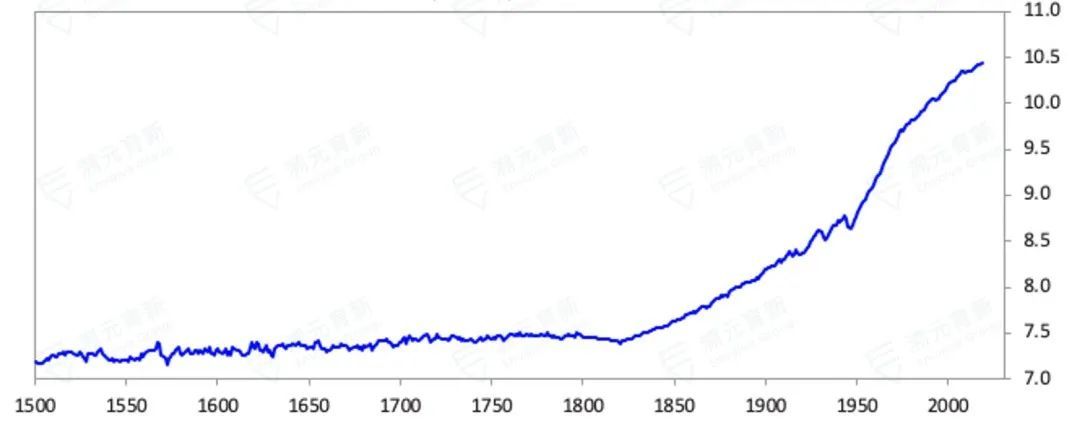
  Estimates of global GDP per capita in the past 500 years (based on 2017 US dollars, taking logarithm)

  From this top-down perspective, we can observe that the growth rate of global per capita output was very slow in the early days, but the slope of the growth curve suddenly became steep around 1800, reflecting the rapid improvement of production efficiency. Such changes have benefited from the improvement of the education level of the whole people and the transformation of educational achievements into productive forces. This change is caused by many factors, which can be traced back to the invention of the printing press in Europe in the mid-15th century (China used it very early), which improved the knowledge and education level of more people and contributed to the Renaissance, the scientific revolution, the Enlightenment and the first industrial revolution in Britain.

  The popularization of education has also shifted wealth and power from the agricultural economy to the industrial economy. In the agricultural economy, monarchs, nobles and churches jointly own land and make profits from it; In the industrial economy, capitalists create and own the means of production, and together with the (secular) government, they maintain a system that enables them to make profits and take power for a long time. In other words, this system has been operating since the industrial revolution; In this system, wealth and power come from the combination of educational resources, innovative ability and capitalist system, and are controlled by those in power and those who control capital and educational resources.

  However, behind the track of relatively steady increase in productivity, it is a turbulent era that witnessed prosperity and depression and experienced revolution and war. However, these turbulent periods are still weak relative to the long-term progress trend, so they only show a weak swing in the chart. These swings seem intense to us as individuals, but only because our lives are short and small.

  Take the Great Depression and the war between 1929 and 1945 as an example. For us, these 17 years have been long and full of shock. The following chart reflects this period (economic situation), which is taken from the above line chart (reflecting the 200-year change). As you can see, GDP per capita fell by about 10% during the Great Depression, and then recovered, while the US stock market fell by 85%. The Great Depression was followed by World War II, which increased the production of munitions. However, due to the destruction of a large number of means of production, it is inaccurate to call this period "the era of mass production", even on a per capita basis. At the end of the war, the global per capita GDP dropped by about 12%, a large part of which was caused by the economic collapse of the defeated countries.
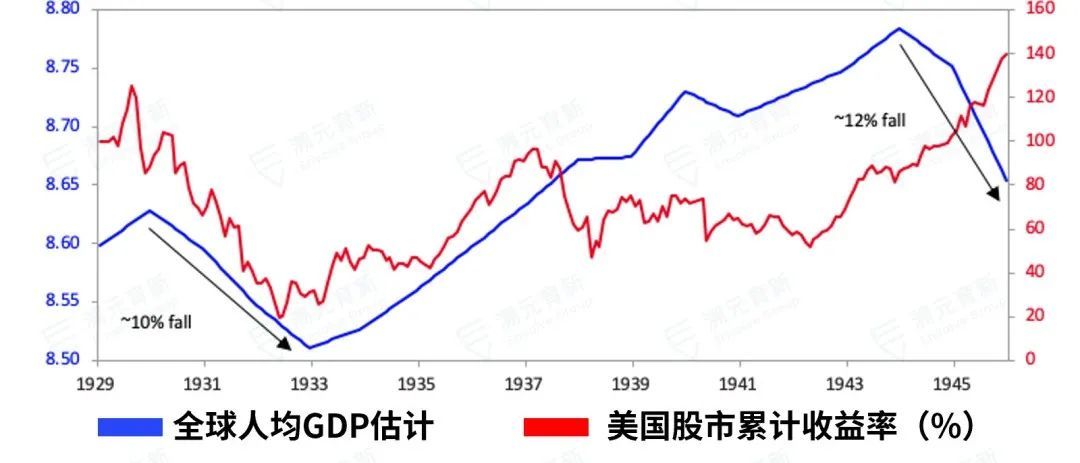
  It can be seen that between 1929-1933 and 1944-46, the global per capita GDP dropped by 10% and 12% respectively.

  Although the first chart I showed reflects the productivity of the world (to the best of our ability), it does not show the transfer of wealth and power between countries. The chart below shows the relative wealth and national strength of 11 world powers in the past 500 years. This wealth and power index is calculated by eight indicators, which I will introduce in detail later. Even though these data are not accurate due to the age, they still perfectly reflect the macro trend. As you can see, almost all big countries have experienced a period of rise and decline. Thick lines are the four most important big countries: the Netherlands, Britain, the United States and China, which have respectively mastered the three recent reserve currencies in history. It is the present tense for the United States, the past tense for Britain, and earlier for the Netherlands. I mention China because it has grown into the second most powerful country and remained so powerful for most of the time before 1850.

  Medium-short period evolution
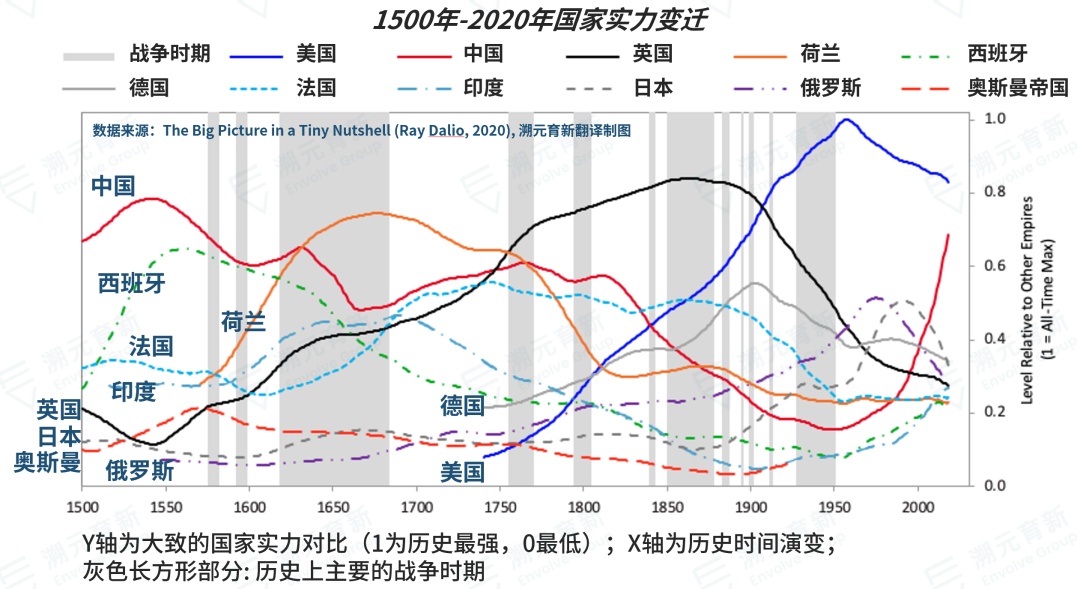
  The chart shows: 1. Although China’s position declined sharply after the 19th century, it has been in a dominant position for centuries (always surpassing Europe in commodity trade); 2. As a relatively small country, the Netherlands became the greatest empire in the world in the 17th century. 3. Britain followed the Dutch model and reached the peak of its national strength in the 19th century; 4. In the end, the United States surpassed several countries and remained a world power for 150 years, especially after World War II and the war. Today, China is catching up.

  The next chart dates back to 600 AD. In order to make the chart look simple, I included 500 years in the above chart. Although 11 countries, 12 major wars and a long history of 500 years can hardly be described as "simple". Long-period evolution
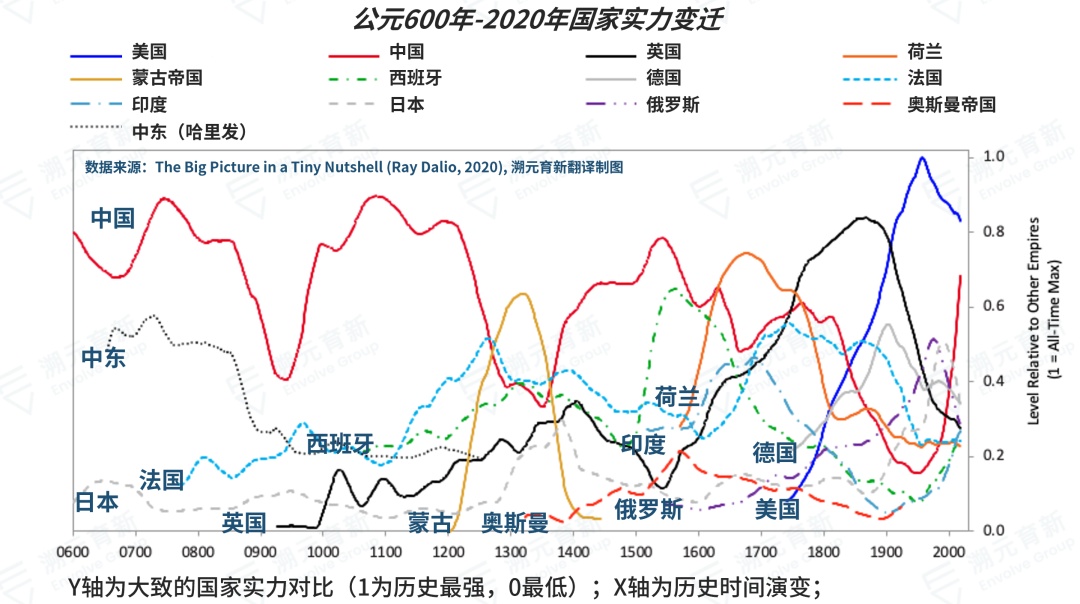
  As the picture shows, 1500 years ago, China was almost always the most powerful, although the Arab Empire, French Empire, Mongolian Empire, Spanish Empire and Ottoman Empire also rose.

  How do we measure the wealth and power level of a country?

  In the first two charts, I measure the wealth and national strength of countries, which is basically obtained by averaging eight indicators. They are 1. Education; 2. Competitiveness; 3. the level of science and technology; 4. Economic output; 5. Trade share; 6. Military strength; 7. Strength of financial center and 8. Reserve currency. We will further discuss the measure of power later, but let’s focus on these eight key elements first.

  Taking the year when China became the world’s largest country as the origin, we list the changes of various indicators in each of the 120 years before and after. The following table is the average data of many countries, but most of the weights are given to three countries with reserve currencies (namely, the United States, Britain and the Netherlands).

  Paradigm law
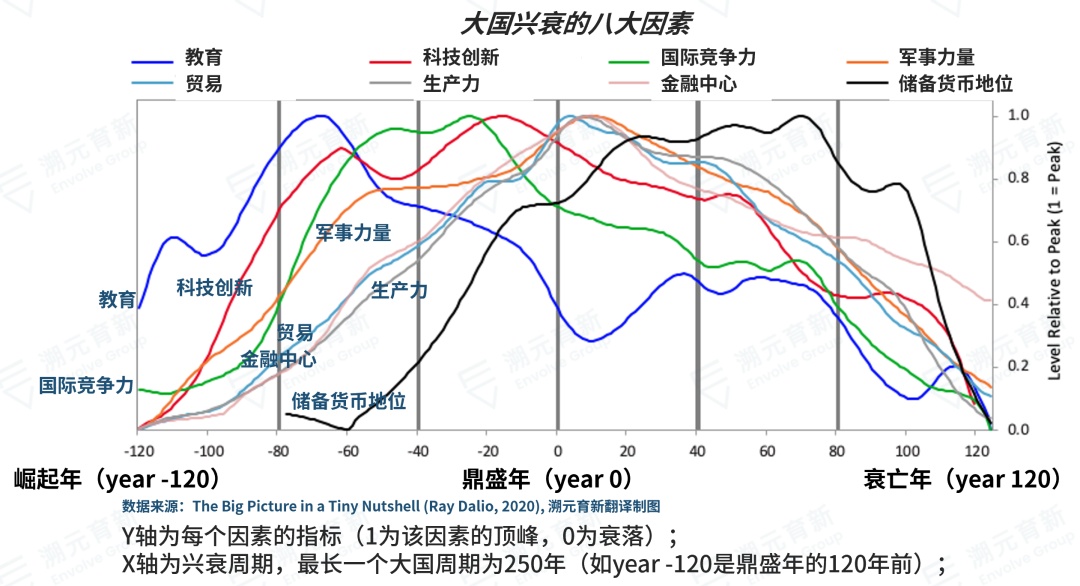
  These charts tell a good story about how great powers rise and fall. I will introduce other factors later, but before I do, let me briefly introduce the cycle. The first thing to note is that all these indicators are curved before and after the rise of great powers, because these indicators always complement each other. That is, the advantages and disadvantages in education, competitiveness, economic output and world trade share can be logically transformed into other advantages or disadvantages. For example, well-educated people will create a more innovative, competitive and productive society.

  I call this up-and-down swing of national strength "the great cycle". Please pay attention to the order in which these factors influence each other, because it reflects the process of the rise and fall of big countries. For example, education is always the leading indicator, but the change of reserve currency status is long overdue. This is because a strong education will bring advantages to most fields, including creating the most widely circulated currency in the world. Like the common language in the world, habit will amplify the strength of money itself and make it circulate more permanently.

  04 great cycle

  Broadly speaking, we can divide the rise and decline of empire into three stages: 1. The rise stage is characterized by gaining competitive advantage; 2. In its heyday, the country maintained its strong strength, but gradually laid a bitter fruit for losing its competitive advantage; And 3. In the weak stage, the self-strengthening mechanism in all aspects of the country has declined.

  In short, a country can only go uphill when it has the following characteristics:

  1. Strong and promising leadership: the premise of all successful elements.

  2. Good education: including teaching knowledge and skills.

  3. Rock-solid virtues, civic literacy and strong professional ethics: they are passed down through school and family education, and help civil society achieve the following achievements, such as:

  Low corruption rate and high respect for social rules such as the rule of law.

  People can not only unite, but also have a consensus on why they need to unite: when a group of people with abundant knowledge, advanced skills, good virtues and good civic literacy unite, they will create:

  4. A good resource allocation system, and can …

  Attracting the best talents in the world is the most important condition for a country to succeed, and then, this country will …

  6. gain strong competitiveness in the international market, so that the national income far exceeds the expenditure, which contributes to

  7. Strong income growth helps …

  8. Increase investment in infrastructure, education and research and development, so as to obtain

  9. Higher production efficiency: the improvement of production efficiency means the simultaneous improvement of productivity and wealth level. When the country’s production efficiency is high enough, they can invest and exhibit:

  10. New technologies: These new technologies will have commercial or military value; As these countries become more competitive with the above factors, they will

  11. Take more shares in the national trading system: this makes it necessary for them to establish:

  12. Powerful military force: protect trade routes and expand its influence on other countries. With their economic advantages, they have developed into the world’s leading …

  13. financial center, which can gather and finance capital: (Amsterdam was the world financial center when the Dutch empire dominated the world; After Britain replaced it, London became a financial center; And new york’s status now comes from the hegemony of the United States. But China is also developing its financial system with Shanghai as the center.) These expanding empires have …

  14. Strong stock, currency and credit markets: The currencies of countries that dominate trade and capital flows naturally become the first choice for trading media and wealth reserves, and develop into reserve currencies. According to this logic, when the Dutch empire dominated, the Dutch guilder was the global reserve currency; During the British Empire, the pound inherited this status. When the US dollar became the global reserve currency in 1944, the United States was only one step away from winning World War II, and it was obviously in a leading position in economy, finance and military affairs. Using a country’s currency as a reserve currency will naturally give the country stronger borrowing and purchasing power. As shown in the above figure, the opportunity for a country to gain or lose its status as a global reserve currency is much later than its other strengths.

  Through unremitting efforts and other complementary factors, the empires achieved their rise and maintained their national strength. The founders of those empires coordinated economic, political and military strength, and built an economic-political-military system that constantly benefited from the international community. The Dutch founded the Dutch East India Company, Britain founded the British East India Company, and the United States had a military-industrial complex. Facts have proved that this kind of economic, political and military cooperation is essential to the expansion of the empire.

  However, the development of the empire always has its platform period, which is because behind the success of the country’s rise, it also lays the groundwork for future weakness. Specifically, it includes:

  During the boom, people’s income increased, making labor more expensive; Compared with countries with lower wages for the same job, competitiveness naturally declines.

  The development model of the most successful countries will be imitated by emerging competitors, and shine on you is often superior to Blue, which makes the leaders lose their competitive advantage. During the British-Dutch hegemony, the labor cost of British shipyards was lower than that of the Netherlands; Therefore, the former chose to hire Dutch engineers to design ships with higher cost performance than the Netherlands. Because the cost of time and money required for copying is less than that of invention and creation, other things being equal, emerging empires hitchhike in mature countries through copying.

  In those countries that are born rich, people will reduce their workload and engage in more leisure and low-productivity activities; In extreme cases, it becomes decadent and incompetent. Especially when the backbone of society changes from a generation that must work hard to succeed to a generation that inherits wealth, the younger generation is often fragile and inexperienced, and it is more likely to be defeated when confronted with challenges. As time goes by, people in these prosperous societies are more eager to pursue a leisurely and luxurious life, so they do not hesitate to lose their strength, create bubbles, and finally become more vulnerable.

  The richest and most powerful countries have the status of global reserve currency, which gives them the privilege of borrowing a lot, so that they are caught in a debt trap. A large number of loans have enhanced the consumption power of hegemonic countries in the short term, but in the long run it is just the opposite. In other words, when lending and consumption are strong, hegemonic countries seem to be strong, but their financial strength is eroded. This lending model enables domestic people to over-consume, and provides funds for expanding the army and launching wars to enhance forces other than basic national strength. This model can be maintained for a period of time, even self-strengthening, thus increasing the interest return of creditor countries, thus enhancing the status of reserve currency.

  When rich countries borrow money from developing countries, it is also one of the early signs of wealth transfer. In the 1980s, the per capita income of the United States was 40 times that of China, but at that time, China had begun to buy US Treasury bonds because the US dollar was the global reserve currency. At the same time, it also became the starting point for China to catch up with the United States. Similarly, Britain borrowed heavily from much poorer colonies during World War II; The Netherlands did something similar before its national strength went downhill, but when the creditors refused to hold and sell the Dutch guilder, the Dutch debt structure collapsed instantly, and its monetary status and economic situation plummeted. The United States has also borrowed a lot of money and reduced its debt by issuing more money, but this has not shaken the status of the dollar and the US debt for the time being.

  When the number one power keeps "expanding its territory" until it is no longer worthwhile to maintain it, the cost of maintaining the system becomes higher than the income. The unprofitable global power system will further hit its financial situation, as is the case in the United States today.

  Because of unequal distribution, the success of economic development naturally widens the gap between the rich and the poor. Those who have wealth and power (such as those who profit from business activities or those in the government) take care of each other and maintain a system that is beneficial to them, while ordinary people lag far behind until the polarization between the rich and the poor has become intolerable injustice. The same is true in the United States today.

  The foreshadowing of decline is always buried in the golden age, and the prosperous country will gradually decline in the downward trend. This decline is due to the fact that when the country is going downhill, the power that can compete with it has developed relatively in the above-mentioned fields.

  When the national debt is high, the central bank can only make ends meet in the face of a weak economy, and the downward state leads to more debt and economic problems, the country has to print a lot of money and devalue its currency.

  If the gap between the rich and the poor widens infinitely, social values are polarized, and economic pressure (no matter where the pressure comes from) cannot be released, it will be easy for the rich and the poor to fight, and the initial conflicts will intensify later. This usually encourages political extremism, that is, populism of reformists (people who try to redistribute wealth) and conservatives (people who want wealth to be in the hands of rich people such as capitalists). Both democratic and centralized countries may become the soil of populism.

  When the rich are worried that their wealth will be taken away, or they will become the target of public criticism, they will transfer their wealth and life to places, assets or currencies that they think are safer. If this transfer is not explicitly prohibited, it will erode the tax and income of the place where the assets are transferred out, making it experience a typical vicious circle of asset hollowing out. Shrinking tax revenue is even worse, aggravating the tense situation, increasing tax revenue, forcing more rich people to leave, and other worse consequences. For example, we now observe that the root of some social problems is that the rich have fled the state with higher taxes because they don’t want to face the financial pressure and the gap between the rich and the poor. When the hollowing out of assets is too serious, the government will come forward to stop it-it is forbidden to continuously collect funds from the lost places to their new places, assets or currencies, and people who want to protect themselves will feel panic.

  Events that shake the foundation will devour the country’s productive forces. The size of the wealth cake is a little smaller, and people are fighting for shrinking resources; The cake is drying up day by day, and people are fighting over how to distribute it. Populist leaders of different camps are clamoring hard in the wrestling, hoping to control the situation and reorganize the order. At this time, democracy is particularly precarious compared with centralization. This is why in the 1920s and 1930s, Germany, Japan, Italy and Spain (as well as some small countries) were all centralized and pulled out the flag of the democratic camp, while the major democratic countries (the United States, Britain and France) also had the shadow of centralization. It is generally believed that in chaotic times, centralized and rapid decision-making is preferable to democratic decision-making based on discussion. Therefore, when the mass struggle against discipline and resorting to violence appears, the movement is not without merit.

  If a country has strong enough economic, geopolitical and military forces to challenge the existing dominant forces, then there are many potential conflicts between these competing powers. Because there is no system for peaceful adjudication of such disputes, conflicts have to be resolved through a head-on contest.

  When the cost of maintaining the image of a big country is greater than the income it brings, the economic strength of the country is hollowed out. At the same time, other countries are on the rise, and the big countries that are already strong in the outside world do not want to give away their interests. This state will make a strong country face economic and military threats. In order to maintain its status as a big country, military spending has been expanding again and again, but the domestic economy has been depressed, making it more difficult for leaders to collect taxes and making them need more domestic support. Seeing this dilemma, the enemy countries have chosen to strike at the beginning of the signs of the decline of great powers. Then, the big countries will face the difficult choice of facing or retreating economically and militarily.

  If other external shocks, such as natural disasters (plague, drought or flood), occur in a fragile period when big countries are struggling to cope with internal and external troubles, it is tantamount to injecting another destructive force into the process of national decline.

  It is also a problem when the number of people in a country who are vegetarian is not enough for the country to win in this cycle. Of course, since each leader is only responsible for a short part of this cycle, they can only solve problems on the basis left by their predecessors, which means that the National Games can control everything better than the leaders.

  In a word, due to the improvement of productivity, cakes are constantly expanding, and some cycles have emerged.

  The construction period of the country’s peak. Due to:

  1. Relatively low debt level

  2. Relatively small wealth, value and political views gap.

  3. People work together to create prosperity.

  4. Good education and infrastructure

  5. Competent leadership.

  6. A peaceful world order led by one or more major powers.

  When it flourished and declined, the country went to a period of deconstruction and reorganization. The reason for the country’s prosperity has gone to the opposite side and turned into a fatal weakness:

  1. High debt

  2. A huge gap in wealth, value and political views.

  3. The cooperation between nationals broke down and they turned to attack each other.

  4. Backward education and infrastructure

  In order to maintain the state of over-expansion, great powers have gone through a painful period of struggle, destruction and reorganization under the challenge of new rising forces, which has given birth to a new order and laid the foundation for the coming of a new era.

  Generally speaking, the 17 characteristic indicators in the figure below are the main forces driving the rise and fall of a country. For any country, the more each feature deviates to the left, the greater the possibility of its rise; The more you shift to the right, the greater the possibility of weakness. World powers tend to show more left-leaning characteristics, and under a virtuous circle, they continue to become stronger; However, if the management is not good, each characteristic index will shift to the right, and the country will go weak. At this time, new competitors can take the opportunity to rise, properly manage each characteristic index, and gradually the situation of strength has changed.
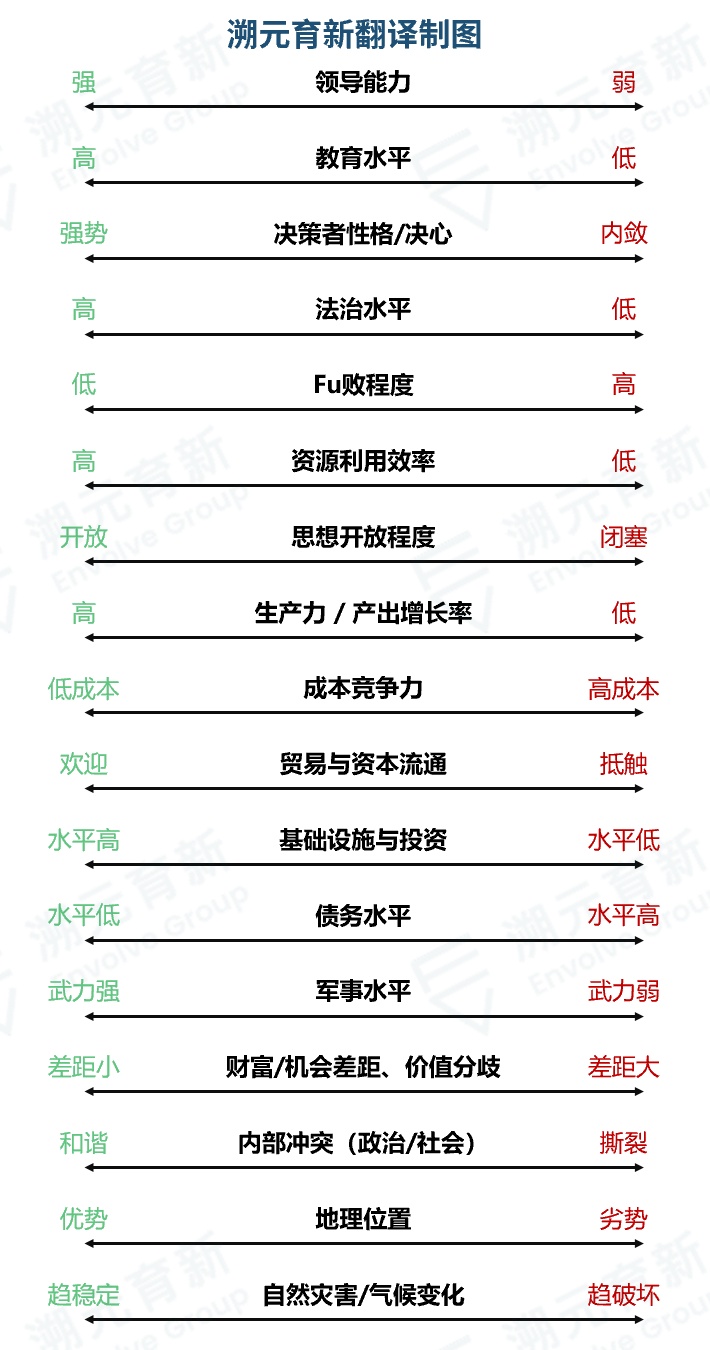
  17 factors affecting the rise and fall of a country

  In short, this is the reason why the rise and decline of great powers occur periodically. Now, I want you to do a little exercise: think carefully about whether the position of each characteristic index is to the left or to the right for the country/region you are interested in. What about the United States and China? What other countries are there? Make a judgment based on your intuition and compare it with my idea later. I will make a more systematic analysis of the characteristic indicators of these big countries later.

  These positive and negative factors are actually intertwined and affect each other, bringing great changes to society. It is no coincidence that the huge gap between the rich and the poor, the debt crisis, the revolution, the war and the changes in the world pattern almost happened at the same time. The following picture outlines the history of the rise and fall of every big country very clearly. As shown in the shaded area in the figure below, the destruction and reorganization caused by depression, revolution and war have largely destroyed the old system and laid the foundation for the emergence of new systems. These great depressions often occur every 10 to 20 years, but there may be more variables in this time period. Followed by a beautiful new world, no country is willing to compete with the world hegemon for the top spot, and well-behaved people begin to work and develop harmoniously. Usually, these beautiful periods can last for 40 to 80 years, but there will be great fluctuations. In the above two big cycles, there are also some small cycles, such as short-term debt crisis/business cycle, which last for 7 to 10 years.

  Reserve currency cycle
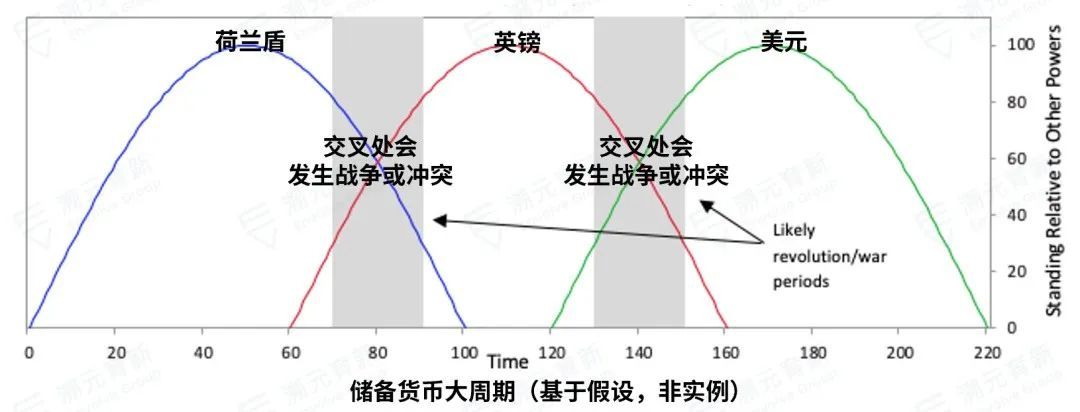
  For example, the decline of a Dutch power gives way to a British power, or Britain gives way to the United States. Most of the following things will happen in this process:

  Debt restructuring and debt crisis are internal conflicts in countries, which eventually lead to the redistribution of wealth, the collapse of the status of foreign war reserve currency and the collapse of a new generation of domestic and international order

  The last Great Depression occurred in 1930-45, which promoted the reconstruction period that began in 1945. More specifically, the collapse and reorganization of the monetary and credit system led to the depression in 1930-45, which led to the establishment of a new global monetary system (Bretton Woods system) based on the dollar in 1944. The huge gap between the rich and the poor in the Roaring 20s narrowed due to depression and war, which led to a fundamental change in the distribution of wealth and rights, and the global war also changed the world pattern. After 1945, everything has undergone earth-shaking changes. The United States became the world hegemon, the gold standard shifted, and a global monetary and credit system based on the dollar was established.

  Translator’s Note: This refers to the 1920s in the western context, which was a period of sustained economic prosperity. In the past ten years, it covered countless exciting events, so some people called it "the most colorful era in history".

  In this new world dominated by the United States, the United States has taken the lead in wealth, economic strength and military strength. It is the richest country with 80% of the world’s gold reserves; It is a country with the highest economic strength in the world, and its production capacity accounts for half of the world’s output; It is also a military power with absolute advantages, monopolizing nuclear weapons and having the most powerful conventional forces. However, after 75 years, the world pattern has also undergone fundamental changes, which we will discuss further in the following chapters. At that time, we will also try to predict and interpret the possible future development direction.

  Next, we will study each indicator more carefully. In the last chapter, I will summarize all these indicators and carefully infer how to make our future better in view of our current situation. In the second part, I will make a detailed interpretation of each country’s case.

  [1] Short-term cycle evolution chart
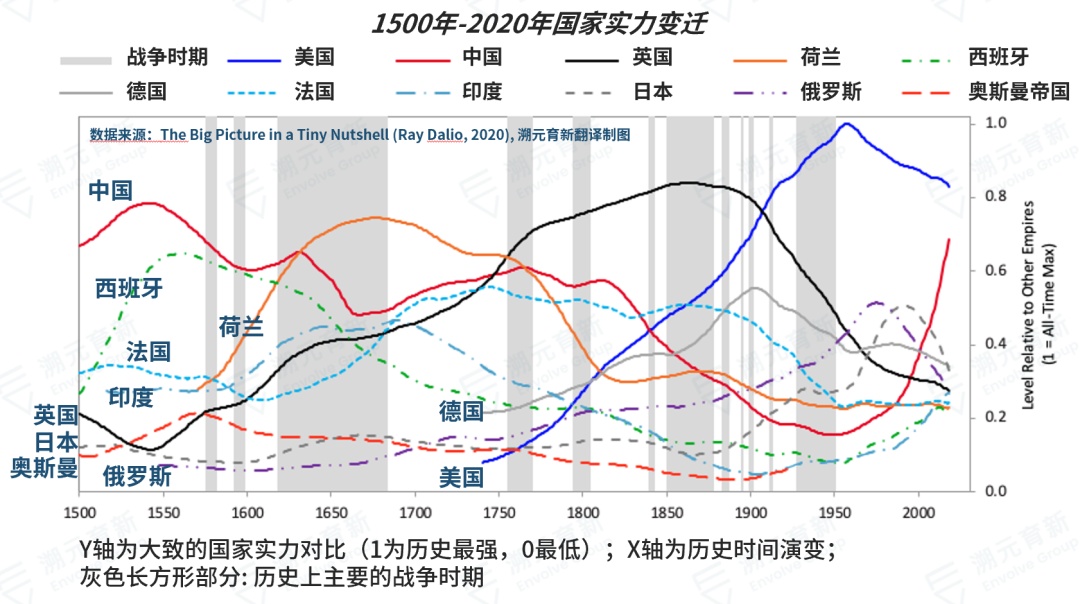
  As for the above figure, these indexes consist of many different statistical data, some of which can be directly compared, while others are only an estimate. The data in some countries are always discontinuous, so different data need to be spliced together. It should be noted that the line shown on the chart is the 30-year moving average of these indexes, and I have adjusted it, so there will be no lag. The moving average is chosen because it is less volatile and can filter out a lot of noise, making the direction of the big period clearer. For a longer-term interpretation, I will use these curves smoothed by the moving average; On the contrary, for some more detailed interpretations, the unprocessed curve may contain more information.

  [2] Chart of Paradigm Law
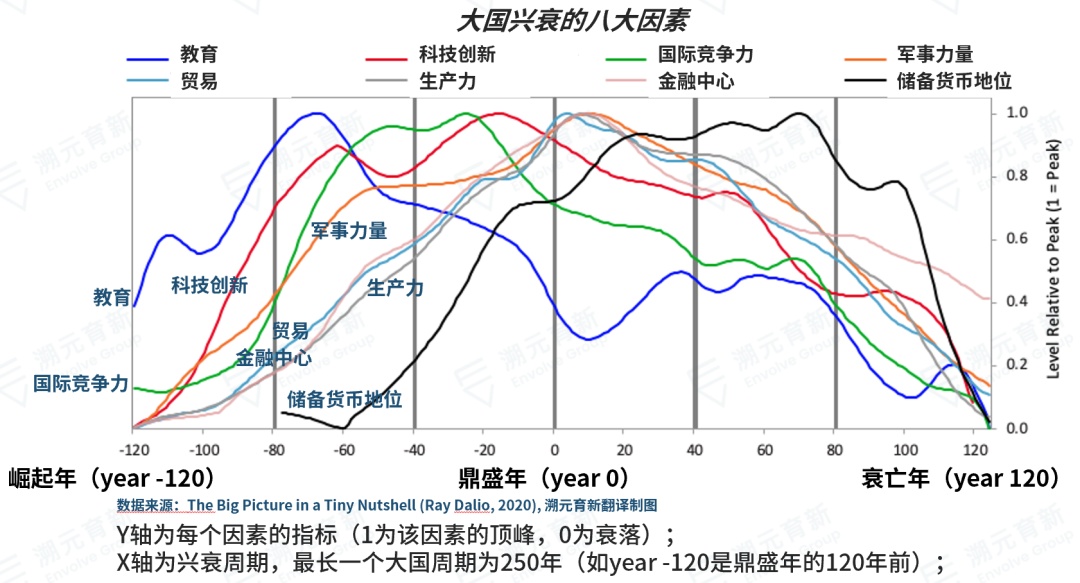
  Regarding the above figure, we show the relationship between these key indicators and history by anchoring specific time periods in history. The value "1" on the Y axis represents the peak value of this indicator relative to history, and "0" represents the bottom. The X-axis, that is, the time axis, is displayed in units of years, where "0" roughly represents the time when many indicators of the country reach the peak. In the rest of this section, we will introduce the stages of paradigm law in more detail. As for the indicator of global reserve currency, we will focus on China. Although it has been a big country for centuries, its currency has never become a global reserve currency. The reasons behind this are worthy of our further study.

  (A global M&A investment transaction information manager at your fingertips)

This article first appeared on WeChat WeChat official account: Yijie DealGlobe. The content of the article belongs to the author’s personal opinion and does not represent Hexun.com’s position. Investors should operate accordingly, at their own risk.
(Editor: Ji Liya HN003)

Internet of things opens the era of Internet of Everything.

The word "InternetofThings" was born 15 years ago. In recent years, this "tall thing" has gradually entered our lives. The Internet of Things can connect all objects in a specific space environment, carry out anthropomorphic information perception and collaborative interaction, and has the behavioral ability of self-learning, processing, decision-making and control, thus completing intelligent production and service. At present, the Internet of Things is promoting the transformation of human society from "informationization" to "intelligence" and promoting great changes in information technology and industry. In the near future, the Internet of Things will powerfully change the environment in which we live and work, and bring us into an intelligent world.

The technical idea of Internet of Things is "connecting everything according to demand"

At the World Summit on the Information Society in 2005, the International Telecommunication Union formally put forward the concept of "Internet of Things", suggesting that the ubiquitous communication era of "Internet of Things" is coming, and all objects in the world, from tires to toothbrushes, from houses to paper towels, can actively exchange information through the Internet.

The technical idea of the Internet of Things is "connecting everything on demand". Specifically, all objects (including all entities and virtual physical objects and terminal equipment) that can be independently identified, including people, machines and objects, are connected everywhere according to requirements through various network technologies and information sensing equipment such as radio frequency identification (data exchange through radio to achieve information identification), infrared sensors, global positioning systems and laser scanners, and information transmission and collaborative interaction are carried out. In order to realize the intelligent information perception, identification, location, tracking, monitoring and management of objects, and build an intelligent service environment with the ability of anthropomorphic knowledge learning, analysis and processing, automatic decision-making and behavior control among all objects.

The information society is developing from the Internet era to the Internet of Things era. If the Internet takes people as the object of connection and service, then the Internet of Things is to expand the object of information network connection and service from people to things, so as to realize the "Internet of Everything". There are also differences in the demand satisfaction between the two: in the Internet age, the task of information network is to meet the demand of public information transmission; In the era of Internet of Things, the task of information network is to meet the specific requirements of intelligent services, which are mutually supportive and indispensable.

The future intelligent service system under the Internet of Things environment will become an important infrastructure in the future society. As the key to the technological innovation of the Internet of Things, the intelligent service system maps and cooperates the physical space of the real environment with the information space of the virtual environment to realize the integration of communication, calculation and control. Intelligent service system enables things and people to interact actively in a new way, thus knitting an intelligent collaborative network with endogenous interconnection in the physical world.

Remodeling the mode of production organization and promoting the industrial revolution

The Internet of Things has become an important driving force for the new round of global scientific and technological revolution and industrial transformation. Driven by the rise of concepts, guided by demonstration applications, remarkable technological progress and gradual maturity of industries, the Internet of Things is accelerating its transformation into real scientific and technological productivity. If the technology that affects production tools and products will bring quantitative change, then the Internet of Things technology will bring qualitative change, because it will reshape the production organization. The technology industry of Internet of Things is developing rapidly around the world, and it is merging with manufacturing technology, new energy and new materials, stepping into the eve of industrial revolution and ushering in a great development era.

With the popularization of Internet of Things applications, trillions of new devices with different application requirements, such as smart wearable devices, smart home appliances, intelligent networked cars, intelligent robots, smart medical care, farmland water conservancy and municipal buildings, will be connected to the network. These applications are growing explosively and will form massive data, which will promote the production, life and social management to be more intelligent, networked and refined, and promote economic and social development to be more intelligent and efficient.

Integration and development with other high-tech technologies is an important feature of Internet of Things technology. At present, the Internet of Things is promoting the penetration of next-generation information technologies such as 5G, narrowband Internet of Things, cloud computing, big data, artificial intelligence, blockchain and edge computing into various fields, triggering major changes in the global industrial division of labor. In terms of networking, low-power WAN technology is rapidly emerging and gradually commercialized around the world, and the standardization process of 5G technology for wide coverage and low latency scenarios of the Internet of Things is accelerating. At the same time, industrial Ethernet, short-distance communication and other related communication technologies have developed rapidly, providing good technical support for the intelligent on-demand networking and interconnection of people, machines and things. In information processing, information perception, knowledge representation, machine learning and other technologies have developed rapidly, greatly improving the intelligent data processing capability of the Internet of Things. In terms of virtual platform of Internet of Things, digital twinning and operating system, based on the wide application of cloud computing and open source software, the ecological threshold for enterprises to build is effectively lowered, and the progress of public service platform and operating system of Internet of Things is promoted worldwide.

The Internet of Things brings digital and intelligent changes, which can change many industries. One of the most representative concepts is the "industrial Internet". In 2011, after the concept of "Industry 4.0" was first put forward by Germany, many countries have followed suit. The concept of "industrial Internet" proposed by General Electric Company of the United States is a high integration of global industrial systems with advanced computing, analysis, sensing technology and the Internet, which means connecting people, data and machines on the basis of the Internet of Things, so that equipment, production lines, factories, suppliers, products and customers can cooperate closely with each other on demand, comprehensively apply big data analysis technology and remote control technology, and optimize the operation and maintenance of industrial facilities and machines. Improve the intelligent level of industrial manufacturing through networked intelligent means, and form an interconnected industrial chain across equipment, systems, factories and regions, thus improving efficiency and promoting the intelligence of the entire manufacturing service system. As an important support for the development of China’s intelligent manufacturing industry, the industrial Internet has been highly valued by the Chinese government. The 13th Five-Year Plan, the State Council’s Guiding Opinions on Actively Promoting internet plus Action and Guiding Opinions on Deepening the Integration and Development of Manufacturing Industry and the Internet all clearly put forward the development of industrial Internet.

Due to the bright future, all countries in the world are accelerating to seize the development opportunities of the Internet of Things industry. At the industrial level, related large companies have formulated the development strategy of the Internet of Things, and quickly laid out key industries and key links in the industrial chain through cooperation and mergers and acquisitions, so as to enhance their position in the whole industry. Alibaba, Tencent, Baidu, Amazon, Apple, Intel, Qualcomm and other world-renowned enterprises have all laid out the Internet of Things from different links and levels.

Intelligent production and intelligent life are opening.

The development of the Internet of Things has drawn a beautiful blueprint for the intelligent world for human society. Then, from the abstract concept to the concrete application, how does the Internet of Things relate to our production and life?

At present, the practical application of the Internet of Things has made remarkable achievements in manufacturing, agriculture, home, transportation and car networking, medical and health care and other fields. At present, the number of active Internet of Things terminal devices in the world has exceeded 50 billion, and the trillion-dollar vertical industry market is emerging.

In terms of production, the Internet of Things has a far-reaching impact on industry and agriculture. At present, the industrial Internet environment can obtain and analyze data from the terminal devices connected to the network. Combined with the remote monitoring and control equipment to monitor the industrial system, it can realize the seamless integration of various manufacturing equipment with sensing, identification, processing, communication, driving and networking functions. The related production materials are electronically identified by technologies such as radio frequency identification to realize the intelligent management of production process and supply chain, and the real-time collection and data analysis of production status information are strengthened by technologies such as sensors to improve efficiency and quality, and promote safe production and energy conservation and emission reduction.

In the field of smart agriculture, the Internet of Things helps "intensive cultivation". By collecting data of temperature, rainfall, humidity, wind speed, plant diseases and insect pests and soil content of planting environment, intelligent processing and decision-making of farming can be realized. Even the data obtained from the Internet of Things can be applied to the precise fertilization plan, so as to minimize the risk and waste and reduce the workload required for crop management.

In life, home, transportation, medical care and health are all places where the Internet of Things comes into play. Smart home integrates information technology with indoor goods and facilities, people’s indoor life, safety protection and other aspects to promote the informationization and intelligence of home and security services. For example, voice control can help users with poor eyesight or mobility difficulties, alarm systems can be connected to cochlear implants worn by users, and monitoring systems can also alarm health accidents such as falls or epilepsy. Intelligent transportation and car networking are also inseparable from the Internet of Things technology. Seamless connection between different elements can realize various scene applications such as in-vehicle and out-of-vehicle communication, intelligent traffic control, intelligent parking, electronic toll collection system, vehicle management control and so on. For example, in the management of logistics fleet, we can check the position and status of goods through wireless sensors and send an alarm when it is abnormal. Smart medical care can realize rapid tracking and positioning of drugs and health care products by using Internet of Things technology, and reduce supervision costs; By establishing a clinical data application center, precision medical applications based on intelligent perception of the Internet of Things and big data analysis can be developed; You can also make full use of smart wearable devices (smart bracelets, smart rings, etc.) and radio frequency identification technologies to collect residents’ health information and establish a cloud service platform for innovative management of health big data.

The Internet of Things has become one of the important trends in the development of global information technology, and its appearance and rise have brought rare opportunities for China’s scientific and economic development. We should seize the opportunity to create the future and build an intelligent digital China.(Author:Zhu Hongbo,Director of china institute of communications Internet of Things Committee)

Syrian government forces and opposition forces fought fiercely in northwest Syria.

  Xinhua News Agency, Damascus, June 8 According to the Syrian News Agency, there was a fierce exchange of fire between Syrian government forces and opposition forces in northwest Syria on the 8 th, with casualties on both sides.

  The Syrian News Agency quoted the Syrian military as saying that the opposition armed forces in the Gab area in the northwest of Hama province in Syria used car bombs and suicide attacks to launch attacks that day, occupying two government military positions. After several hours of fierce exchange of fire between the two sides, the government forces regained control of the military stronghold.

  The Syrian military said that one government army was killed and one was injured, and the number of armed casualties of the opposition was relatively large. According to the British-based Syrian Human Rights Watch, 19 soldiers were killed by government forces and 22 by opposition forces.

  At present, parts of northwest Syria are occupied by Syrian opposition armed forces supported by Turkey and other extremist organizations, including a large area in western Idlib province, a small area in Hama province and Aleppo province.

  On March 5 this year, Russian President Vladimir Putin and Turkish President Erdogan reached an agreement on the ceasefire in Idlib province, Syria. According to the agreement, from 0: 00 local time on March 6, the warring parties in Idlib province of Syria ended all military operations on the front.

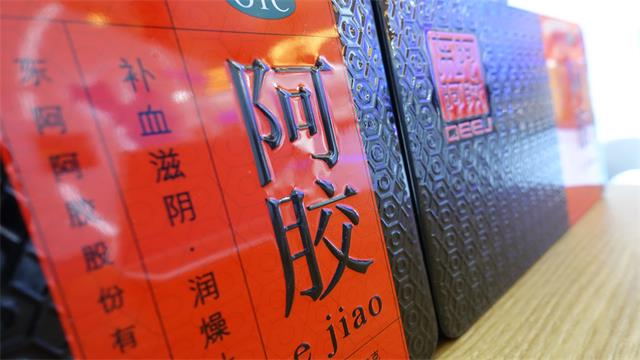
Dong ‘e Ejiao admits that the channel relies on hoarding goods for profit. How to reverse the sharp drop in performance?

  The destocking of channels dragged down the performance of Dong ‘e Ejiao, and how did the inventory of channels accumulate?

  The performance of Dong ‘e Ejiao (000423.SZ) in the interim report dropped by nearly 80%, which made the capital market unexpected. After a word limit on July 15 and a 5.59% drop on July 16, the stock price once fell more than 2% in intraday trading this morning (July 17). Dong ‘e Ejiao, which has long been advertised by the market as one of the white horse stocks, why did it develop so far?

  The First Financial Reporter noticed that Dong ‘e Ejiao responded to the challenges faced by the company in the newly disclosed record of investor relations activities on the interactive platform of Shenzhen Stock Exchange. "The channel originally relied on hoarding goods to make profits. All channel providers are profitable when we raise prices, because the shelf life of Ejiao is 5 years. If dealers hoard goods, the difference will be relatively large. Now the channel has changed, from relying on stocking to relying on turnover rate. We have adjusted the inventory reduction in line with the channel changes, which has brought short-term fluctuations in sales performance and is also the main reason for this decline in performance. " Dong’ e Ejiao said this.

  Dong ‘e Ejiao’s interim report performance forecast shows that the company expects the net profit attributable to shareholders of listed companies to decrease by 75% to 79% in the first half of this year compared with the same period of last year. This decline will be the largest in the interim report since the company went public in 1996. In the notice, the company said that due to the overall macro-environment and other factors, and the market’s expectation of the return of Ejiao value gradually decreased, the company’s downstream traditional customers took the initiative to reduce inventory, resulting in a year-on-year decline in product sales in the first half of the year.

  Recently, the first financial reporter also learned in the interview that the channel is keen on hoarding goods, which is also inseparable from the frequent price increase of Dong ‘e Ejiao. Frequent price increases have become a lingering brand left by Dong ‘e Ejiao.

  According to the First Financial Reporter, during the nine years from 2010 to 2018, Dong ‘e Ejiao raised the ex-factory price of Ejiao, the company’s main product, for a total of 11 times. Among them, in 2010 and 2014, the company raised the price three times in one year. Since 2015, the frequency of the company’s price increase has slowed down to once a year, and it is concentrated in November of that year, which is just the peak season for Ejiao sales.

  Some people in the industry also told the First Financial Reporter that the price increase rhythm like Dong ‘e Ejiao has given the channel expectations over time. Therefore, whenever it is premonition that manufacturers are going to raise prices, the channel will stock up in advance. In view of Dong ‘e Ejiao’s own brand effect, the channel also believes that the company’s products are not worried about selling.

  Now, looking back, the frequent price increase of Dong ‘e Ejiao has many disadvantages. Here, how does Dong ‘e Ejiao reverse the situation?

  "In recent years, the company’s brand, quality and scientific research have gradually strengthened, and the pure sales of terminals are growing, and the growth rate exceeds the market average. The main problem now is that we take the initiative to reduce inventory. In the future, we will launch pulling measures around consumers, and this year’s strategy will be adjusted accordingly. " Dong ‘e Ejiao mentioned in the above-mentioned investor relations activity record.

  Dong ‘e Ejiao said that in combination with the changes in the external environment and the trend of channel customers to improve efficiency and reduce costs, since last year, the company has started from the needs of channel customers and its own development needs, reduced inventory and returned to benign, canceled some secondary commercial customers, flattened channels, and strengthened channel layout in pharmaceutical commerce and retail chain. In terms of traditional channels, in the past, the company’s key channels were retail pharmacies, including customers with leading positions in the industry, such as ordinary people, Yifeng and Guoda Pharmacy. Last year, on the basis of the original, the company began to strengthen cooperation with regional leading chains and top 100 chains. This year, it laid out the market development of thousands of counties and expanded to the grassroots market. At the same time, we are also developing channels for medical terminals, including grade hospitals and primary hospitals.

  How will the stock price go?

  The First Financial Reporter also noticed that Dong ‘e Ejiao’s record of investor relations activities was mainly based on the investigation of institutional investors such as CICC on July 15th.

  It is worth mentioning that on July 16, CICC also published a research report on "Dong ‘e Ejiao promotes channel sorting throughout the year and short-term performance is under pressure". In this research report, CICC downgraded Dong ‘e Ejiao to "neutral" and lowered its target price by 32.4% to 33.8 yuan. CICC said that the expected price increase of Dong ‘e Ejiao was reduced, and the pressure on channel inventory began to be released. The value regression strategy of Dong ‘e Ejiao’s core products has been going on for many years, and the channel has formed a certain inertia of stocking. However, at present, with the decrease of the company’s price increase expectation, the channel’s willingness to stock has declined, and the inventory pressure has begun to be released.

  "The market believes that the company’s long-term strategy is unclear, but we believe that the company has brand potential and is expected to achieve benign development through the development of new products, new channels and new people in the future. However, at present, the company is facing the dilemma of actively adjusting channels, and its operating income and adjustment time are still unpredictable. " CICC also said so.

  Looking back at the trend of Dong ‘e Ejiao’s share price, during the past thirteen years from November 2005 to June 2017, the company’s share price has increased more than 10 times after its restoration. It is precisely because of Dong ‘e Ejiao’s stable share price and stable performance that the organization is keen on heavy positions. According to the straight flush data, as of the end of the first quarter of this year, among Dong ‘e Ejiao’s shareholders, the total institutional shareholding ratio is still as high as 51.03%.

  Nowadays, under the slump in performance, how will Dong ‘e Ejiao’s share price be interpreted?

  After Dong ‘e Ejiao’s share price fell to the limit on July 15th, from the list of trading companies’ stocks on that day, we can see that there are no institutions in the top five with the largest selling amount. On the contrary, among the top five with the largest purchase amount, one institution-specific seat appeared, and the purchase amount of that day was 3,623,500 yuan.

  Some private investors also told the first financial reporter that the company is in a period of gradual release of bad news and the stock price needs to be repaired. On the whole, Dong ‘e Ejiao products still have brand value and vitality, but the driving force for the subsequent company’s rise depends on the performance of new products and the promotion of new channels.

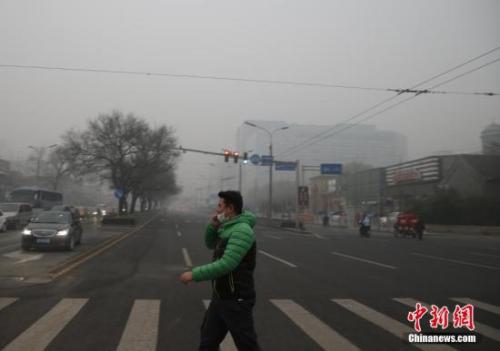
Law enforcement officers were detained! Environmental protection supervision found more than 1,600 problem units in 8 days.

  BEIJING, Beijing, April 17 (Shang Qi) "Refused to inspect, did not provide relevant environmental protection materials, and immediately locked the door, did not allow inspectors to leave, and detained law enforcement officers for more than an hour … …”

  On the evening of 16th, WeChat official account, the official WeChat of the Ministry of Environmental Protection, announced the latest situation of intensified supervision on air pollution prevention and control in Beijing, Tianjin and Hebei and its surrounding areas, in which the news that the staff of the enterprise resisted the supervision and detained law enforcement personnel caused concern.

  Why did the problem enterprise refuse to check? At present, how is the progress of this intensive supervision? What other issues have been disclosed?

  How is the "largest scale" operation going?

  — — 1,621 illegal units were found in 8 days.

  On April 5, the Ministry of Environmental Protection announced that 5,600 environmental law enforcement officers from all over the country would be deployed to carry out one-year intensive supervision on air pollution prevention and control in Beijing, Tianjin and Hebei and the surrounding transmission channel "2+26" cities, which was called "the largest-scale action directly organized at the national level in the history of environmental protection".

  "2+26" cities are Beijing and Tianjin, Shijiazhuang, Tangshan, Baoding, Langfang, Cangzhou, Hengshui, Handan and Xingtai in Hebei Province, Taiyuan, Yangquan, Changzhi and Jincheng in Shanxi Province, Jinan, Zibo, Liaocheng, Dezhou, Binzhou, Jining and Heze in Shandong Province, Zhengzhou, Xinxiang, Hebi, Anyang and Heze in Henan Province.

  According to media reports, according to the arrangement, each inspection team has 8 people to carry out on-site inspections in the above cities, rotating once every two weeks, and each city arranges 25 rounds throughout the year. On the evening of April 7, all 224 people who participated in the first round of intensive supervision of air pollution prevention and control were in place, and they docked with the inspected cities to officially start on-site supervision.

  In the past few days, the Ministry of Environmental Protection has reported the intensified supervision on its official website, Weibo and WeChat WeChat official account. According to the statistics of Zhongxin. com reporters, from April 8 to 15, 28 inspection teams inspected 2,301 enterprises (construction sites) and found that 1,621 units violated laws and regulations, accounting for about 70% of the total number of inspections.

  — — Investigation of Local Public Security and Environmental Protection Departments in Shandong Province

  It is worth noting that in the inspection situation notified by the Ministry of Environmental Protection on the evening of the 16th, the news that an enterprise resisted the inspection and detained law enforcement officers attracted attention.

  The Ministry of Environmental Protection reported that on the morning of April 16th, when the 15th inspection team of the Ministry of Environmental Protection inspected Shandong Lvjie Environmental Protection and Energy Saving Technology Co., Ltd. in Zhonggong Town, Licheng District, Jinan City, it was found that the coal-fired hand-fired furnace in the workshop of this enterprise was not included in the elimination list of local small coal-fired boilers, and there was no dust and waste gas collection and disposal device in the electric welding production section, with relatively high noise in the workshop and heavy dust on the ground.

  Wang, the person in charge of the enterprise, rushed to the scene, and the inspection team and law enforcement officers of the local environmental protection department showed him the law enforcement documents. Wang said that there was something wrong with the documents, refused to check, did not provide relevant environmental protection materials, and immediately locked the door, did not allow inspectors to leave, and detained law enforcement officers for more than an hour. During the period, the inspectors communicated many times to show their identity, but they were still blocked. It was not until the public security organs arrived that they were able to leave.

  At present, the local public security and environmental protection departments are investigating and handling this incident.

  What other issues have been disclosed?

  — — The problem of "scattered pollution" is outstanding, and the glass enterprise is named.

  Judging from the recent inspection, the environmental pollution problem of "scattered pollution" enterprises is more common.

  According to the "Work Plan for Air Pollution Prevention and Control in Beijing, Tianjin and Hebei and Surrounding Areas in 2017" issued by the Ministry of Environmental Protection, Beijing, Tianjin and Hebei and the surrounding "2+26" cities will complete the investigation of "scattered pollution" enterprises before the end of March 2017, and determine the list of "scattered pollution" clean-up enterprises.

  Among them, the investigation of "scattered pollution" enterprises in some cities is not thorough. The inspection team found that 58 enterprises in Shijiazhuang, 39 enterprises in Xingtai and 33 enterprises in Liaocheng were not on the list.

  According to the statistics of reporters from Zhongxin. com, from April 8 to 15, the inspection team found a total of 259 illegal enterprises that were "scattered and polluted".

  In addition, the Ministry of Environmental Protection also named some enterprises in the glass industry, believing that they have outstanding environmental problems.

  For example, Hebei Nanbo Glass Co., Ltd., Yongqing County, Langfang City, Hebei Province, can interfere with the automatic monitoring data by modifying the parameter test on site and modifying the upper limit of the range, so that it is less than the upper limit of the range, which is suspected of interfering with the automatic monitoring facilities;

  For another example, Shandong Heishan Glass Group Co., Ltd., Shandong Baoxiang Glass Co., Ltd. and Shandong Hongda Glass Products Co., Ltd. in Zibo, Shandong Province, use gas generators as fuel gas sources, and so on. (End)

The Escort Agency in the World: the first escort in the world, the enmity and hatred in the Jianghu

A love story caused by a sachet

The legendary course of an escort king.

A masterpiece of a costume film that eliminates evil and promotes good.

A visually novel martial arts commercial film


Since ancient times, it has been said, "Businessmen are inseparable from darts, and darts are inseparable from business." Since the Ming and Qing Dynasties, escort agencies have existed in all commercially developed areas.

During the development of escort agency culture for more than 200 years, ten most distinctive and influential escort agencies emerged. China Escort Agency’s magnificent historical scenery, which swallowed waves and swelled waves, has interpreted countless legendary stories.

Shanxi merchants and dart culture are the most typical culture of Shanxi merchants.

The six dart systems adopted by the escort agency are: letter dart, ticket dart, silver dart, grain dart, material dart and personal dart. The main forms of escort before the birth of escort agency are basically consistent with the emergence and development of commerce. The rapid development of business has made many people become big bosses and officials. Too much gold and silver has brought too much danger, so they invite people with martial arts to accompany them to protect themselves.

It is against this social and commercial background that the film leads to a magical story of darting in Ming and Qing Dynasties.


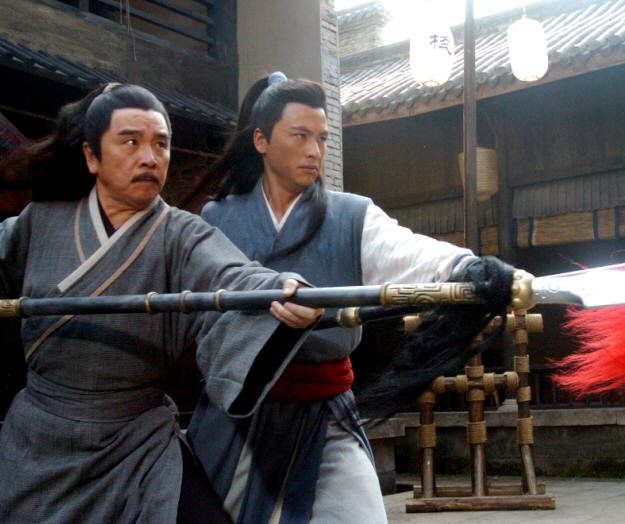
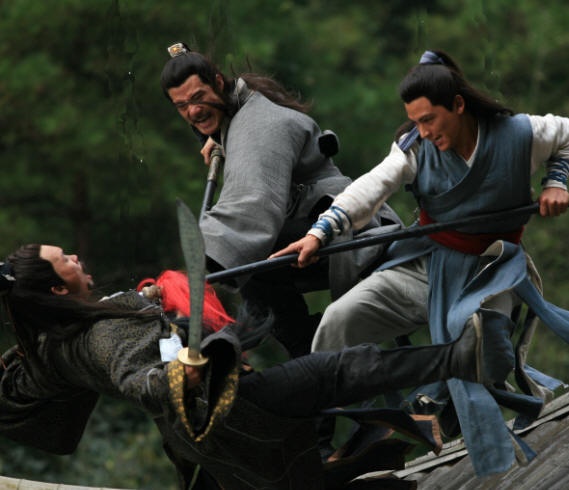
Stills of "World Escort Agency"


The World Escort Agency will bring us a different martial arts vision.


A. The logical development of the plot

At the beginning of the film, a love story is drawn. Wang Zhenwei, the old daughter of Shanxi, has a higher heart than the sky. He is not satisfied with living in Shanxi for a long time and is bent on opening a "world escort agency" in Beijing. Under the guidance of my parents, I opened an escort agency. I didn’t expect this one to be a sachet to escort Princess Shi from Shenfu Royal Guards. Although it is not expensive, it is also a business. According to the old rules, the bodyguard can take the list of the items he receives and the pass issued by the government, so he can take the dart on the road. Unexpectedly, he was chased by a master on the way, and it was dangerous.

The heroine’s name is Shen Feiyan, the daughter of Shi Shenrong, the commander of Royal Guards. She is unruly and willful, and likes guns and sticks. She is a frivolous woman who has nothing to do in the palace, so she uses a sachet to try darts. Let’s see if this newly opened escort agency is in name only. After the princess issued the dart, she didn’t finish the calculation, but also sent a team of people to rob the dart …

One day, Wang Zhenwei was alone in the forest and grass with a dart box on his back. Suddenly, a group of men jumped out of the wild grass and launched a life-and-death fight with Wang Zhenwei, the escort, who lost to his opponent. Suddenly, the father of the escort seemed to fall from the sky and tried his best to protect his son. In the fight, he fought to the death and drank away the robber, but his father was seriously injured. Facing the injured father, Wang Zhenwei did not flinch and was determined to carry out the escort business to the end.
At the same time, the butler also sent a few troops to chase the darts. The reason is that there is a secret piece in the girl’s sachet, which contains a list of thousands of corrupt officials in Beijing, which makes an ordinary dart line confusing …

2. Unique martial arts design

Wushu is a tradition in China, which has dual functions of fitness and attack and defense. Because Shanxi merchants often go out for business thousands of miles away, they often encounter unexpected difficulties and obstacles, even thieves’ attacks. Therefore, Shanxi merchants have always attached importance to martial arts, and many people practice martial arts themselves to strengthen their bodies and defend themselves from thieves’ attacks.

Wushu and boxers play a role in protecting the safety of Shanxi merchants, and Shanxi merchants’ encouragement and support for Wushu and boxers also play a role in promoting Wushu activities to a certain extent.

The martial arts of the film can be said to be the biggest highlight of the film. The martial arts director is Li Cai, a famous martial arts designer in film and television. He was the martial arts director of Zhang Yimou’s Hero. This digital film shooting can be said to be familiar with the martial arts design. On the basis of the script, the martial arts design mainly depends on imagination to become a wonderful martial arts drama. His martial arts design has a large space and high difficulty. The lens modeling is realistic, virtual and real, dynamic and static, and the combination of dynamic and static is like flowing water.

The martial arts design in the film strives for novelty, and there are breakthroughs and innovations in martial arts design. Especially at the end of the film, water village and bamboo ware are used to build momentum and have excellent visual effects.

3. Expressive techniques of relaxation

A movie must have a relaxed rhythm, that is, it must create a dramatic climax in every time period, so as to continuously attract the audience into the plot. In this respect, The Escort Agency in the World is an excellent example. For example, the combination of love drama and kung fu drama makes the plot of the film fast and slow, and it is relaxed.

The arrangement of the plot and the allocation of shots in the film are prioritized, leaving sufficient room for the rhythm of the film. For example, in the first half of the film, there is no accumulation of shots, but it is as soothing and dull as possible, trying to achieve gradual progress in rhythm and strive to be a latecomer, laying an excellent foundation for finally conquering the audience.

4. Grand aesthetic pursuit

The World Escort Agency is beautiful and excellent in martial arts, stunts, music, modeling and costumes. Strive for innovation and innovation in the exploration and innovation of martial arts films. As the creator of the play, no matter the playwright, director or actor, they strive for perfection. Especially in the final stage of the film, the design of martial arts and the use of lens reached a feverish level. Underwater and water, land and sky, bamboo wares and weapons were intertwined, and several people were killed inextricably, creating a grand and majestic fierce battle scene. The film pursued a grand and shocking momentum, and it was overwhelming in the arrangement of strength, and finally won the applause of the audience!

National Health Commission: Yesterday, 92 local confirmed cases and 715 local asymptomatic infected people were added.

CCTV News:National Health Commission informed, September 18th 0— At 2400 hours, 31 provinces (autonomous regions and municipalities directly under the Central Government) and Xinjiang Production and Construction Corps reported 147 newly confirmed cases. Among them, 55 cases were imported from overseas (11 cases in Shanghai, 11 cases in Guangdong, 10 cases in Fujian, 6 cases in Zhejiang, 5 cases in Beijing, 3 cases in Heilongjiang, 2 cases in Shandong, 1 case in Inner Mongolia, 1 case in Liaoning, 1 case in Jiangsu, 1 case in Chongqing, 1 case in Sichuan, 1 case in Yunnan and 1 case in Shaanxi), including 6 cases from asymptomatic infected people to confirmed cases (2 cases in Beijing, 2 cases in Guangdong and 1 case in Fujian). There were 92 local cases (48 cases in Sichuan, 12 cases in Guizhou, 11 cases in Tibet, 8 cases in Tianjin, 4 cases in Shandong, 2 cases in Henan, 2 cases in Guangxi, 1 case in Inner Mongolia, 1 case in Heilongjiang, 1 case in Guangdong, 1 case in Hainan and 1 case in Chongqing), including 34 cases from asymptomatic infected people to confirmed cases (27 cases in Sichuan, 4 cases in Shandong, 2 cases in Guizhou and 1 case in Chongqing). There were no new deaths. There are no new suspected cases.

On that day, 366 new cases were cured and discharged, including 51 imported cases and 315 local cases (93 in Tibet, 58 in Sichuan, 54 in Guangdong, 45 in Hainan, 21 in Inner Mongolia, 6 in Henan, 5 in Xinjiang, 4 in Beijing, 4 in Guizhou, 3 in Liaoning, 3 in Heilongjiang, 3 in Jiangxi, 3 in Shandong, 3 in Hunan, 2 in Jilin and 2 in Inner Mongolia).

There are 576 confirmed cases (no severe cases) imported from abroad, and there are no existing suspected cases. A total of 23,436 cases were diagnosed, and 22,860 cases were cured and discharged, with no death.

As of 24: 00 on September 18th, according to the reports of 31 provinces (autonomous regions and municipalities directly under the Central Government) and Xinjiang Production and Construction Corps, there are 3,646 confirmed cases (including 35 severe cases), 239,454 discharged cases have been cured, 5,226 cases have died, and 248,326 confirmed cases have been reported, with no existing suspected cases. A total of 5,829,059 close contacts were tracked, and 180,297 close contacts were still under medical observation.

31 provinces (autonomous regions and municipalities directly under the Central Government) and Xinjiang Production and Construction Corps reported 843 new cases of asymptomatic infections, including 128 imported cases and 715 local cases (352 in Guizhou, 187 in Tibet, 47 in Sichuan, 29 in Guangxi, 19 in Xinjiang, 18 in Tianjin, 11 in Heilongjiang, 11 in Hainan, 5 in Hebei, 5 in Shandong, 5 in Henan and 5 in Xinjiang).

On that day, 1,296 asymptomatic infected people were released from medical observation, including 72 imported cases and 1,224 local cases (522 in Tibet, 119 in Hainan, 74 in Heilongjiang, 66 in Liaoning, 61 in Jiangxi, 54 in Guangxi, 38 in Xinjiang, 36 in Shandong, 35 in Sichuan, 32 in Qinghai, 31 in Inner Mongolia, 27 in Guizhou and 25 in Gansu). 40 cases were converted into confirmed cases on the same day (6 cases were imported from abroad); There are 17987 asymptomatic infected people under medical observation (774 cases imported from abroad).

A total of 6,378,066 confirmed cases were reported from Hong Kong, Macao and Taiwan. Among them, there were 406,835 cases in Hong Kong Special Administrative Region (80,922 cases discharged from hospital and 9,891 cases died), 793 cases in Macao Special Administrative Region (787 cases discharged from hospital and 6 cases died) and 5,970,438 cases in Taiwan Province (13,742 cases discharged from hospital and 10,548 cases died).

Jin Zhuanglong took up the new Ministry of Industry and Information Technology and was once the "head" of domestic large aircraft.

  On the 29th, it was officially announced that "Comrade Jin Zhuanglong is the Party Secretary of the Ministry of Industry and Information Technology, and Comrade Xiao Yaqing is no longer the Party Secretary of the Ministry of Industry and Information Technology."

  The day before, the website of the State Supervision Commission of the Central Commission for Discipline Inspection disclosed the news that Xiao Yaqing, Party Secretary and Minister of the Ministry of Industry and Information Technology, had been investigated.

  According to public information, Jin Zhuanglong, born in Zhoushan, Zhejiang Province in 1964, studied winged missile design at Beihang University. Later, he obtained a master’s degree in engineering from Shanghai Institute of Aerospace Technology and a doctorate in industrial economics from Fudan University.

  In June 1989, Jin Zhuanglong began to work in the Eighth Design Department of Shanghai Space Administration. Nine years later, in 1998, 34-year-old Jin Zhuanglong became the director of Shanghai Space Administration. One and a half years later, he also served as a member of the party group of China Aerospace Science and Technology Corporation.

  In December, 2001, Jin Zhuanglong stepped down as the director of Shanghai Space Administration and became the deputy general manager and member of the leading group of China Aerospace Science and Technology Corporation.

  From June 2004 to March 2008, Jin Zhuanglong worked in the Commission of Science, Technology and Industry for National Defense, and served as Secretary-General (concurrently deputy director of the National Space Administration and spokesman of the Commission of Science, Technology and Industry for National Defense), deputy director of the Commission of Science, Technology and Industry for National Defense and member of the Party Group. In August 2007, he also served as the deputy head of the preparation team for large passenger aircraft projects.

  In March 2008, the State Council officially approved the establishment of China Commercial Aircraft Co., Ltd. In May, the company was established in Shanghai, and Jin Zhuanglong became the general manager of Comac China.

  In January 2012, Jin Zhuanglong became the chairman and party secretary of Comac China, and was called "the head of domestic large aircraft" by the media.

  On May 5, 2017, under the global attention, China has completely independent intellectual property rights, and the first trunk civil aircraft C919 developed according to the latest international airworthiness standards successfully made its first flight. At the ceremony that day, it was Jin Zhuanglong, the commander-in-chief of the C919 project, who announced the success of the first flight.

  In August 2017, Jin Zhuanglong appeared in media reports as the executive deputy director of the integration of defense and civilian technologies Office of the Central Committee.

  Now, 58-year-old Jin Zhuanglong has gone to a new post.

How to do economic work in 2019? CCTV Spring Festival Evening gave us these ideas.

  The Spring Festival passes quickly, and I will go to work the day after tomorrow. How to carry out the work in the new year, CCTV Spring Festival Evening in 2019 may provide us with ideas and answers.

  Watching and talking about the Spring Festival Gala is a popular entertainment for the people during the Spring Festival. Looking at it from another angle, the Spring Festival Evening is also an excellent starting point to interpret China’s economic trends. The Southern Economic Think Tank tries to interpret the economic signals released by CCTV Spring Festival Evening from three perspectives.

  Visual angle 1

  Four high-frequency words in the Spring Festival Evening


  High-frequency words in CCTV Spring Festival Evening in 2019. Finishing Chen Yubing

  Through the incomplete statistics of the host words, program lines, lyrics and other party elements,Science and technology, poverty alleviation, revival, express deliveryIt has become a high-frequency word in the CCTV Spring Festival Evening in 2019.

  As the host of the Spring Festival Evening said, "Technology has changed life from extravagant imagination to real daily life". In the Shenzhen sub-venue, the embodiment of "science and technology" is more obvious, from the host words, program arrangement to stage design, which is very scientific and technological. An international science and technology innovation center with global influence is also one of the five strategic orientations of the central government for Guangdong-Hong Kong-Macao Greater Bay Area where Shenzhen is located.

  In the party, it is more symbolic to realize the first 5G network transmission of 4K ultra-HD content in China:2019 is regarded as the first year of 5G commercialization, and the "digital economy" is expected to leverage 5G to achieve rapid development..

  According to the China internet plus Index Report (2018) released by Tencent Research Institute, the national digital economy in 2017 was 26.70 trillion yuan, up 17.24% year-on-year, accounting for 32.28% of GDP.

  Compared with 4G, the characteristics of 5G, such as wide-area coverage, high connection density, high hotspot capacity, low delay and high reliability, can not only meet people’s daily needs for high-speed networks, but also realize the "Internet of Everything", which opens the door for the large-scale popularization of China’s industrial Internet and urges the transformation of old and new kinetic energy in economic development. In other words, 5G empowerment will comprehensively accelerate the digitalization process of China’s economy and society.

  Getting rid of poverty and becoming rich, and building a well-off society in an all-round way is an important task for the central government to read here, and it is of course fully displayed on the stage of the Spring Festival Evening. The "building canals, greenhouses, green ecological parks and food processing plants" mentioned in the Spring Festival Evening sketch are the important contents of industrial poverty alleviation. In 2019, fighting the tough battle against poverty is not only an important economic task, but also an important political task, which not only contains new opportunities and new space for economic development, but also is a powerful answer for China to face the problem of unbalanced and insufficient development.

  There is a familiar prop on the stage of the Spring Festival Evening — — Fuxing train. During this period in Spring Festival travel rush, hundreds of millions of people returned home by rail. The high-speed train is not only a business card made in China, but also the best embodiment of the speed in China.

  It is reported that this year, the national railway investment in fixed assets has maintained a strong scale, ensuring the production of 6800 kilometers of new lines, including 3200 kilometers of high-speed rail.By the end of 2019, the number of Fuxing vehicles put into operation reached 850.. With the improvement of modern transportation network with more high-speed rail and higher efficiency, the logistics cost is expected to be further reduced, and the flow speed of people, logistics, information flow and capital flow is expected to be further accelerated, making it a lubricant and accelerator for China’s economic development.

  Combing this year’s Spring Festival Evening sketch shows will find an interesting phenomenon:Courier has become the hottest profession, and together with cleaning aunts, advertising practitioners, criminal police, house sales agents, and drivers, it forms a professional group that focuses on the Spring Festival Evening.. The general feature of these occupations is that they are all related to urban life and are front-line participants and builders of modern economy.

  Among them, couriers have more distinctive characteristics of the times due to the rapid development of online consumption.

  Just as hundreds of millions of people return home or travel, the same huge logistics is passed to thousands of households through the hands of countless courier brothers. As a new professional group born with the urbanization process, such as courier brother, how to better improve efficiency and their own income and integrate into urban development will be another important topic for China’s economic development.

  Angle of view 2

  Selection of three Spring Festival Gala venues

  The selection of three sub-venues in the Spring Festival Gala is also very interesting.

  From an economic point of view, tea in Jinggangshan, cars in Changchun and robots in Shenzhen respectively represent three industrial forms: traditional agriculture, modern manufacturing and intelligent manufacturing.. Three cities and three kinds of products from the old revolutionary base area in central China, the heavy industry base in northeast China and the southeast coast appeared on the stage of the Spring Festival Evening at the same time, which itself is a microcosm of China’s industrial economy.

  This arrangement supports the basic pattern of the whole Spring Festival Evening in the expression of China’s economic stories. The program arrangement of the three sub-venues has strengthened this point.

  The song and dance "Time No.1" in Changchun FAW Branch of Jilin Province has become an all-round exhibition of China FAW products. The deformed robot modified by FAW cars and the world’s largest indoor remote-controlled aircraft model show the great ambition of the old industrial base to speed up the optimization and upgrading of the economic structure.

  In 2016, the General Secretary of the Supreme Leader visited Shenshan Village, Mao Ping Township, Jinggangshan City, which appeared in the Jinggangshan Sub-venue, and now it has been lifted out of poverty together with six other administrative villages in the township. The Central Economic Work Conference proposed that efforts should be made to increase the supply of high-quality green agricultural products. Jinggang Mountain is green, and it is one of the famous teas in Jiangxi Province. The song and dance "Please Tea Song" is all in full of green, from lyrics to costumes and stage design, full of tea fragrance, which is equivalent to using the super IP of Spring Festival Evening to make a favorite product promotion.

  The song and dance "Fantasy of Youth" in Shenzhen Branch Hall has become a stage for robots and flexible screens, which fully reflects the strong strength and strong enterprising spirit of Shenzhen and even Guangdong-Hong Kong-Macao Greater Bay Area in the fields of electronic information, intelligent manufacturing and other industries.

  Compared with the first two venues, innovation is the most distinctive theme of Shenzhen Sub-venue in terms of stage layout, technical means of signal output and program presentation, which fully embodies the mission of this special zone city in "promoting the deep integration of advanced manufacturing and modern service industries and unswervingly building a manufacturing power".

  The appearance of three sub-venues in succession fully embodies the development characteristics of regional economy and skillfully expounds the different aspects of China’s economic development.

  At the same time, the seamless connection of the three sub-venues has a special symbolic meaning — —The development between different regions and different economic forms is by no means separated from each other..The development of the western region, the overall revitalization of the Northeast, the rise of the central region and the pioneering development of the eastern region are all indispensable and important contents for the country to achieve coordinated regional development. How to implement these national strategies and promote a more adequate and coordinated development of the national economy is a major point of view for China’s economy in 2019.

  Angle of view 3

  Opportunities for the sinking of the consumer market

  Outside the stage, the list of sponsors of the Spring Festival Gala is an excellent material for a glimpse of China’s economic hotspots.

  From Kangbas and Seagull Clocks in the 1980s to Chinese Bicycles, National pits, Wuliangye and other wine brands in the 1990s, Spring Festival Evening advertisements, as a "barometer of China economy", have reflected the economic changes in China for more than 30 years. It has become a true portrayal of the continuous upgrading of the domestic consumer market and the continuous enrichment of people’s living standards.

  In the CCTV Spring Festival Evening in 2019, Tik Tok, Aauto Quicker and Baidu occupied an important position in extending the content sharing of the Spring Festival Evening with their platform advantages. What attracts people’s attention is that Pinduoduo, who was influenced by negative news, became the sponsor of the Spring Festival Gala.

  Behind this round of sponsor replacement, mobile phones have become the absolute protagonist of network use. According to the 42nd Statistical Report on Internet Development in China, as of June 2018, the number of Internet users in China was 802 million, including 788 million mobile phone users, accounting for 98.3% of Internet users from 97.5% in 2017.

  Compared with Tik Tok and Aauto Quicker, the economic significance of Pinduoduo’s appearance on the stage of the Spring Festival Gala is even more extraordinary.

  The Central Economic Work Conference regards "promoting the formation of a strong domestic market" as an important content of economic work in 2019, and proposes to strive to meet the final demand, improve product quality, and accelerate the development of service industries such as education, child care, pension, medical care, culture and tourism.

  Pinduoduo’s becoming a sponsor of the Spring Festival Evening not only shows that the online shopping field is still in fierce competition, but also shows that the consumer market is further enriched and the channels are sinking.

  With the implementation of strategies such as rural revitalization and the adjustment of urban and rural economic structure towards a more coordinated pattern, the consumer markets in first-tier cities, third-and fourth-tier cities and even rural areas are rapidly opening up, and the upward channels of agricultural products are gradually getting through. These factors have provided unprecedented market space for new e-commerce companies like Pinduoduo.

  The emergence of this phenomenon is supported by clear data.

  Previously, the National Bureau of Statistics disclosed when analyzing the economic operation in 2018.In 2018, the per capita consumption expenditure of urban residents in China was 26,112 yuan, a nominal increase of 6.8%, 0.9 percentage points faster than the previous year; The per capita consumption expenditure of rural residents was 12,124 yuan, a nominal increase of 10.7%, 2.6 percentage points faster than the previous year..

  In other words, the rapid growth of rural consumption and the gradual narrowing of the gap between urban and rural consumption have become new features of economic development. At present, the economy is facing downward pressure, and the rapid development of consumption market, especially in non-first-tier towns and rural areas, is even more critical to economic development.

  The rapid development of new e-commerce such as Pinduoduo also means that the online shopping platform has completed the sinking of the "last mile" of the domestic rural terminal market, which means the rapid development of the digital economy in the consumer field. Accompanied by this, it is the further opening and integration of urban and rural consumer markets, and with the steady progress of building a well-off society in an all-round way, a huge market with a scale of 1.4 billion people with more integrity, coordination and comprehensive digitalization is taking shape.

  In fact, regardless of urban and rural areas, there is still huge market space in many consumer areas. The "health care products for the elderly" suspected of selling fakes in "My son is coming" is both a legal issue and an economic issue — — As China enters an aging society, the consumption market of goods and services for the elderly needs to be improved urgently, and the improvement of its quantity and quality is also the key to promoting endogenous economic growth through consumption. People’s pursuit of a better life is also a great opportunity for China’s economy.

  [Write] Wang Biao, a researcher at the Southern Economic Think Tank  

  [Overall Planning] Huang Yinglai

  [Proofreading] Feng Zhijian

  [Product] Nanfang Daily Southern Economic Think Tank

Country Garden, emergency response

Country Garden’s response came.

On June 5th, in response to the news that its Country Garden Venture Capital may sell the equity of Changxin Storage, a memory chip manufacturer, thus raising 2 billion yuan, Country Garden responded to a reporter from China, a brokerage firm, saying that the company is actively considering various strategies aimed at optimizing the asset-liability structure, including carefully evaluating the asset portfolio and exploring potential asset disposal opportunities.

Country Garden is still in difficulties. Due to the failure to publish the 2023 annual report on schedule, Country Garden has suspended trading since April this year. At the same time, Country Garden is also facing a debt liquidation hearing. At present, the Hong Kong High Court has ordered that the petition hearing be postponed until June 11.

Respond to the sale of Changxin Storage Equity.

Country Garden, which is in trouble, heard the news of disposing of assets.

Some foreign media reported that Country Garden Venture Capital, a subsidiary of Country Garden, is seeking to sell its shares in Changxin Storage Technology Co., Ltd. (referred to as "Changxin Storage"), raising about 2 billion yuan. However, the sale time is still under negotiation, and the final result is inconclusive.

According to official website, Changxin Storage is an integrated memory manufacturing company, focusing on the design, research and development, production and sales of dynamic random access memory chips (DRAM). It is a competitor of Micron Technology and Samsung Electronics. Changxin Storage was founded in 2016. Changxin Storage is headquartered in Hefei, Anhui, and has several R&D centers and branches at home and abroad.

In response to the above news, Country Garden insiders told China, a brokerage firm, that the company is committed to actively exploring various strategies to optimize the asset-liability structure, including prudent assessment of the asset portfolio and potential asset disposal opportunities.

"If there is any substantial progress or specific decision, we will disclose it to the market in a timely manner in accordance with relevant regulations." The above insiders said.

According to Tianyancha information, Country Garden holds 1.6805% of the shares of Changxin Technology Group Co., Ltd. (hereinafter referred to as "Changxin Technology") through the equity investment partnership (limited partnership) of No.5 Huibi, Nanhai District, Foshan City under Country Garden Venture Capital, and the latter holds 100% of the shares of Changxin Storage.

In March this year, the listed company Zhaoyi Innovation (603986.SH) announced that it planned to make a strategic capital increase of 1.5 billion yuan for Changxin Technology. After the capital increase is completed, Zhaoyi Innovation will hold about 1.88% of the equity of Changxin Technology. Before this capital increase, Zhaoyi Innovation held about 0.95% equity of Changxin Technology, which also indicated that the valuation of Changxin Technology may increase from the previous 139.982 billion yuan to 161.29 billion yuan, and Country Garden held more than 2 billion yuan.

Country Garden seeks to save itself from difficulties.

In fact, due to its predicament, it is not surprising that Country Garden sold its equity to cash in funds to save itself.

On June 5th, Country Garden announced that in May this year, the contracted sales attributable to shareholders’ equity of the Company reached 4.29 billion yuan. The contracted sales floor area attributable to shareholders’ equity of the Company is 440,000 square meters.

In the first five months of this year, Country Garden realized the contracted sales attributable to shareholders’ equity of the Company of 21.65 billion yuan, down 80.8% from 112.76 billion yuan in the same period of last year; The contracted sales floor area attributable to shareholders’ equity of the Company was 2.251 million square meters, down 84.39% from 14.42 million square meters in the same period of last year.

On May 13th this year, at the monthly management meeting of Country Garden, Yang Huiyan, chairman of the Board of Directors of Country Garden, said that although the company was experiencing market tests, its balance sheet remained relatively healthy. She revealed that the Group is actively optimizing its asset structure and reducing financial risks to ensure that it can quickly seize opportunities when the market recovers.

Yang Huiyan also said that the policy is gradually improving. As long as we persist in the trough, the real estate industry will surely usher in spring.

Country Garden announced on the Hong Kong Stock Exchange in March this year that it is expected that it will take longer to complete the preparation of the consolidated financial statements for 2023, and it will not be able to publish the annual results for 2023 on schedule. In view of this, Country Garden has been suspended since the beginning of April this year.

Country Garden will also face a liquidation hearing. The petitioner, Ever Credit Limited (Jiantao Group), filed a liquidation petition with the High Court of Hong Kong in February this year due to the unpaid term loan and emergency interest of about HK$ 1.6 billion, and the first hearing was held on May 17.

In May this year, after the two parties went to court, Country Garden applied for an adjournment to prepare more evidence. The two sides subsequently agreed to postpone the case until June 11th.

Editor: Tactical constancy

Proofreading: Li Lingfeng